
Project Summary
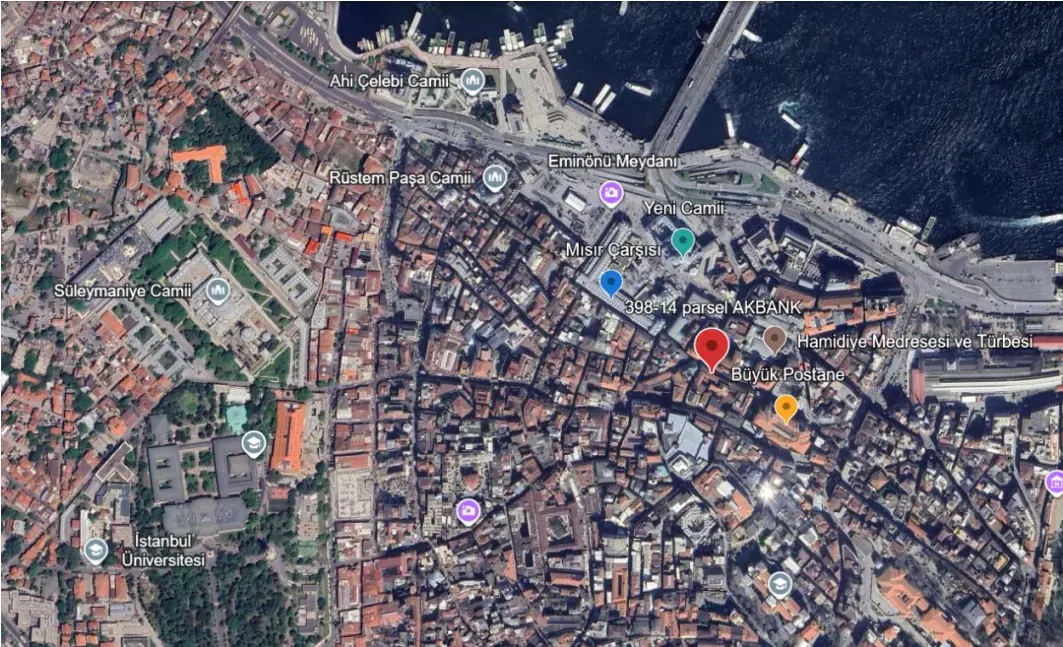
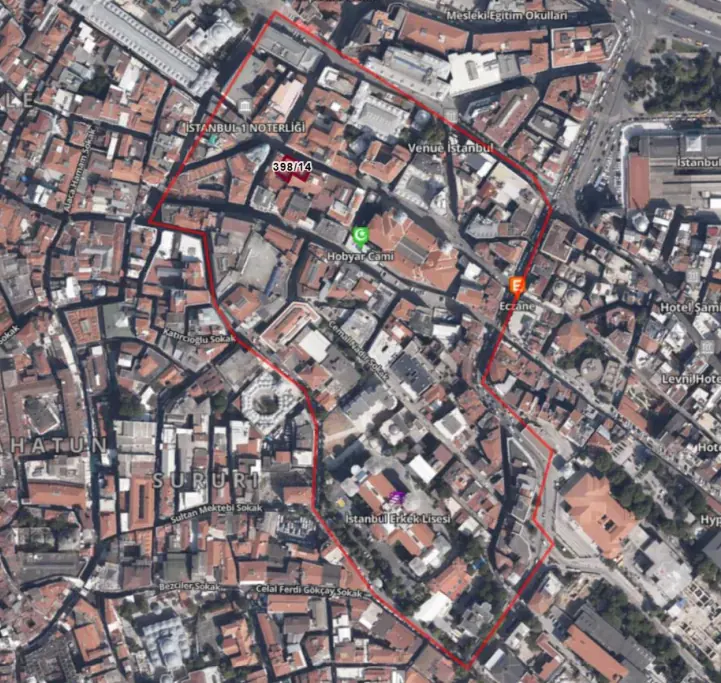
On the Historic Peninsula, which holds one of the densest layers of Istanbul's commercial memory, the Eminönü–Bahçekapı axis has been an important urban spine shaped over centuries by hans, banks and commercial buildings. The building, located on Büyük Postane Street within the boundaries of Hobyar Mahallesi, Fatih, is one of the significant representatives of this memory extending into the Early Republican period.
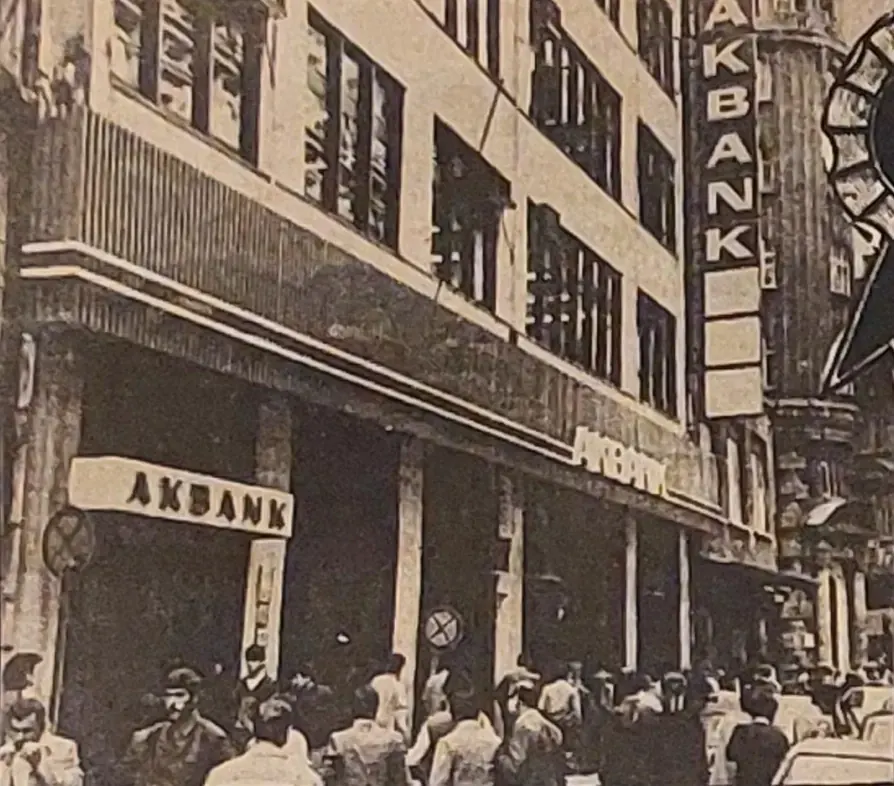
The masonry office building now used as a bank was built in the late 1940s under the influence of the International Style on Republican architecture. The structure is located in a continuous row within Eminönü's dense commercial fabric and reflects a functional, plain and modernist architectural approach. Its massing simplicity, austerity in the facade layout and stripped architectural language clearly express the period's modernisation tendencies.
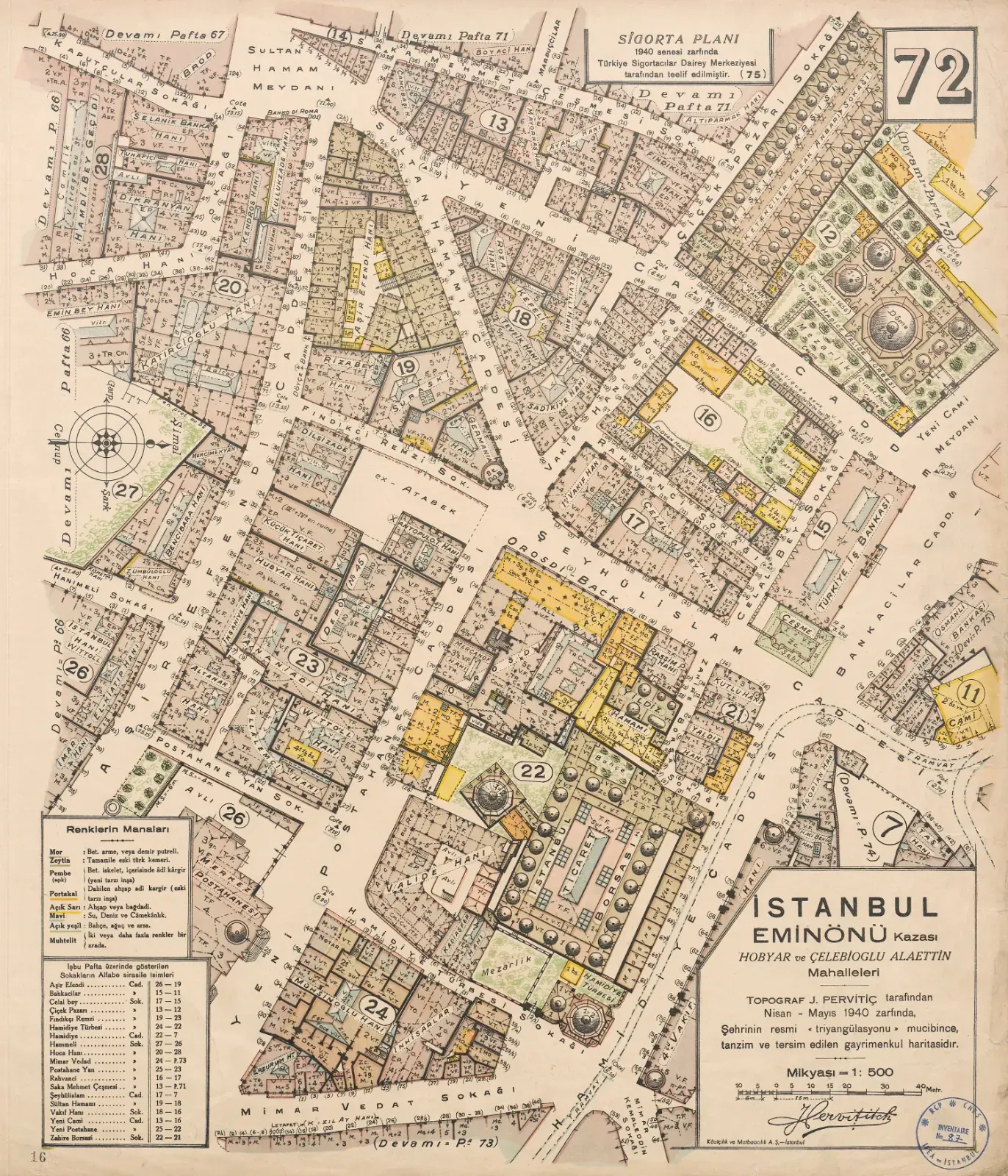
The present building, however, is not only a work of the Republican period but stands on the historical continuity of two important 19th-century commercial structures that previously occupied the same plot. From the early 20th century, the plot is known to have contained Xanthopoulo (Ksantopulo) Han and Küçük Georgiadis Han. These buildings were constructed as office and commercial hans serving Eminönü's late Ottoman commercial life.
Xanthopoulo Han stood out with its courtyard and gallery plan, while Küçük Georgiadis Han was a simpler, corridor-type office han without a courtyard. In both buildings, shops were on the ground floors and offices on the upper floors, in line with the period's han typology; the facades featured round-arched entrances and rhythmic window sequences. These buildings are architectural reflections of Eminönü's transformation into a finance and trade centre.
The major fire centred on Sultanhamam in 1939 seriously affected the commercial fabric of Bahçekapı and its surroundings; many buildings, notably Xanthopoulo Han, were severely damaged. After the fire, the ruined han structures were largely lost and the area was redeveloped according to the Republican period's new planning approach. This process also marked the beginning of a profound transformation in Eminönü's architectural identity.
In the 1940s, the fire-damaged plots were consolidated and a new building was constructed; a modern office building with a reinforced concrete structural system replaced the earlier hans. The new building represents a conscious break from the han typologies of earlier periods through its functionally oriented plan, stripped facade approach and contemporary architectural language. In this respect, the building is an important example reflecting the Early Republican period's modernisation and rationalisation at the scale of Eminönü.
Used as a bank from the 1950s onwards, the building has undergone interior rearrangements and functional adaptations over time, yet has continued its commercial and financial role on the same site without interruption. The standing building today, while not physically bearing the traces of the earlier hans, forms a layered memory field that represents, at the scale of the plot, Eminönü's commercial and architectural transformation from the late Ottoman period to the Republic.
The Bahçekapı Historic Han Restoration Project aims not only to conserve the existing building but to make readable the transformation process the plot has undergone since the 19th century. Within the project scope, the place of the pre-fire han buildings in urban memory, the modernist reconstruction of the Republican period and the architectural heritage that has reached the present are addressed as a whole; the building is evaluated within its historical context. This approach reflects an integrated restoration understanding that aims to preserve Bahçekapı's commercial identity and Eminönü's multilayered urban memory.
Images
Questions about this project? Get in touch
← Back to Restoration Projects