
Fatih Mosque and Complex
Site Selection, Layout, Historical Process and Present State
1. Site Selection and Urban Layout
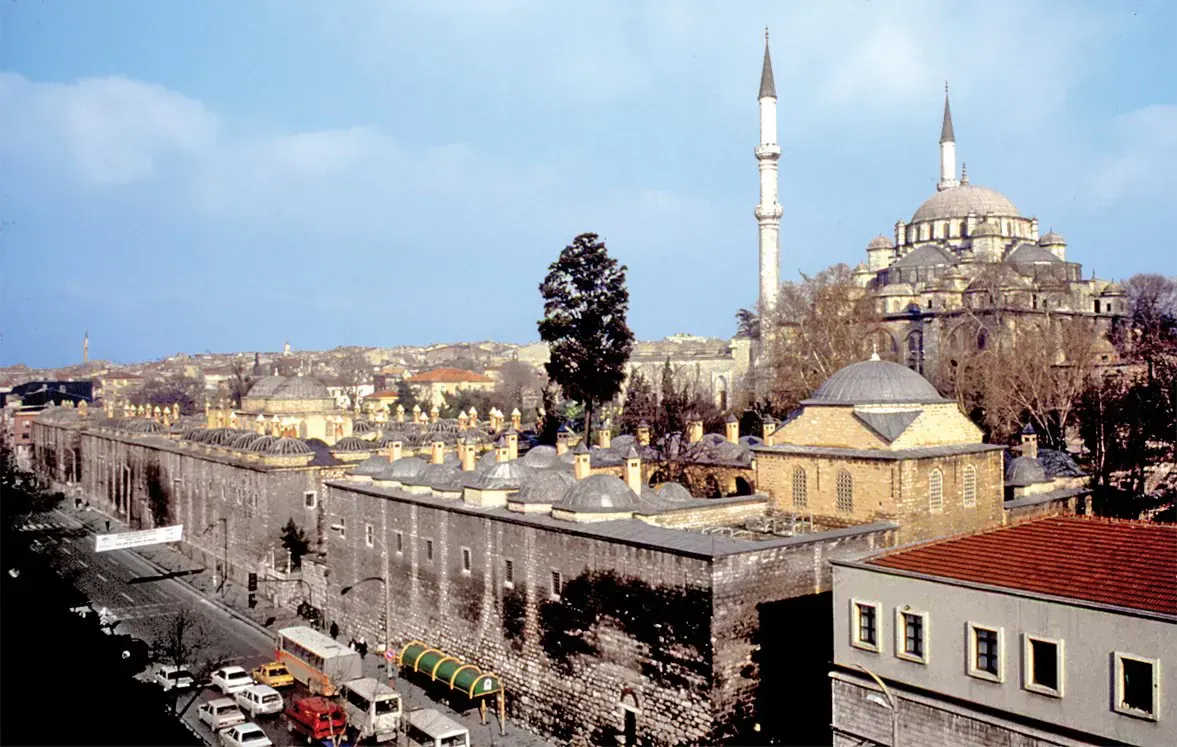
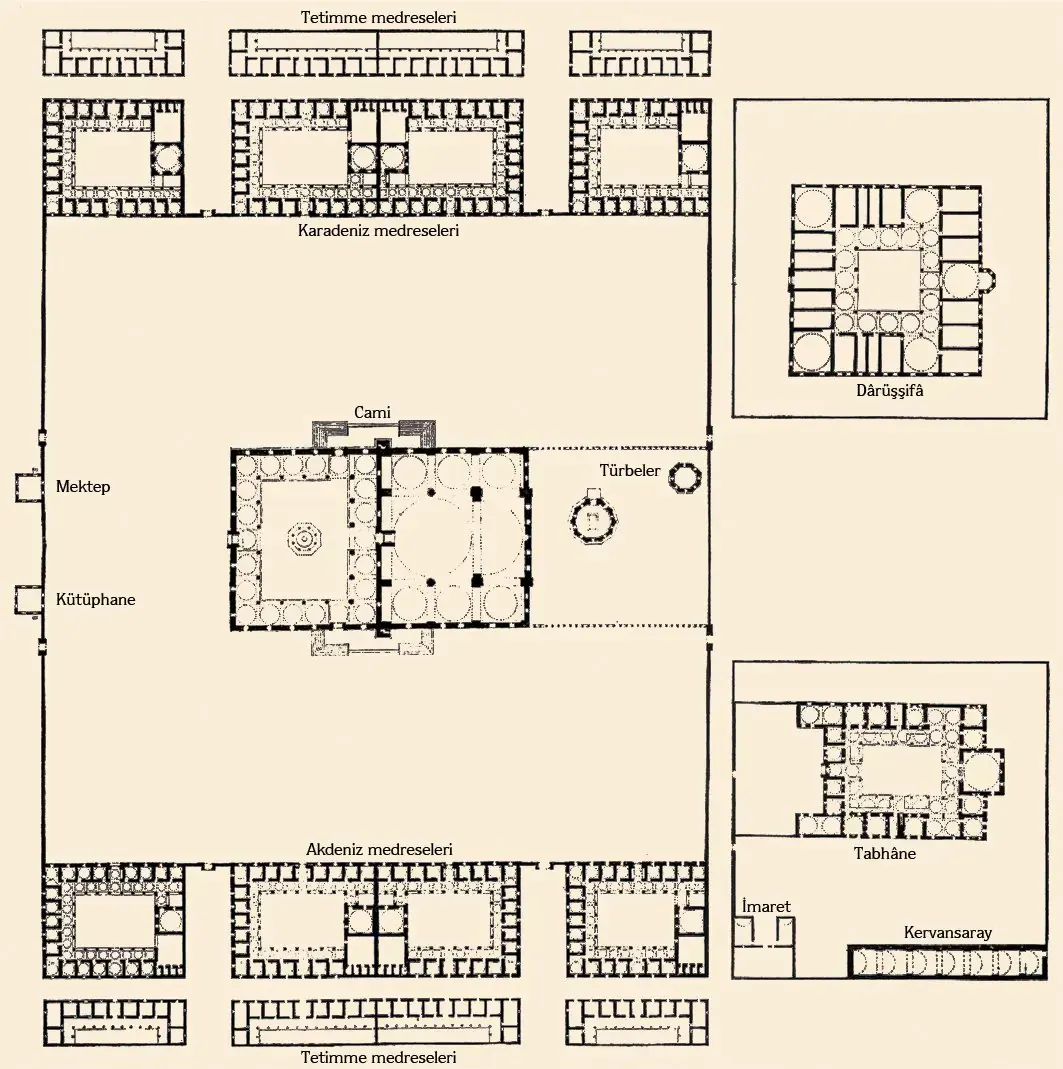
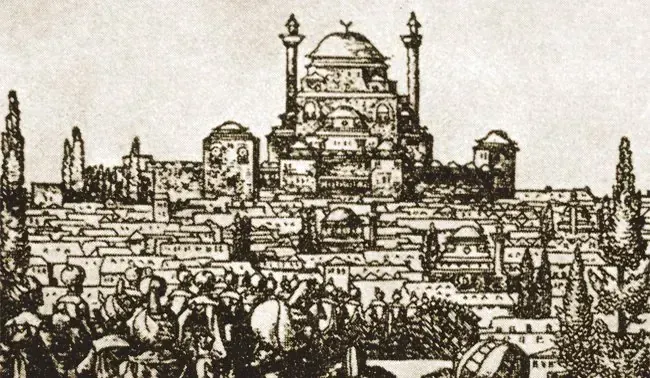
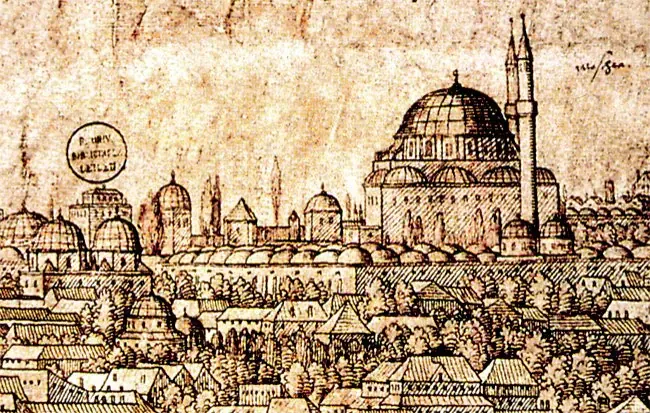
Mehmed the Conqueror deliberately chose for his namesake mosque and complex the site of the Church of the Holy Apostles (Hagioi Apostoloi), which had been central to Byzantine Constantinople. This choice both emphasised the new faith's dominance in the city and, thanks to the hilltop position, made the Turkish-Islamic identity visibly part of the Istanbul skyline. The complex was designed with strict symmetry around the mosque at its centre and was conceived as one of Istanbul's foremost religious and cultural centres.
2. Components of the Complex and Original Layout
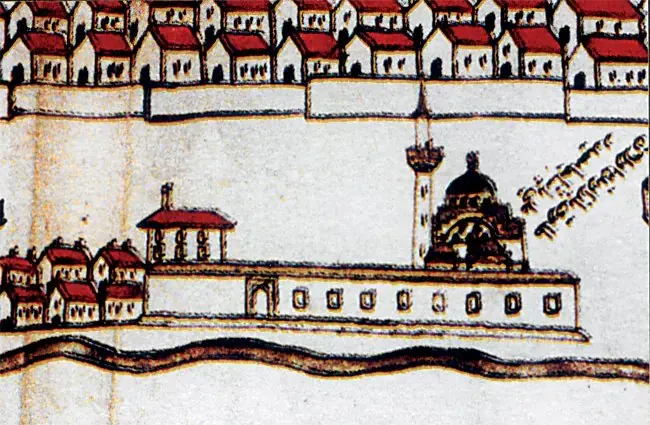
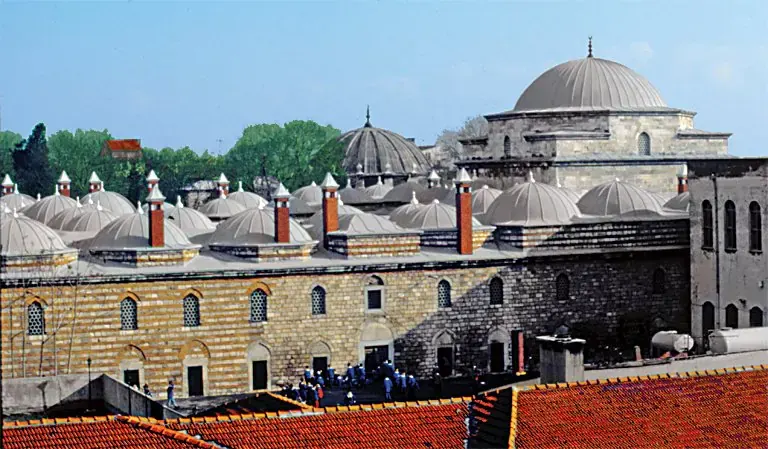
Madrasas flank the mosque on both sides; in front of them stood the tabhâne (guest house) on one side and the dârüşşifâ (hospital) on the other, with the bazaar (arasta) and bath further on. Over time the complex was not preserved as a whole: some buildings were lost entirely, and the original layout was disrupted by later additions from the late 19th century onward.
3. Construction and Architect
After the conquest the ruined Church of the Holy Apostles was for a time assigned to the Orthodox patriarchate; when the patriarch wished to leave in 1455, Mehmed gave the patriarchate another church and reserved this site for his own complex. Construction began in March 1463 and continued until December 1470. Claims that a Greek architect built the complex are considered unfounded; research has established that the architect of the Fatih Mosque and Complex was Atik Sinan. The complex is understood within the natural development of Turkish architectural tradition and is stated to show no trace of Byzantine art (though Byzantine craftsmen may have contributed to the work).
4. Plan and Features of the First Fatih Mosque
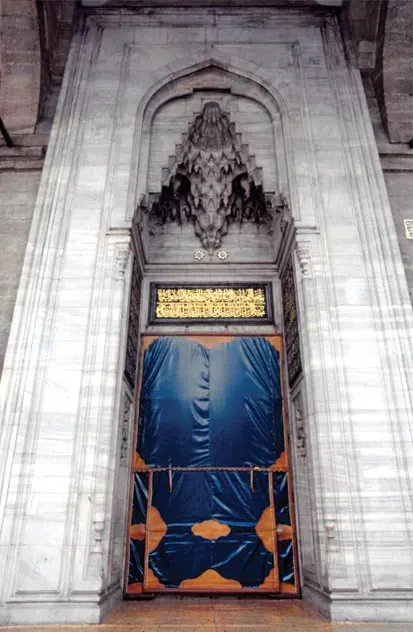
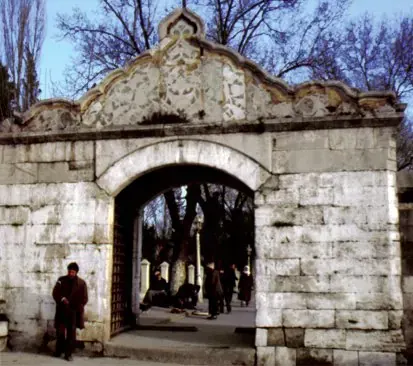
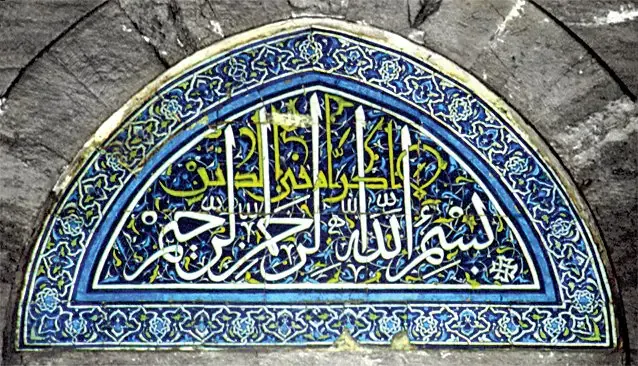
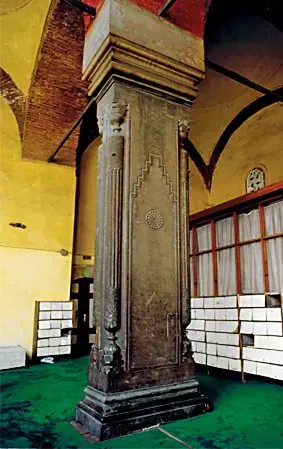
From old depictions and documents, the first Fatih Mosque is understood to have had: a large central dome; a projecting half-domed section on the mihrab side; lower units of three small domes on each side; and an inner courtyard and portico surrounded by arcades. Entry to the main space was through a portal with muqarnas vaulting; the plan is said to resemble that of the later Atik Ali Paşa Mosque. Some carved marbles reused upside down in the courtyard paving have been identified as belonging to the Apostles church. The tile panels adorning two window lunettes in the inner courtyard are also from the first mosque; they bear part of the basmala and the Throne Verse and use the yellow typical of the period's tiles.
5. Earthquakes, Destruction and Rebuilding
The Fatih Mosque and Complex was repeatedly damaged by major Istanbul earthquakes. In the 1509 ("lesser apocalypse") earthquake the mosque dome and column capitals were damaged and the hospital, imaret and madrasa domes suffered major harm. It was damaged and repaired again in 1557 and 1754. In the 1766 earthquake the mosque's main dome collapsed completely and the walls were ruined beyond repair. Sultan Mustafa III first had the mausoleum and other complex structures rebuilt; reconstruction of the mosque began on 31 July 1767 and the mosque was opened for worship in April 1771.
6. The Present Mosque and Its Style
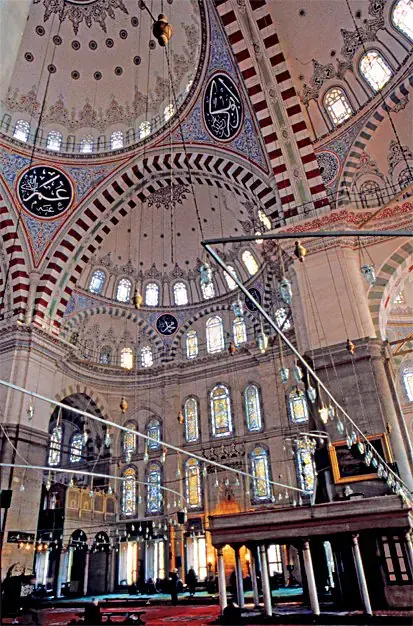
The second mosque, built after 1766, has a different layout from the first. The north wall (separating the courtyard from the portico) is said to survive from the first mosque. In the new mosque the prayer hall follows the four-half-dome scheme similar to the Şehzade, Sultan Ahmed and Yeni Valide mosques. The composition is generally classical but Baroque features of the second half of the 18th century appear in elements such as the chamfered pier corners and moulded bands separating the arches and half-dome springing. The painted decoration in the interior is also described as Baroque; nevertheless the mosque's overall effect on the Istanbul skyline is said not to have broken entirely from the classical style. The minarets were single-gallery until the 19th century, when a gallery was added to each; in the late 19th century (probably after the 1894 earthquake) they were given stone caps, and in 1966–1967 were again given lead-covered wooden caps.
7. Mausoleums and Cemetery
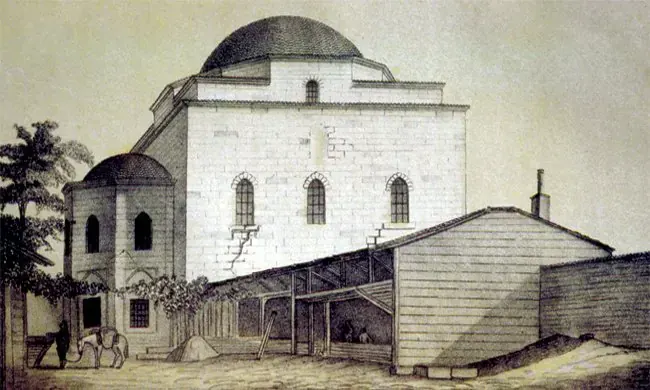
Fatih Mausoleum: After Mehmed the Conqueror's death in 1481 his body was brought to Istanbul and buried in the mausoleum in the cemetery in front of the qibla wall. The mausoleum was ruined in the 1766 earthquake and soon repaired. Whether its position changed after the earthquake is debated; the issue is said to be resolvable only by detailed research. The mausoleum is octagonal and single-domed with a two-column portico at the entrance; the exterior combines classical tradition with Baroque elements. It was damaged in the 1782 Cibali fire and repaired under Abdülhamid I; it was repaired and redecorated under Abdülaziz (1865–66) and again in 1909–1918 and 1952–53.
Gülbahar Hatun Mausoleum: An octagonal domed structure near the Fatih Mausoleum; it evidently underwent extensive repair after 1766 and was damaged in the 1782 fire and repaired the same year.
Nakşidil Valide Sultan Mausoleum: A large mausoleum with an adjacent sebil was built in the 19th century for the mother of Mahmud II; it is cited as one of the successful Baroque examples in Turkish mausoleum architecture.
Cemetery (hazire): The walled cemetery on the qibla side contains many notable graves; most are from the 19th century and the mausoleum of Gazi Osman Paşa is also here.
8. Madrasas, Tabhâne, Hospital and Other Buildings
Madrasas: The large madrasas on either side of the mosque were known as Sahn-ı Semân; the lower Tetimme preparatory madrasas stood at a lower level. The Tetimme madrasas were demolished during road works and some disappeared entirely. The large madrasas were damaged in the 1766 earthquake; the hospital was neglected while the madrasas were repaired with the mosque. The eight large madrasas that survived have been used as student dormitories since 1955 after repairs.
Tabhâne and Imaret: The tabhâne was built on the Mediterranean side and later used as a madrasa after its guest-house function. The presence of the kitchen-imaret and the terrain level led to a caravanserai being arranged beneath. The dârüşşifâ is described as Istanbul's first Turkish-period hospital. It fell into ruin, was demolished and put to other uses in the 19th century, and was further damaged by the 1894 earthquake and fires until it disappeared completely. No trace of it remains today. The muvakkithâne (timekeeping house) was completely destroyed by fire in 1918. The bazaar (arasta) to the south is mentioned in the waqf deeds; its traces persisted into the early 20th century but it was largely lost after the 1918 Fatih fire. The bath (Çukur Hamam) stood in a hollow to the south and was so named; it was damaged in 1766, not repaired, put to other uses and gradually ruined; by 1917 no trace of it could be found.
9. General Assessment
The Fatih Mosque and Complex played a central role in Istanbul's development after the conquest through its site choice, symmetrical urban layout and multi-component building ensemble. Earthquakes, fires, neglect, demolition and later additions meant that the complex's original integrity has not survived to the present. Nevertheless the mosque, mausoleums, cemetery and part of the madrasas remain among the principal cultural assets representing Istanbul's Turkish-period history.
Images
Questions about this project? Get in touch
← Back to Restoration Projects