
Nuruosmaniye Mosque and Complex
Istanbul (Çemberlitaş / Grand Bazaar)
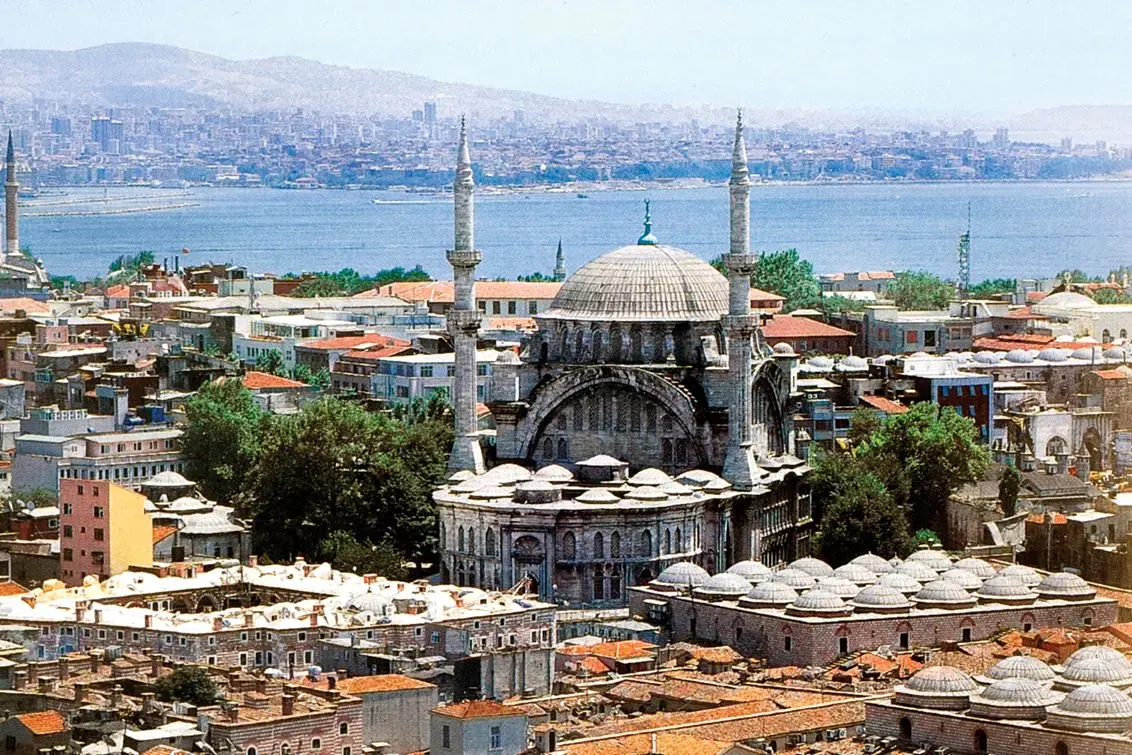
The Nuruosmaniye Mosque and Complex is located at the centre of Istanbul's historic commercial fabric, adjacent to the entrance of the Grand Bazaar (Kapalıçarşı), and is one of the earliest and most pronounced examples of the transition from classical to baroque style in Ottoman architecture. Construction began under Mahmud I and was completed by Osman III after Mahmud's death; the complex opened in 1755. The complex was designed to include a mosque, sultan's pavilion/gallery connection, madrasa, library, tomb, fountain, public fountain, soup kitchen and shops.
Location and Siting
The building stands in the Nuruosmaniye quarter, between Çemberlitaş, the Grand Bazaar and Cağaloğlu, near the area known in the Byzantine period as the Forum of Constantine. Its position on Istanbul's "second hill" has made the complex visible both in the city skyline and on the historic peninsula's busy circulation axes.
Previous Building and Construction Process
It is stated that the Fatma Hanım Mosque, named after the wife of Hoca Sâdeddin Efendi, previously stood on the site. The foundation was laid on 19 January 1749; construction continued under Osman III after Mahmud I and the opening took place on 5 December 1755. The name "Nûr-ı Osmânî" was given to the mosque by Osman III, and the foundation inscription is said to name Osman III as founder. Simeon (Simon) Kalfa is mentioned in the works under building superintendent Ahmed Efendi; the architect is recorded as Mustafa Ağa. The layout of the complex was designed to integrate with trade and passage axes in a narrow urban plot, differing from classical period sultanic complexes.
Urban Layout and Courtyard
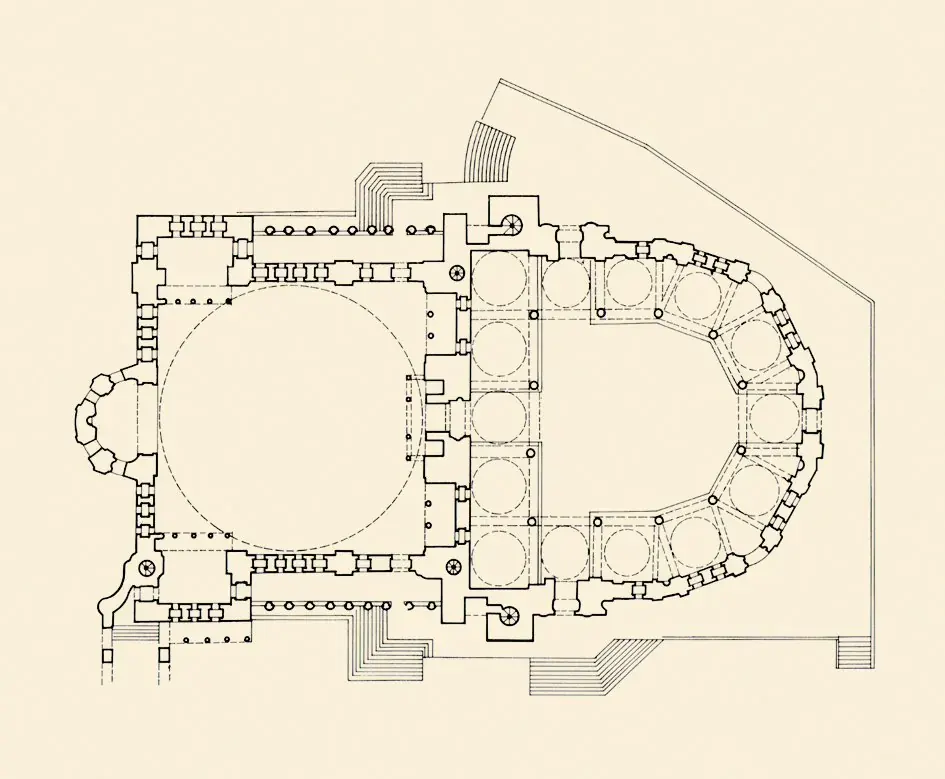
The complex was built on a terraced platform on sloping ground. A volume beneath the terrace formed by the mosque and courtyard—possibly intended as a bazaar/cellar—is said to have remained long unused. The mosque is reached via an outer courtyard with two gates to the east and west. The arcaded inner courtyard, reached by stairs from the outer courtyard, was for the first time in Ottoman architecture laid out in a horseshoe (half-round) form. The inner courtyard has no central fountain; ablution taps are on the side walls of the mosque in the outer courtyard. The outer courtyard also functions as a passage between the Grand Bazaar and Cağaloğlu–Çemberlitaş.
Architectural Features (Mosque)
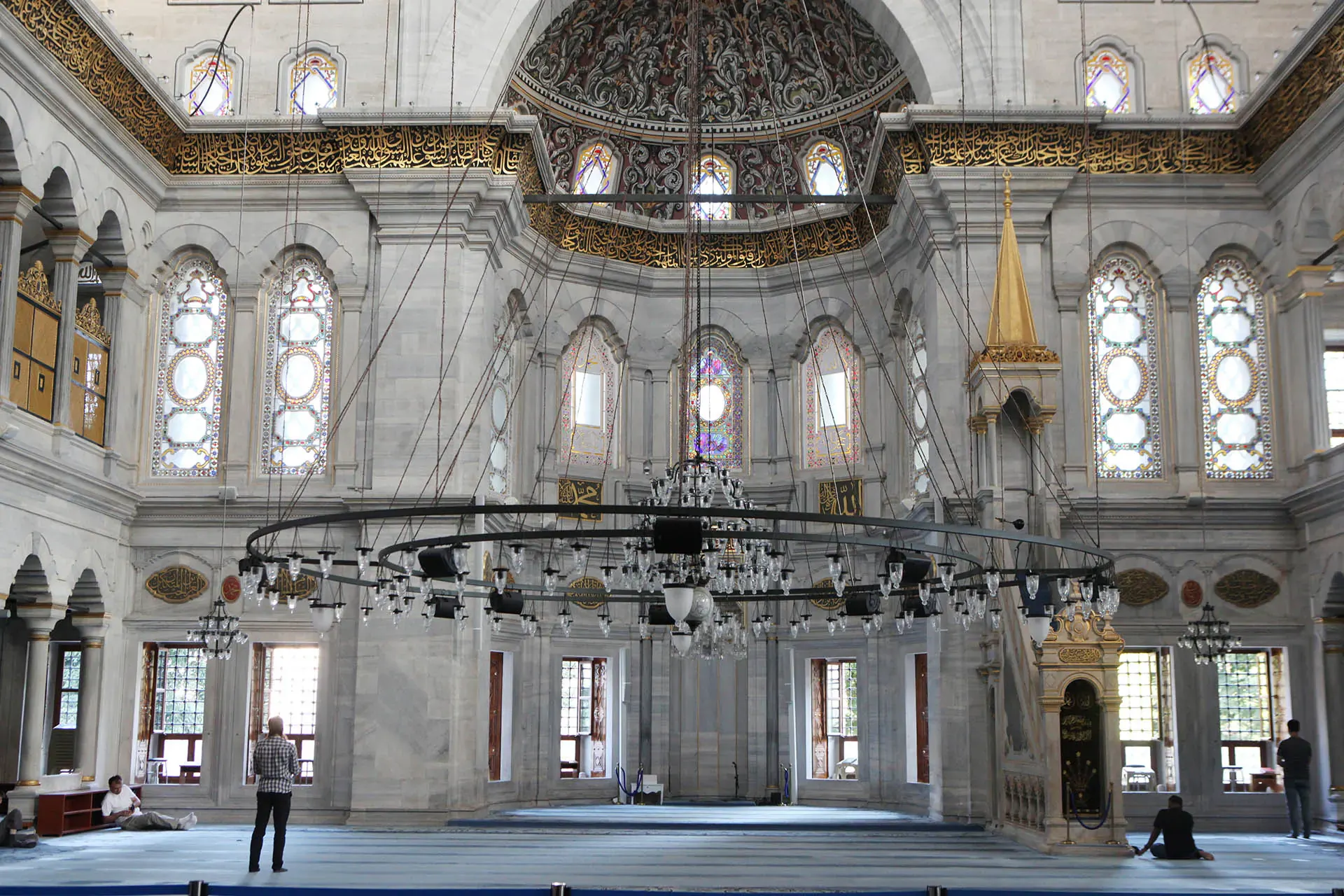
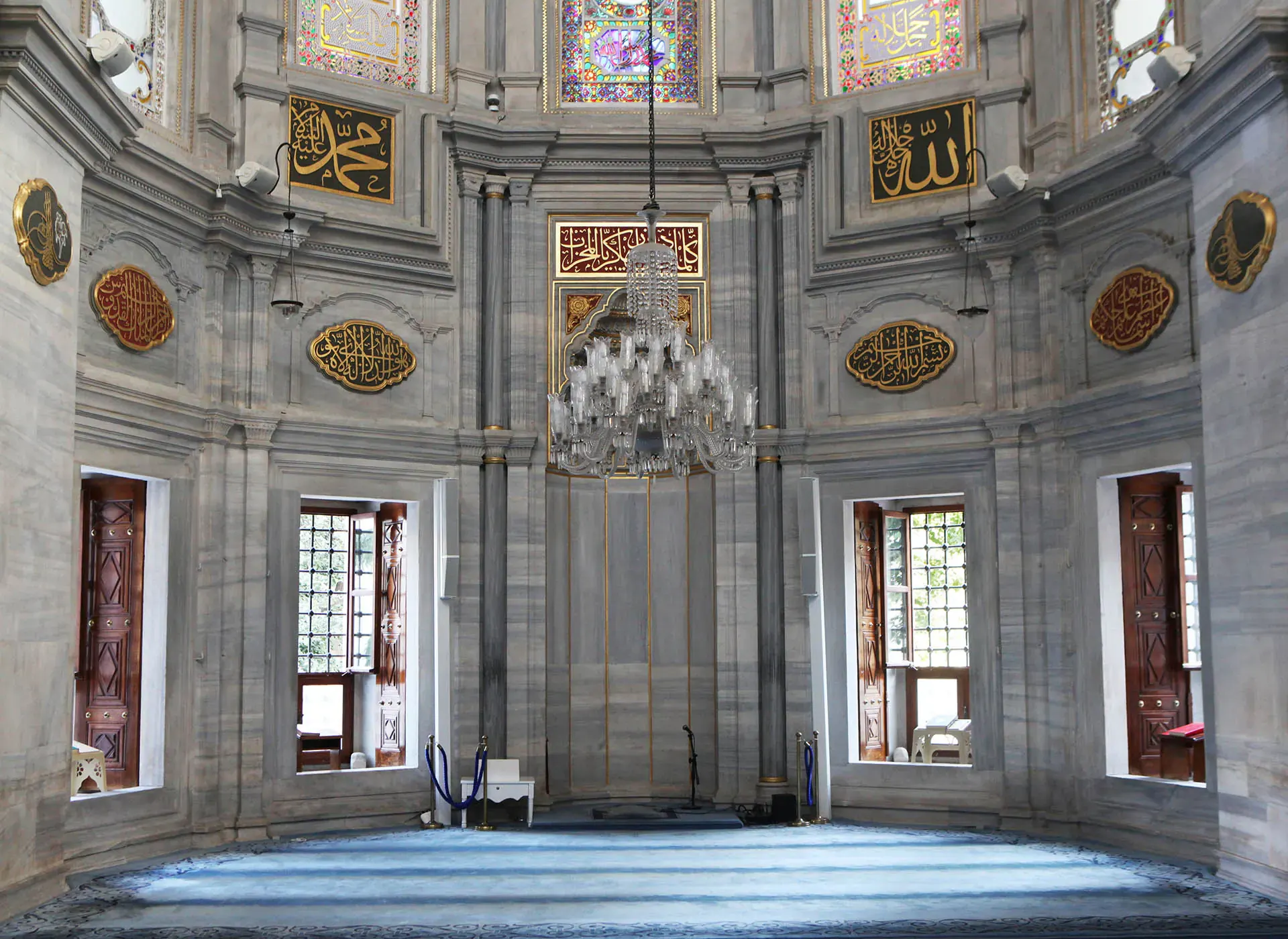
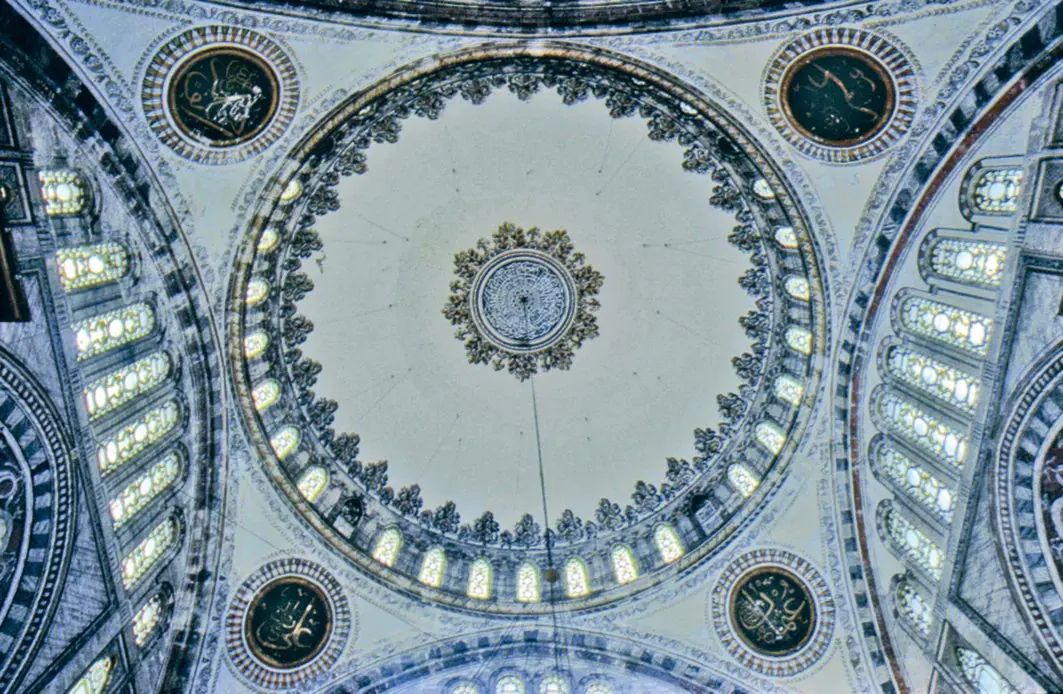
The prayer hall is laid out in a near-square plan and covered by a single large dome. The dome diameter is given as 25.50 m, with reference to period observers (e.g. Le Roy) on brick construction. The mihrab is in a projecting bay covered by a semi-dome. The minarets are described as cut stone, with two galleries and fluted shafts; they were originally lead-capped and given stone caps in the late 19th century. The mosque aims at a bright interior with many window openings; the text cites 174 windows as one of the building's distinguishing features.
Style: Baroque Influence and "New Style" Character
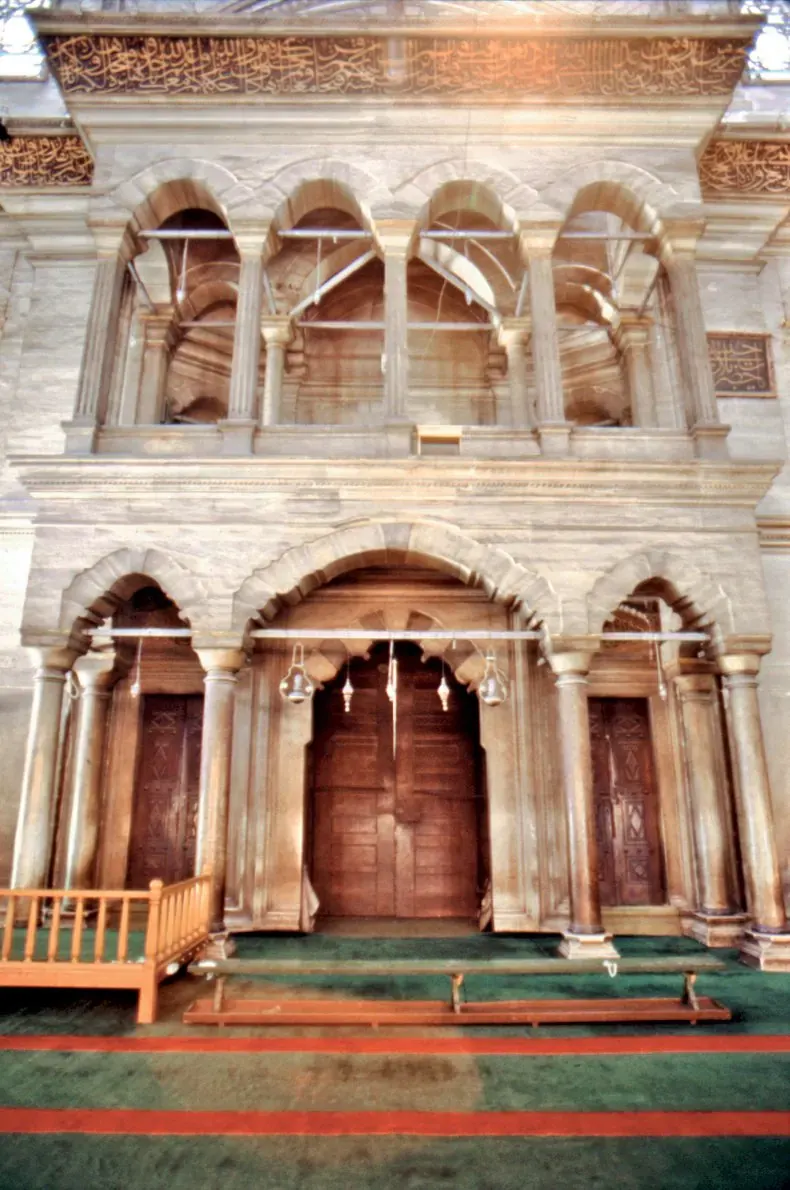
Nuruosmaniye is described as one of the buildings where 18th-century European baroque influence on Ottoman art is most strongly felt in Istanbul. The horseshoe form of the courtyard, window and door arch profiles, the upper layout of the large door niches and the interior decorative language emphasise the baroque character. The marble mihrab and minbar are discussed in terms of a decorative approach with baroque motifs. The most direct continuation of Turkish artistic tradition is said to be the inscriptions and calligraphy seen inside and out.
Calligraphy Programme and Inscription Bands
One of the most striking written compositions in the mosque is the long band inscription described as the "first and only example" written without interruption. The band is said to be about 11 m high and 115 m long, executed by the calligrapher Mumcuzade Mehmet Efendi and to contain the complete Surah al-Fath (29 verses). Oval areas above the lower windows contain the Names of God (Esmaü'l Hüsna) beginning with the Basmala; the dome carries the verse from Surah at-Tawbah 112. Medallions on the walls in red script are said to refer to the names of the Prophet (Ahmad, Mahmud, Muhammad, etc.) in a form not found in other mosques.
Sultan's Pavilion / Gallery and Ramp System
On the east side of the mosque a large ramp provides access to the sultan's pavilion. The ramp begins after a round-arched door, turns left at the top and connects to the mosque and the gallery. The spaces at the end of the ramp are described as partly resolved with shops and partly with a layout on columns. This ramp and gallery arrangement is a defining element in the operation of the complex on a tight site.
Madrasa and Soup Kitchen
The madrasa and soup kitchen are said to stand in the outer courtyard in the qibla direction, with inscriptions dated 1755. The madrasa has a square plan with 12 cells of varying size and a classroom around an arcaded courtyard. The waqf deed stipulated teaching of writing; the practice room is recorded as the place where calligraphers Abdullah Zühdi and Filibeli Ârif Efendi practised for years. The soup kitchen adjoins the madrasa; the rectangular courtyard gives access via doors to the madrasa and kitchen to the south, with a long narrow refectory to the west and a small service space to its north.
Library
The library was built northeast of the mosque on a raised platform with a few steps, the lower storey being a basement. It was designed with an original plan in baroque spirit: the reading room is described as having a central dome on four free-standing columns, fluted semi-domes in two directions and a covering system extending with a vault in one direction, creating a layered interior effect with an arcade on columns. The book room is to the west and connects to the reading room by a round-arched door. The text also states that the library held over 5,000 manuscript and printed works.
Tomb, Fountain and Çeşme
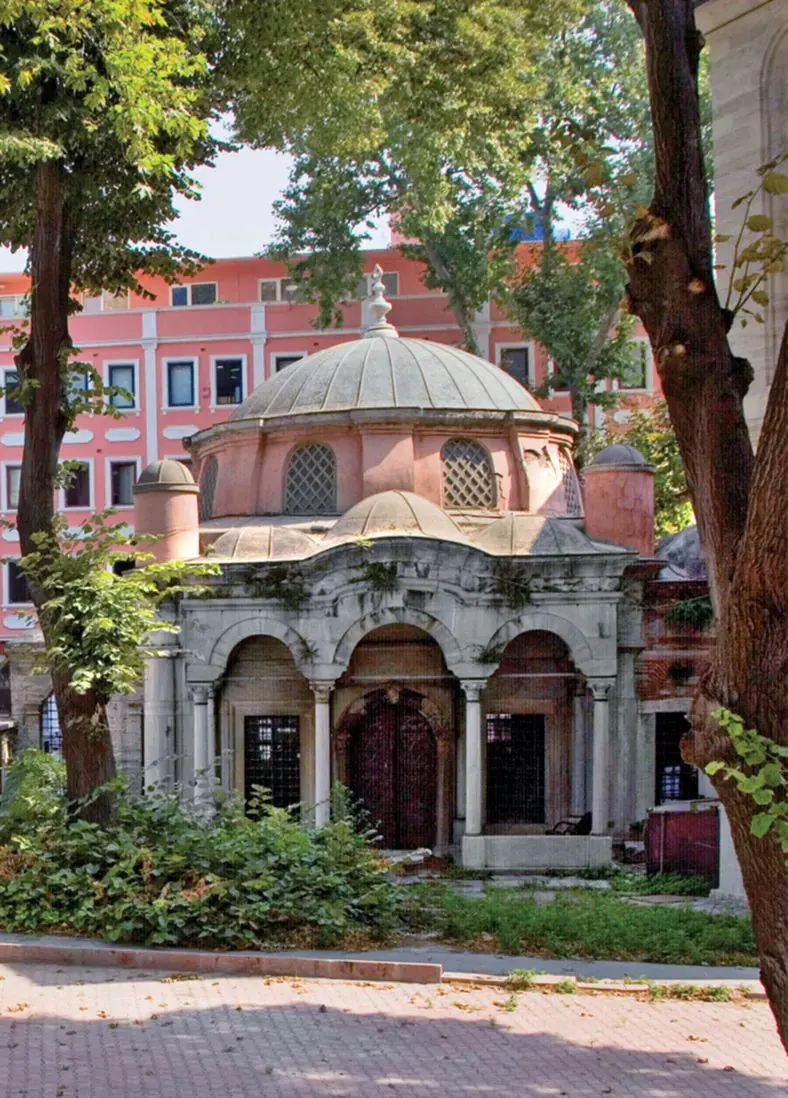
The tomb between the library and sultan's pavilion is described as square in plan, domed, with a three-bay portico in front. Şehsuvar Valide Sultan (consort of Mustafa II and mother of Osman III) and other dynasty members are buried there. The sebil and çeşme outside the gate opening to the Grand Bazaar are described as elegant examples of Turkish baroque art, with conscious use of baroque motifs in marble work and bronze grilles. The complex's water supply is recorded as coming from the Halkalı waters via the Nuruosmaniye water line.
The "Empty Tomb" Claim and Clarification
Although the text mentions that a tomb was built for Mahmud I and Osman III and that neither was buried there, the same text clearly states that other dynasty members are buried in the tomb. The report therefore concludes: the Nuruosmaniye Complex has a tomb structure with burials inside; it is separately noted that Mahmud I and Osman III were not buried there.
General Assessment
Nuruosmaniye Mosque and Complex, with its position beside the Grand Bazaar, horseshoe-plan courtyard, large dome, sultan's gallery connection via ramp, baroque decorative character and strong calligraphy programme, is one of the most representative monuments of the 18th-century "new style" quest in Istanbul. The integrated layout of the complex is also notable for showing that madrasa, soup kitchen, library, tomb, sebil-çeşme and shops could be combined even on a narrow urban parcel.
Images
Questions about this project? Get in touch
← Back to Restoration Projects