
Pertevniyal Valide Sultan Complex
Aksaray / Istanbul
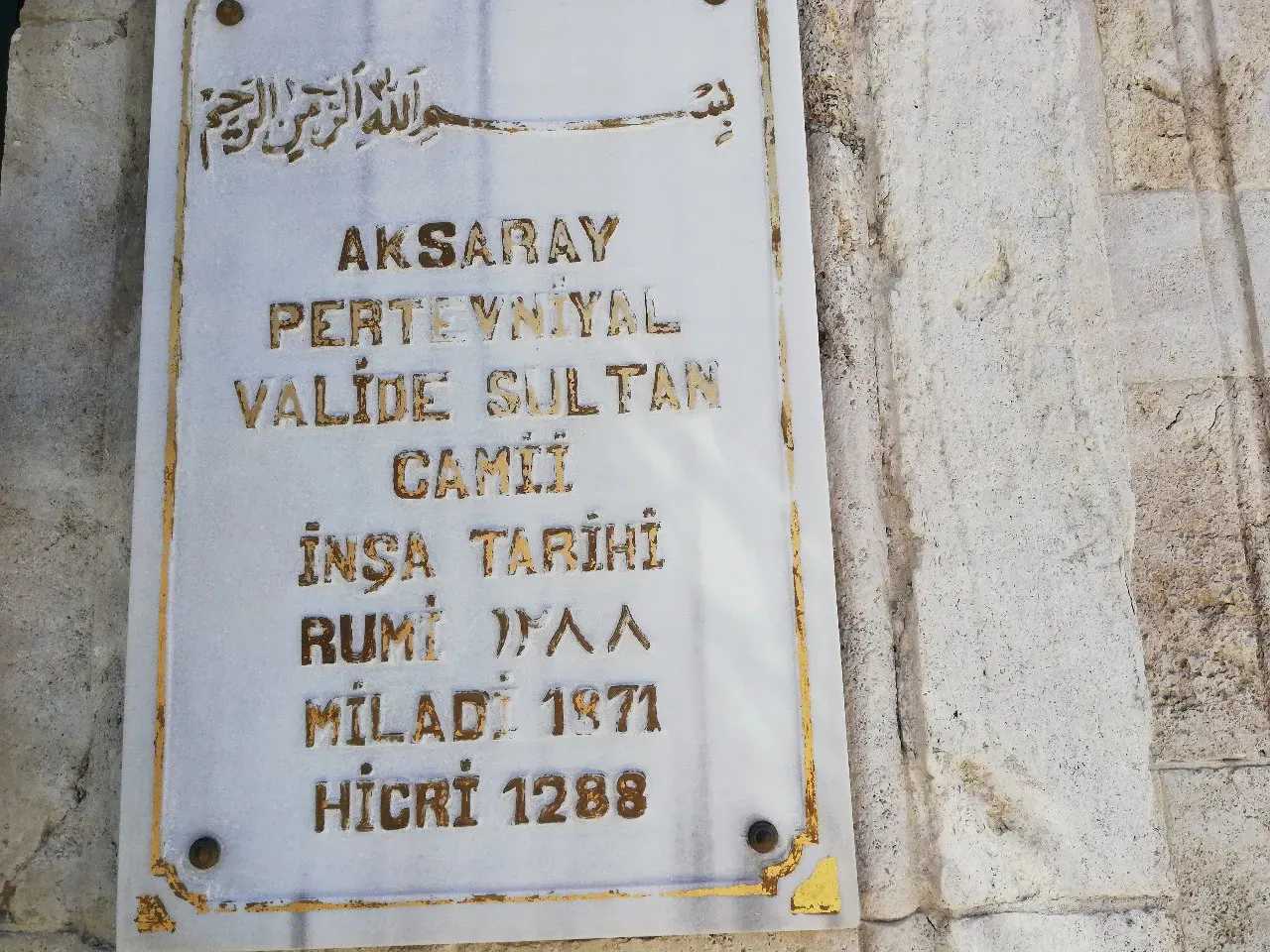
The Pertevniyal Valide Sultan Complex is a comprehensive pious foundation built at Aksaray Square by Pertevniyal Valide Sultan, wife of Mahmud II and mother of Sultan Abdülaziz. The complex was designed to comprise a mosque, school (mektep), tomb, tomb-keeper’s room, library, timekeeper’s room (muvakkithâne), police station, six fountains and seven shops. Construction records for the complex cover 1867–1871 and are held in the Topkapı Palace Archives in 24 documents.
Construction Process, Expropriation and Organisation
The site was enlarged by purchasing the burnt-out Kâtib Mosque plot in Aksaray and surrounding land; after two years of expropriation, expenditure of 753,865 kuruş is recorded. Supervision was in the hands of building superintendent Hüseyin Bey (assistant Hüsrev Bey), scribe Sâmi Efendi, and foundation administrator Bogos Bey (later Mihran Bey). Architectural responsibility was assigned to “master builder/architect” Sarkis (Balyan) Bey; his assistants—brothers Agop and Bedros Bey—and Oseb Bey (motif drawings) and his assistant Agop (Balyan) Bey are mentioned. These records show that the claim in some sources that the Italian Montani Efendi was the architect is incorrect.
Construction of the complex lasted 121 weeks from 16 October 1868 to 9 January 1871. The mosque, tomb, halls and rooms, the opposite police station and seven shops (tobacconist, kaymak seller, milkman, pastry seller, butcher, helva seller, grocer) cost a total of 3,980,896.25 kuruş, paid from Pertevniyal Valide Sultan’s foundation revenues. The foundation stone was laid at an “auspicious hour”: 4 January 1869 (20 Ramadan 1285) at 04:15.
“As large as Ortaköy Mosque”: Scale and Urban Position
Sarkis Kalfa is said to have sized his design to Pertevniyal Valide Sultan’s instruction “as large as Ortaköy Mosque”—the prayer hall matches Ortaköy’s, while the courtyard was made wider. Because the complex sits at a busy transport and junction node like Aksaray, it became one of the monuments most damaged by later planning interventions; today it lies below street level as a result.
Courtyard Gates and Inscriptions
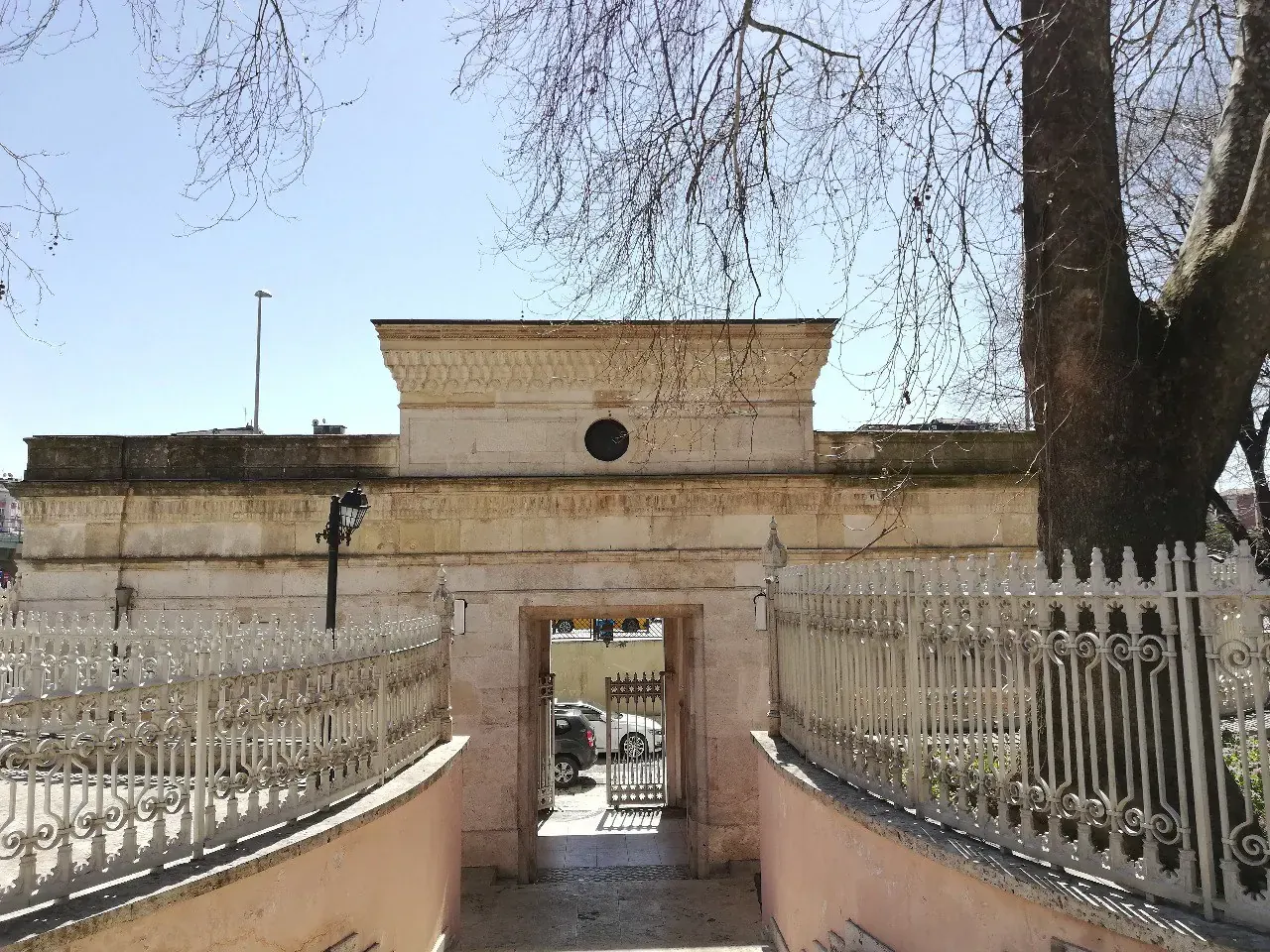
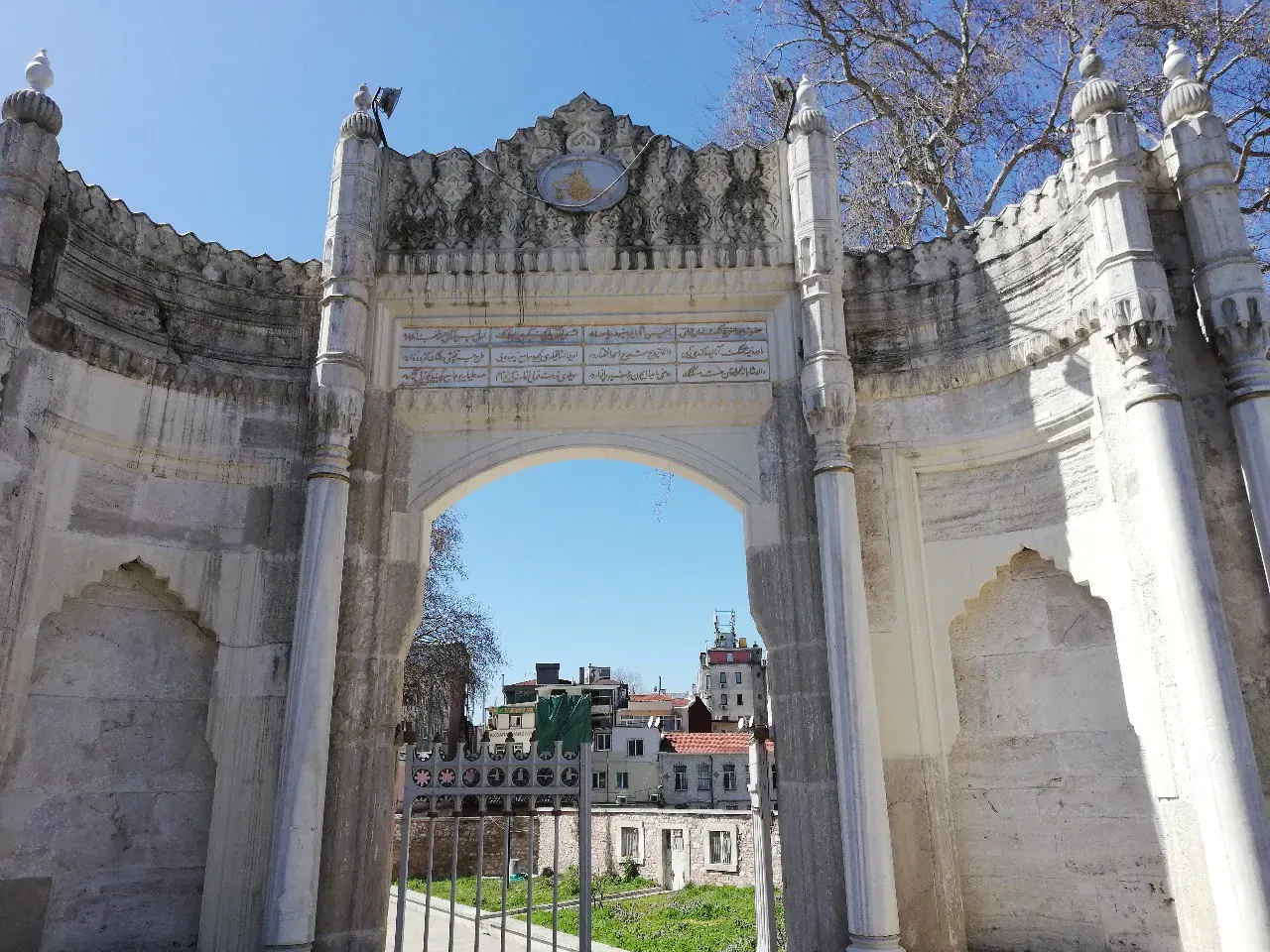
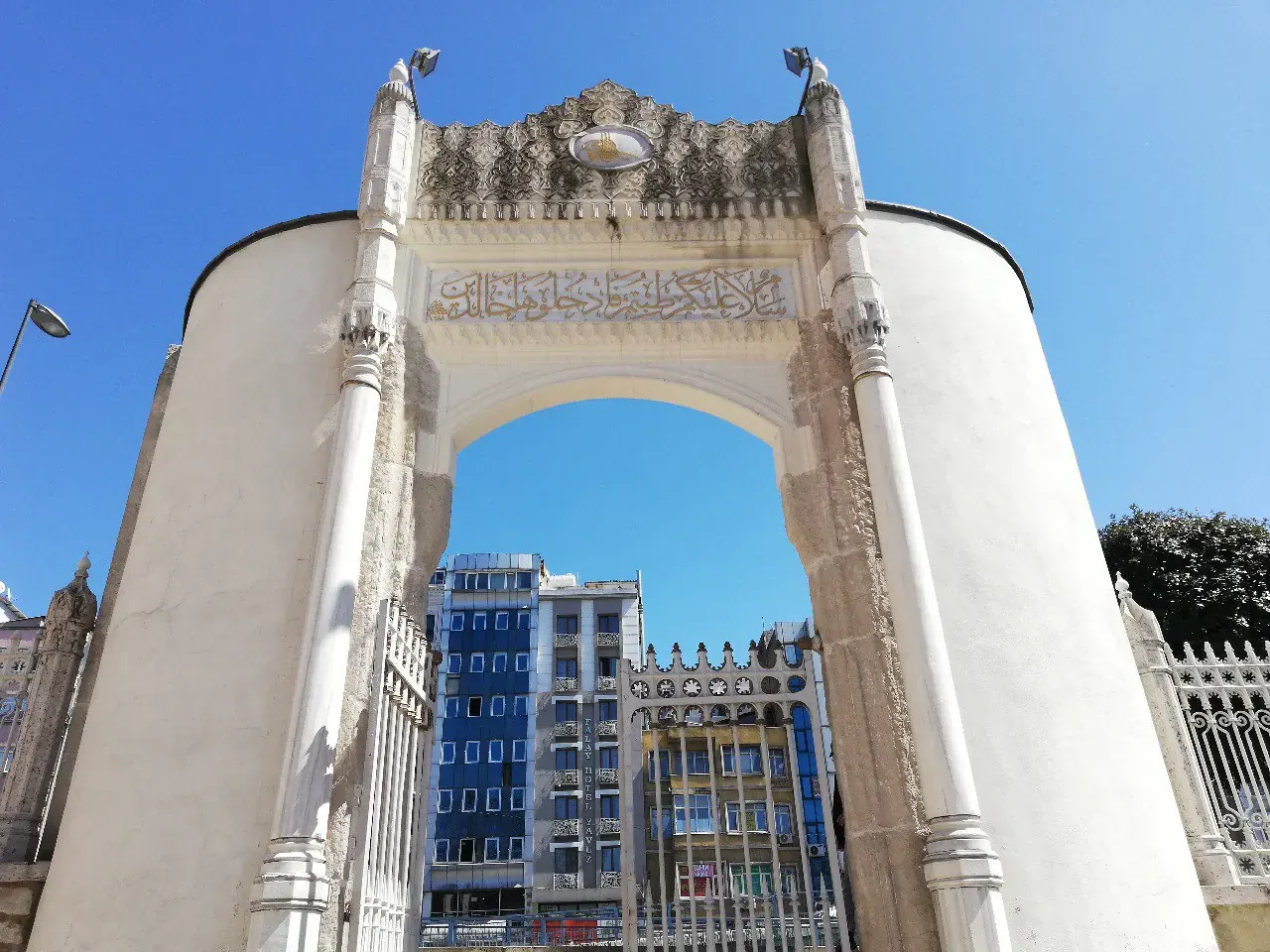
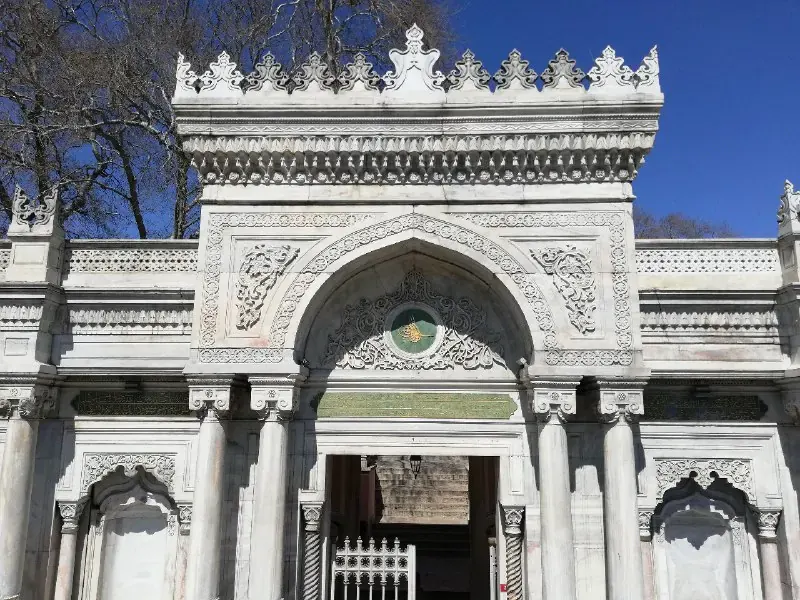
The mosque courtyard is entered through three gates from the east, west and north.
The north gate is plainer.
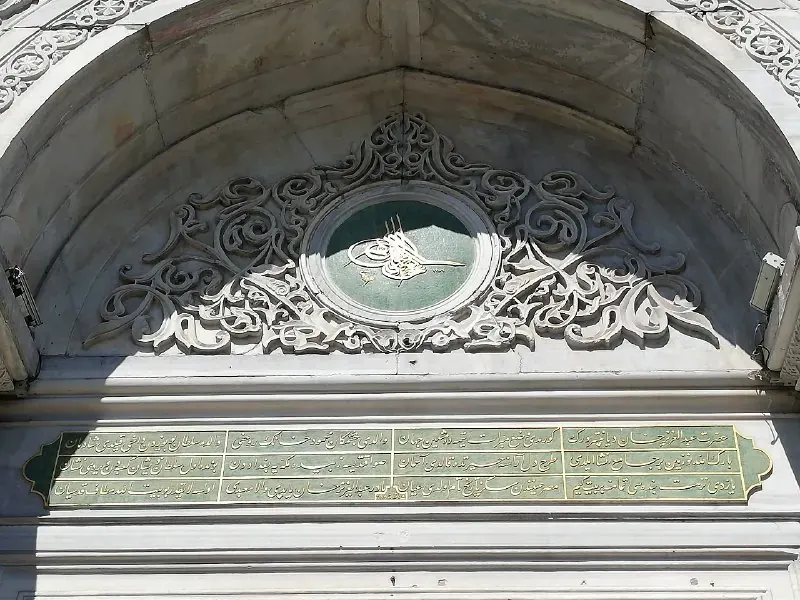
The east gate is enlivened by oval side surfaces and niches; above the depressed arch opening is a six-couplet inscription and a tughra above.
The west gate is monumental: a marble relief lotus-rûmî vegetal pediment centres on Sultan Abdülaziz’s tughra. Twin columns and a pointed arch are framed by a thin band; spandrels are filled with vegetal ornament; above are a muqarnas frieze and a large palmette finial. Some researchers have suggested this gate may be attributed to Giorgio Cociffi, but this does not appear in the archival documents.
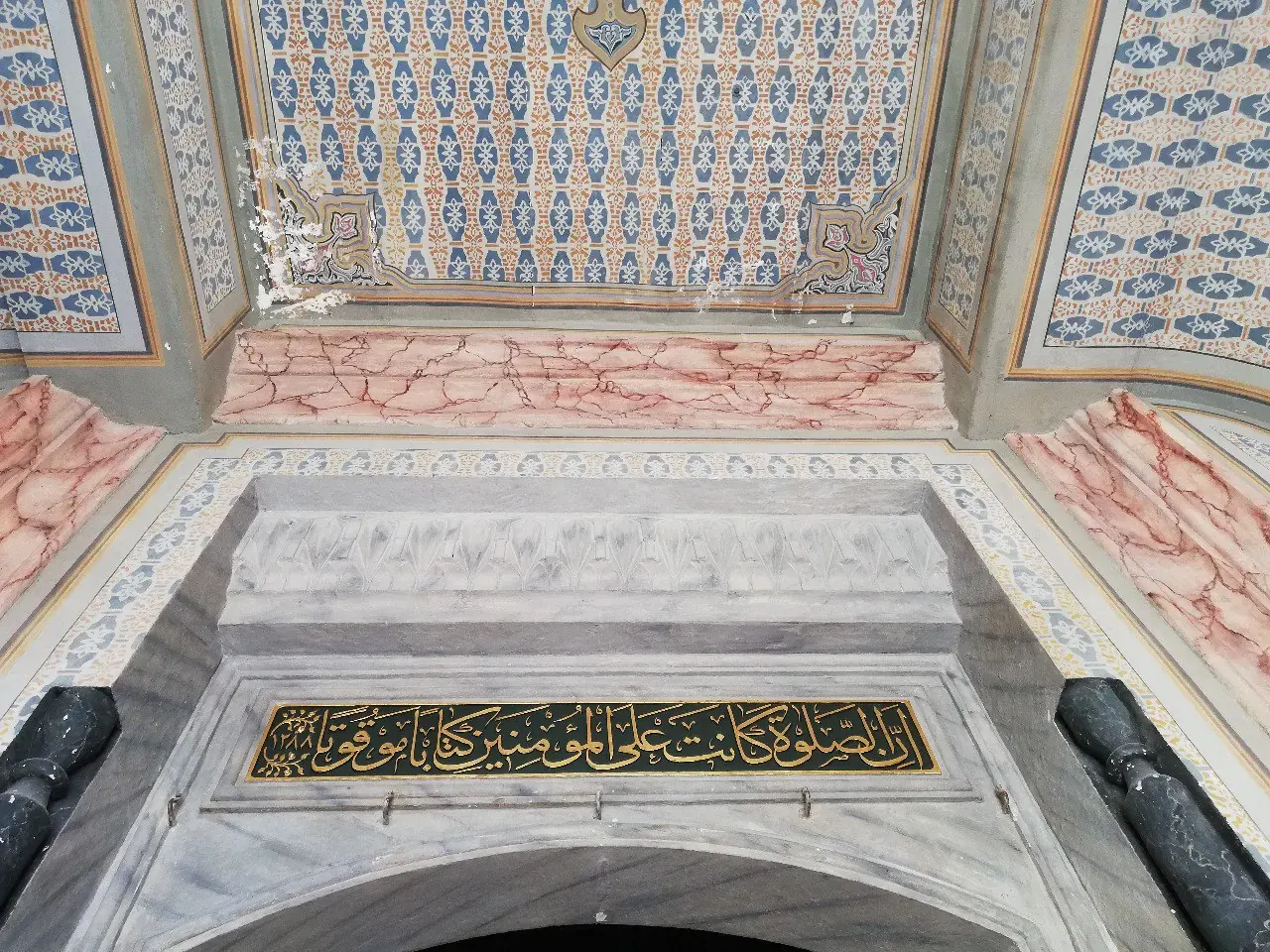
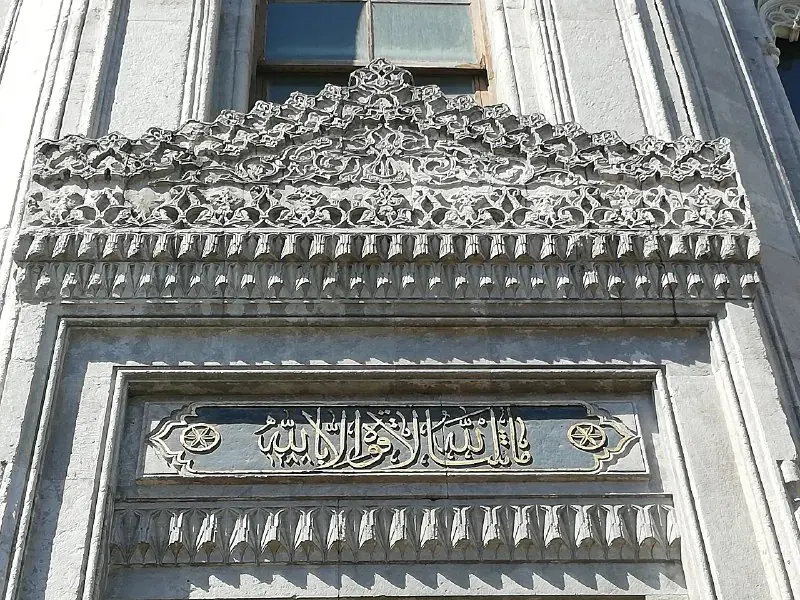
On the east and west gates, six-couplet inscriptions by the poet Nüzhet, dated 1871 (1288), were written in ta‘lîq script by Calligrapher Abdülfettah Efendi. On the other gate, the verse “Selâmün aleyküm tıbtüm fe’dhulûhâ hâlidîn” appears in celî sülüs script by Calligrapher Mehmed Rifat, dated 1871.
Architectural Style and Facade Composition
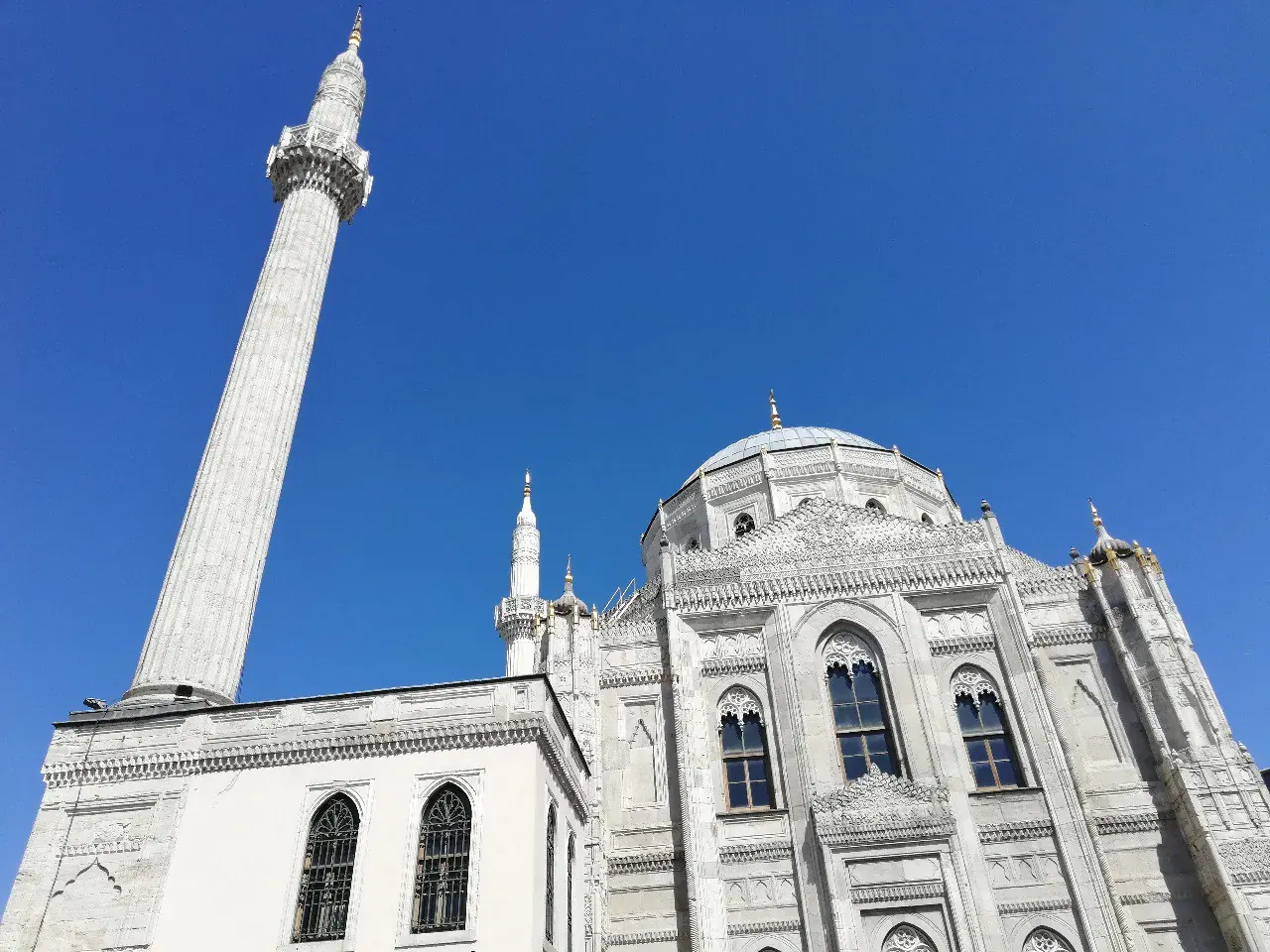
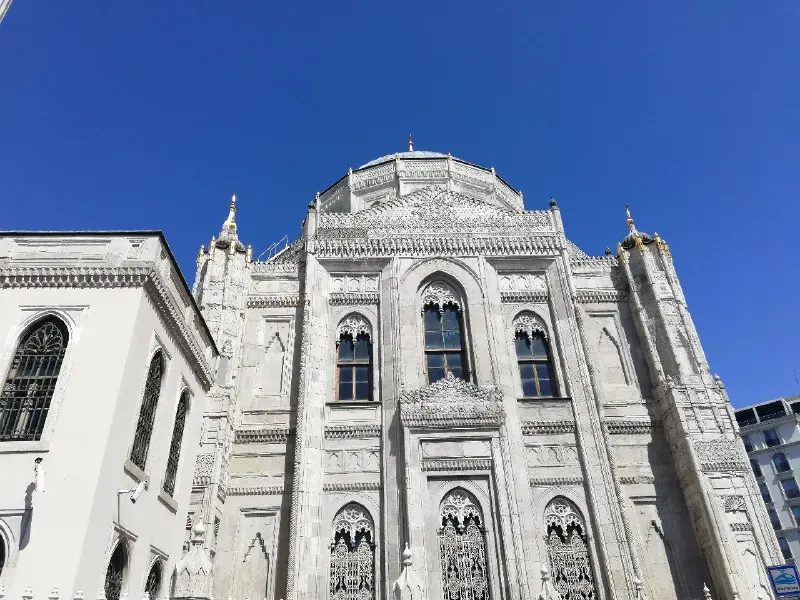
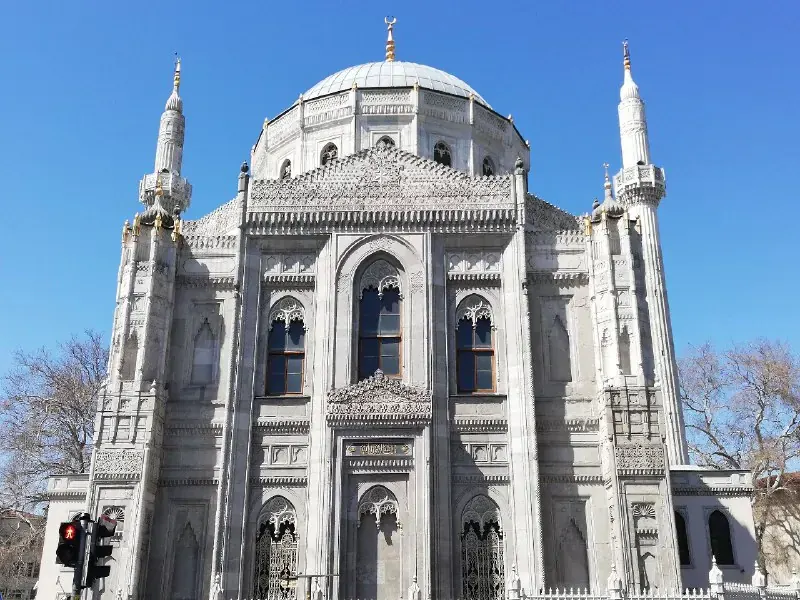
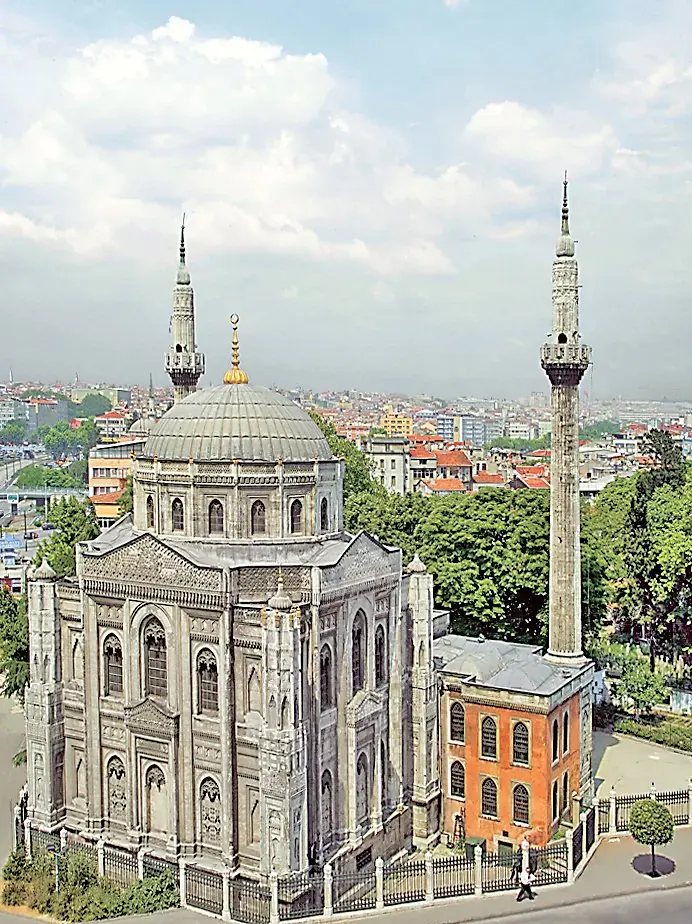
The mosque was built in an eclectic style. As often in late Ottoman mosques, it has a single-dome scheme on four large piers with four large arches; here the segmental arches are not emphasised externally and the drum is very tall. The hexagonal drum has geometric interlace and muqarnas eaves below; each facade has one large Gothic-style window.
The prominent corner piers rise like towers; the qibla wall has two lower and three upper pointed-arch Gothic windows; the other two facades have three lower and three upper pointed-arch windows. Facades are crowned by triangular pediments; pediment and window-head triangles carry large rûmî–palmette ornament. Below the pediments, cartouches contain the phrase “Mâşallah lâ kuvvete illâ billâh” in celî sülüs. Neo-Gothic window pointed-arch fills are in marble; cast grilles follow a design developed from the classical Ottoman rûmî–palmette frame.
Entrance Layout, Imperial Pavilion Units and Library
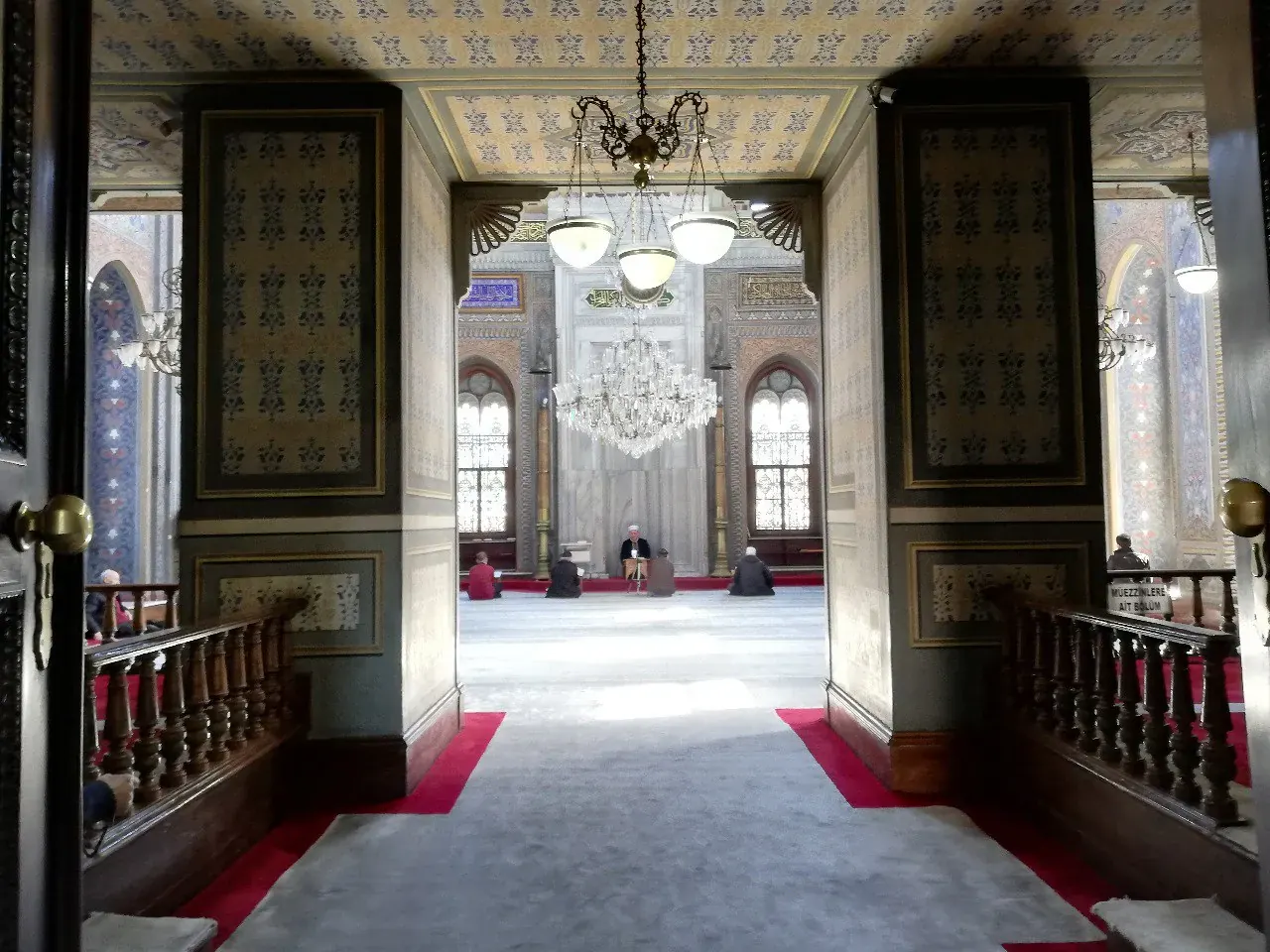
From the projecting platform of the main gate one enters a vestibule; from there, corridors left and right lead to the harem and selâmlık parts of the imperial pavilion. These side units are separate from the prayer hall:
The right-hand unit was used for a time as the library; the books were later transferred to Süleymaniye Library.
The left-hand unit is entered by a separate external door and contains the stairs to the valide sultan’s apartment on the upper floor.
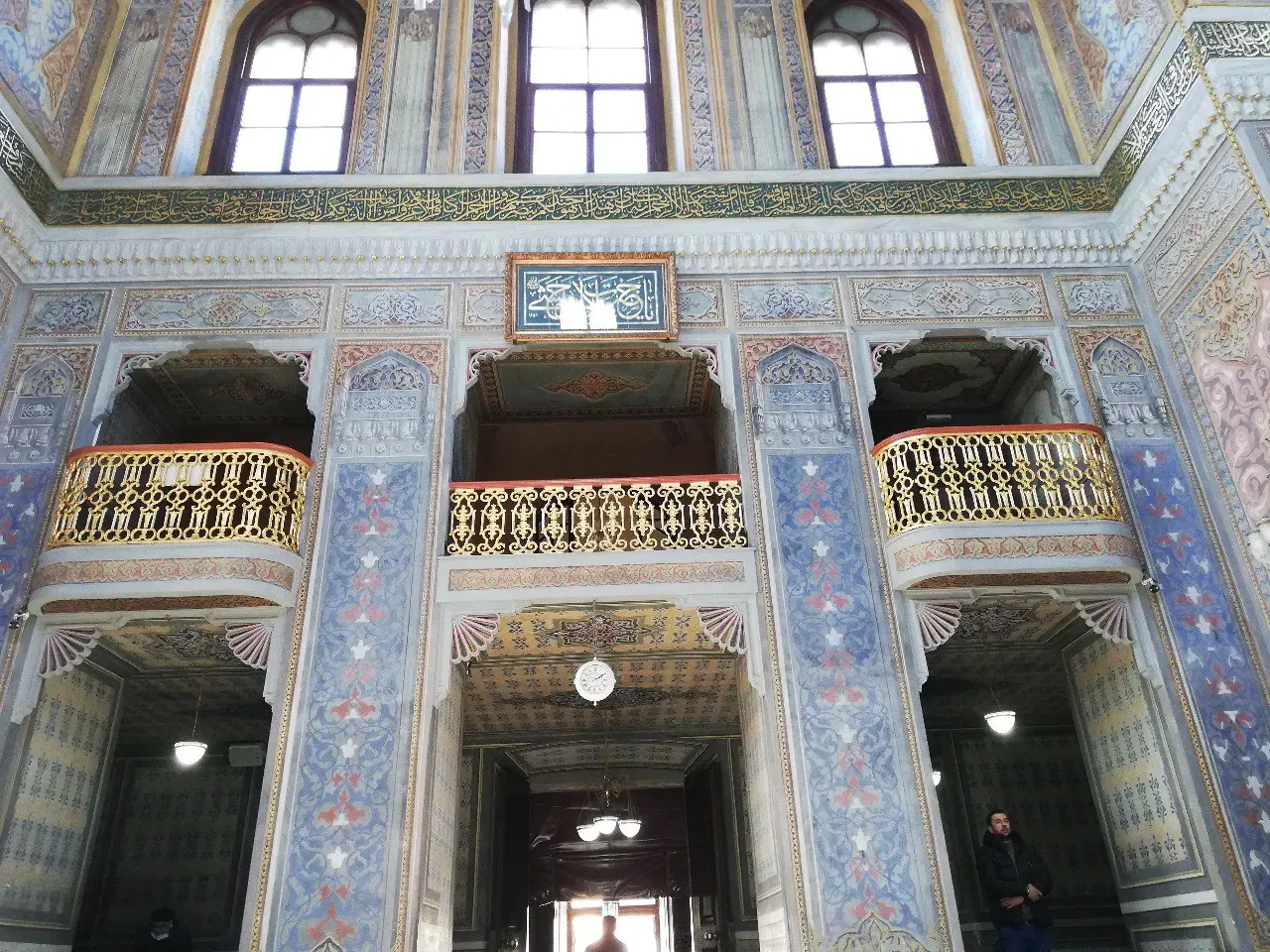
Beyond the axial second door, a triple-opening intermediate space leads into the prayer hall; its upper floor also opens onto the hall in triple form like a gallery.
Interior: Dome, Scale and Dense Decoration
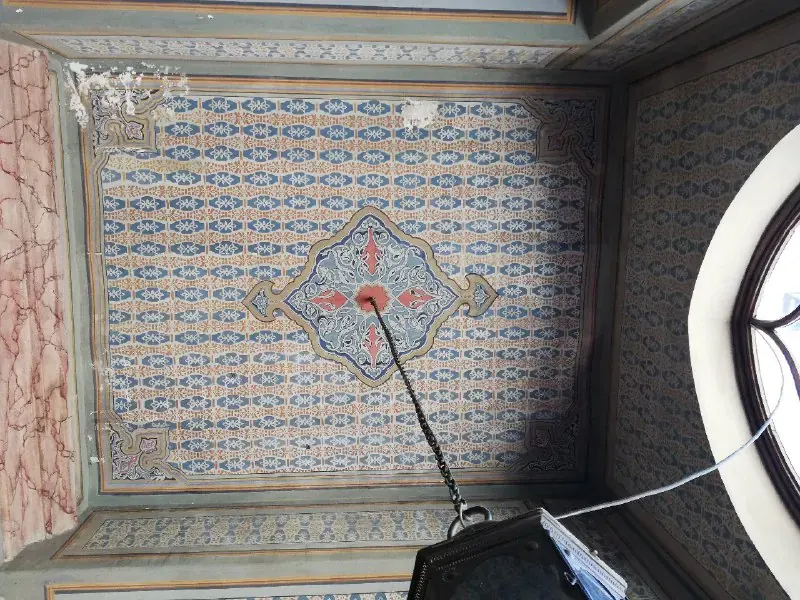
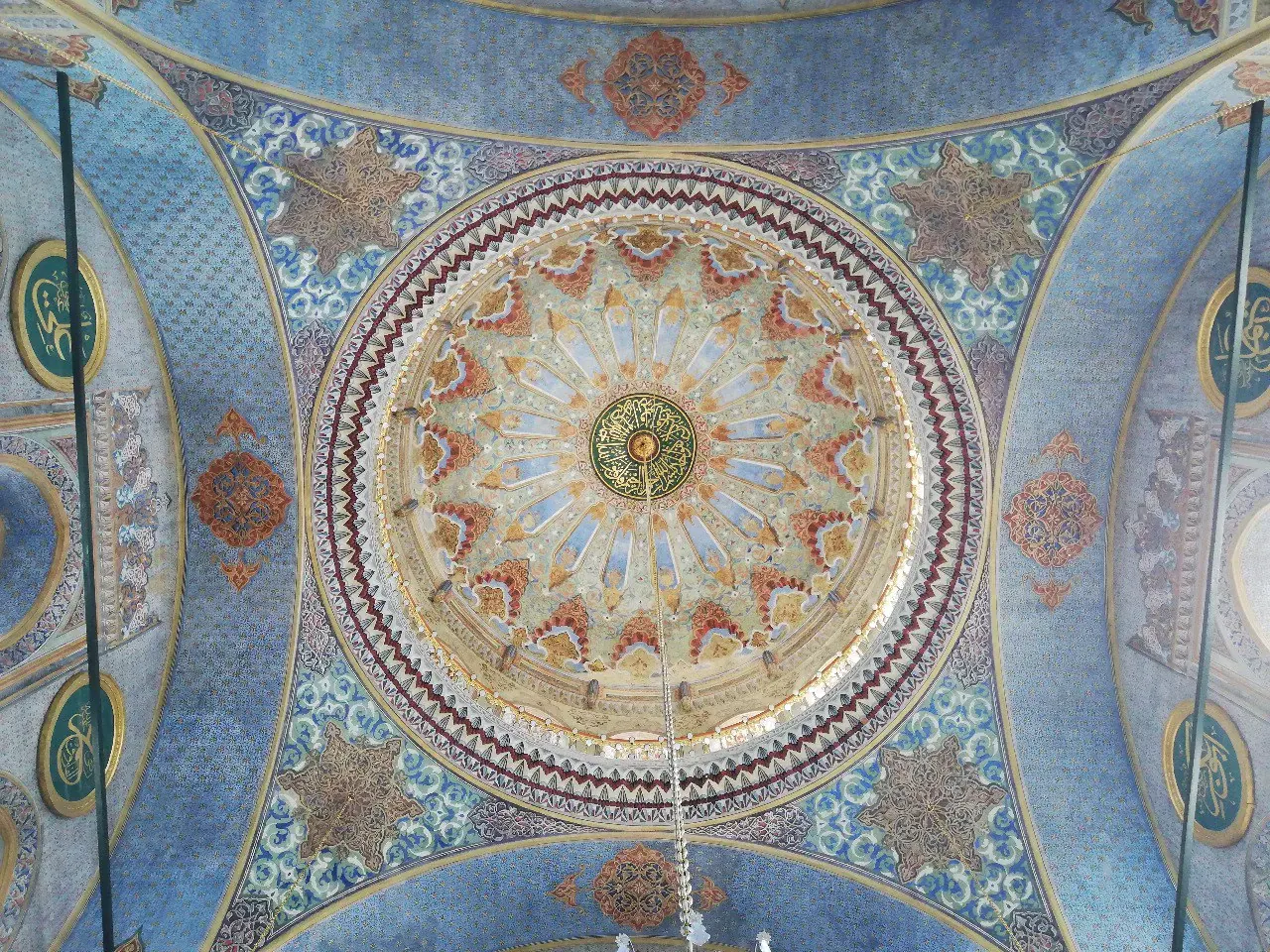
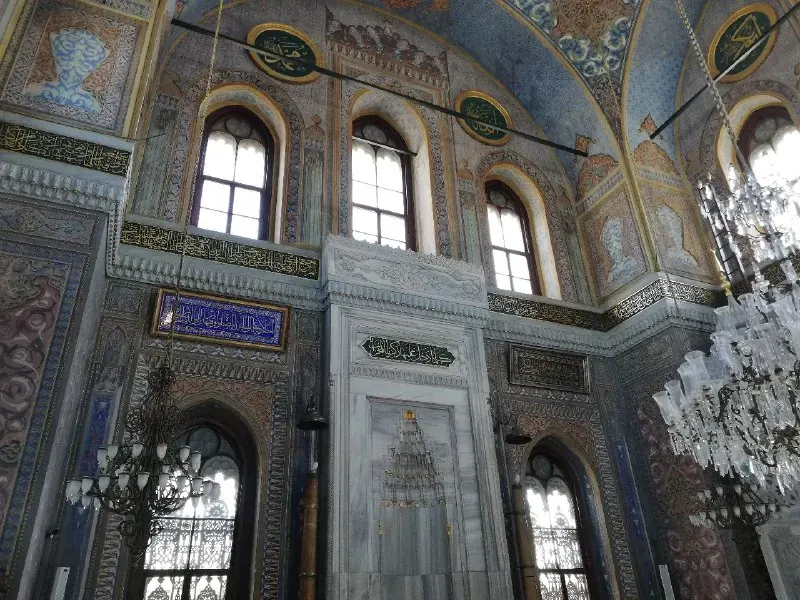
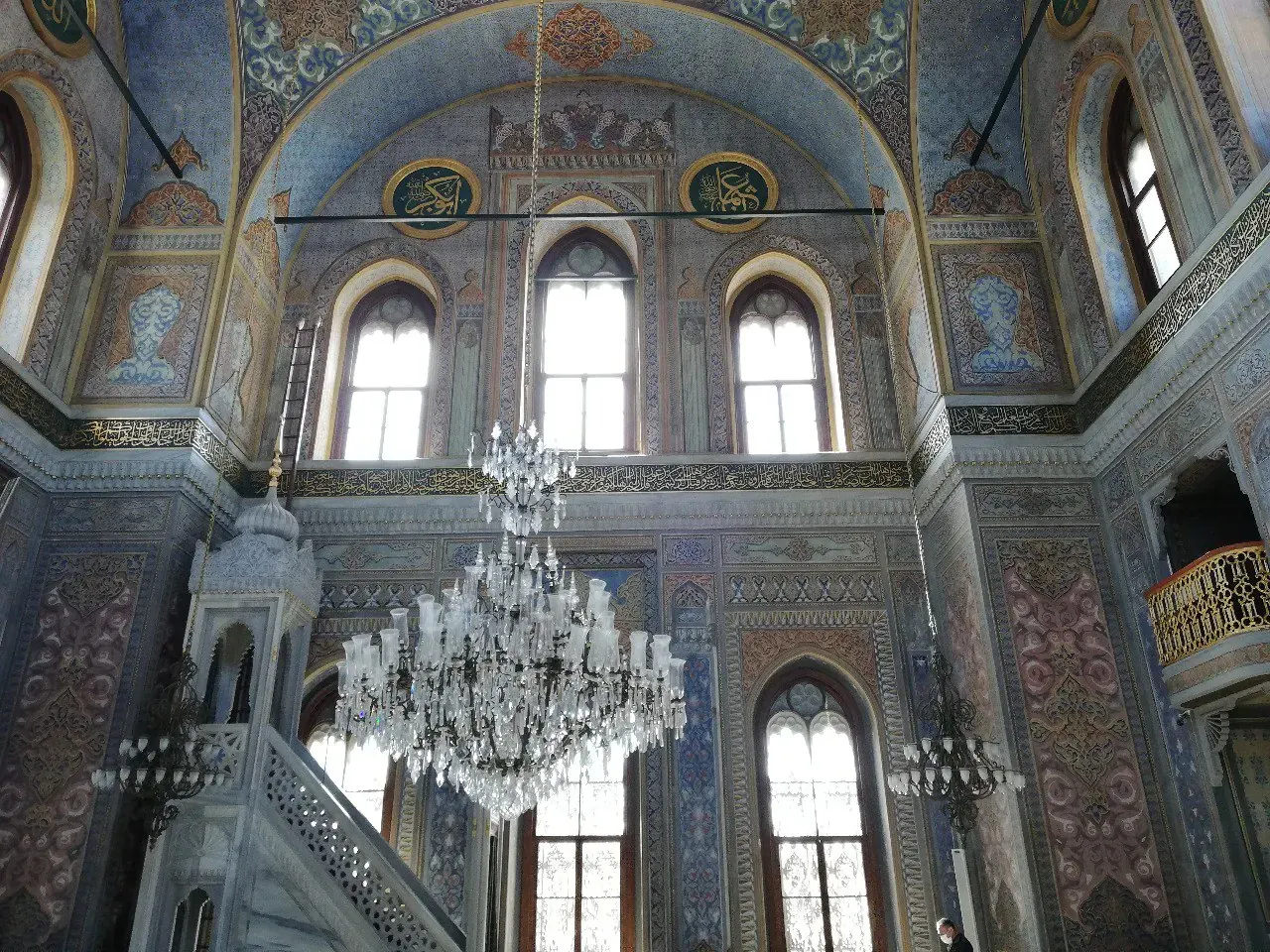
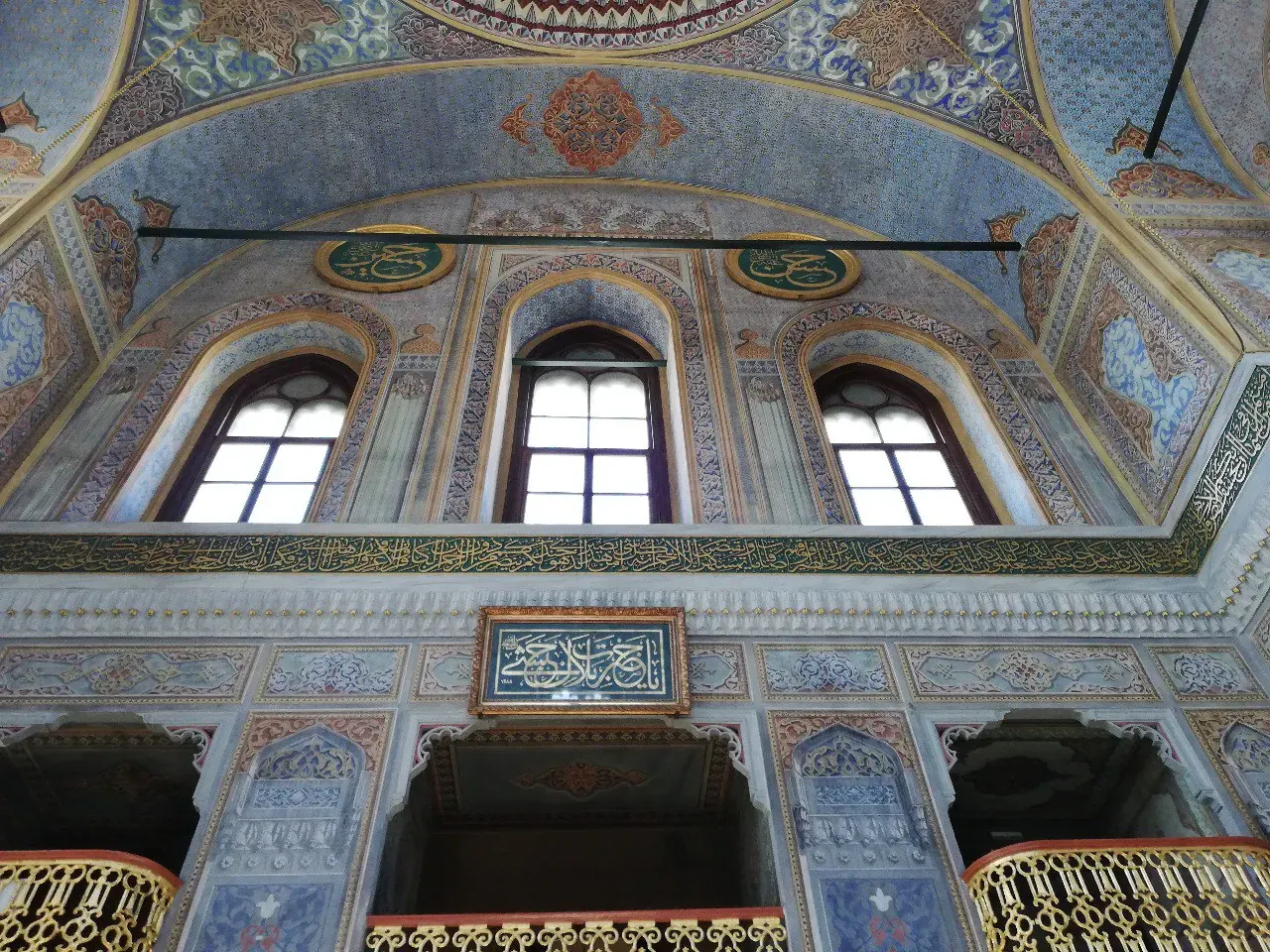
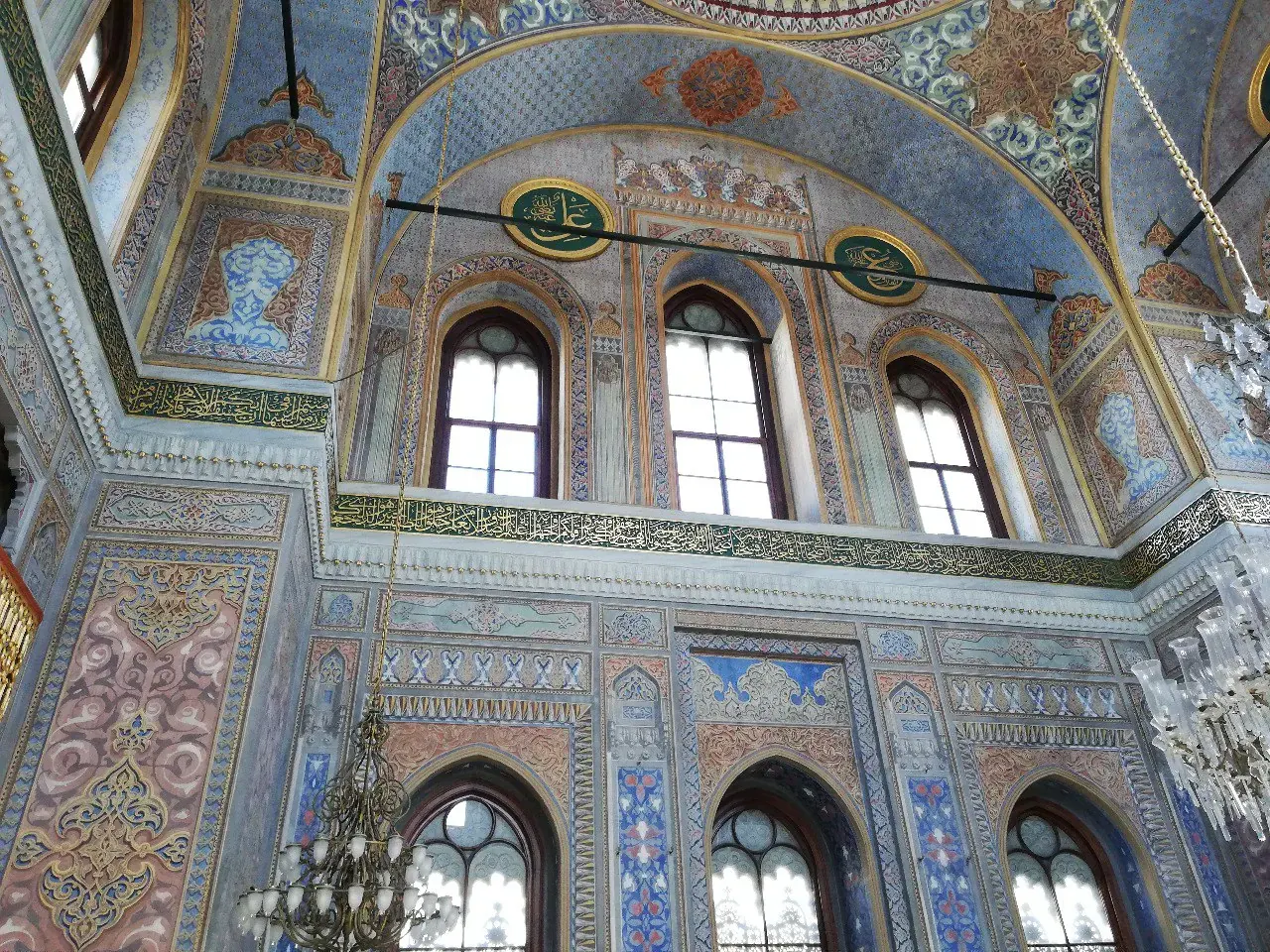
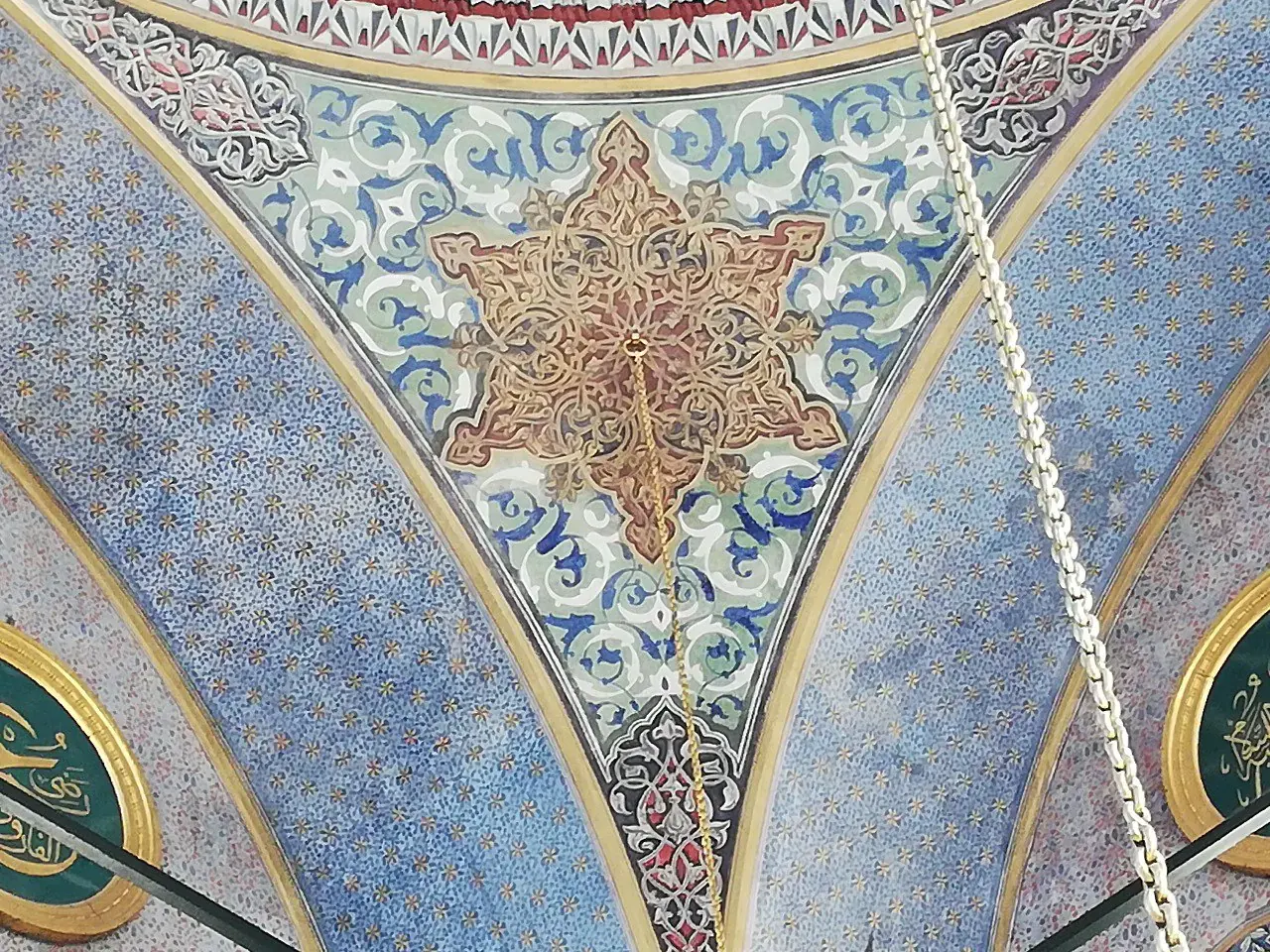
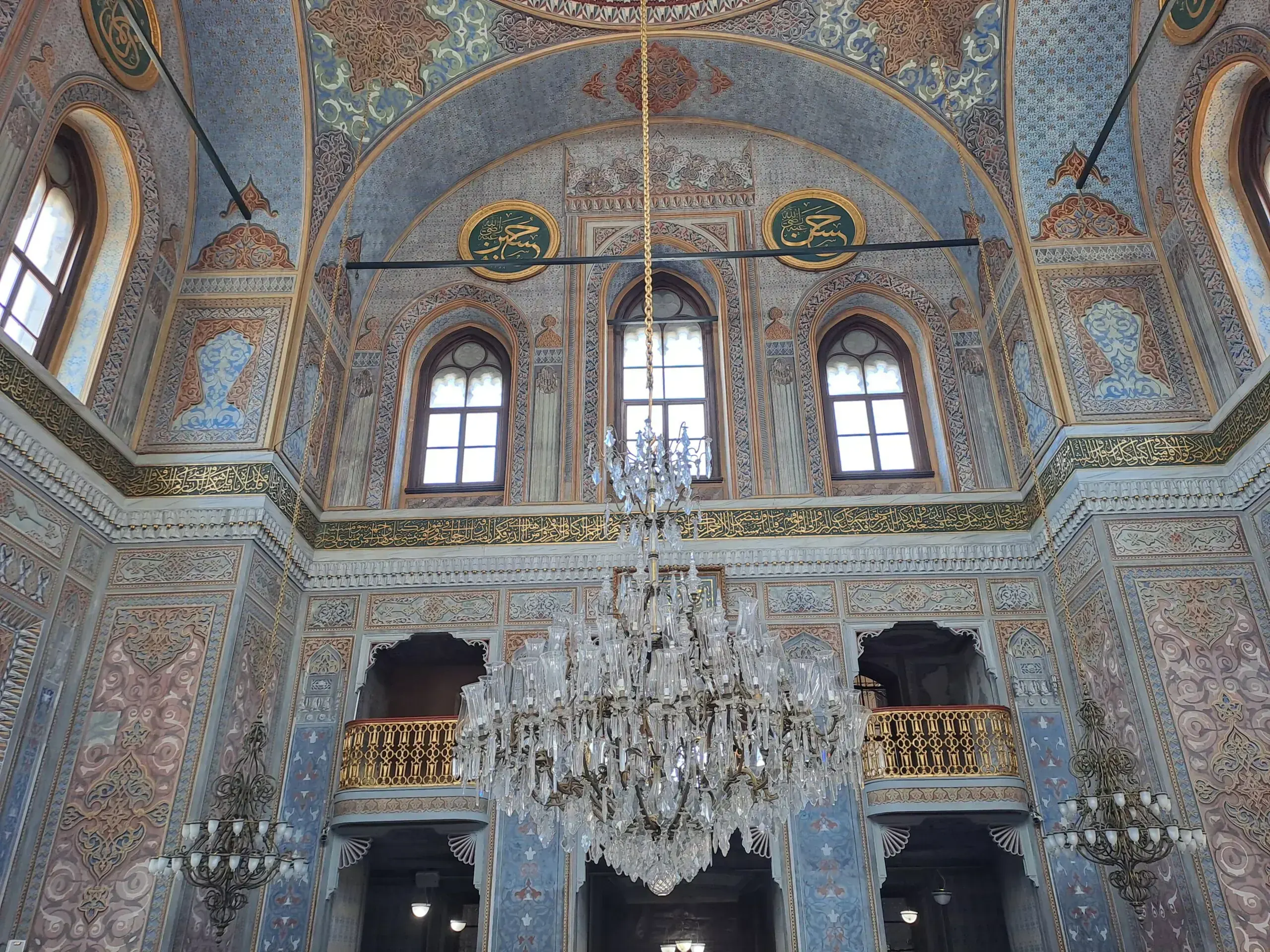
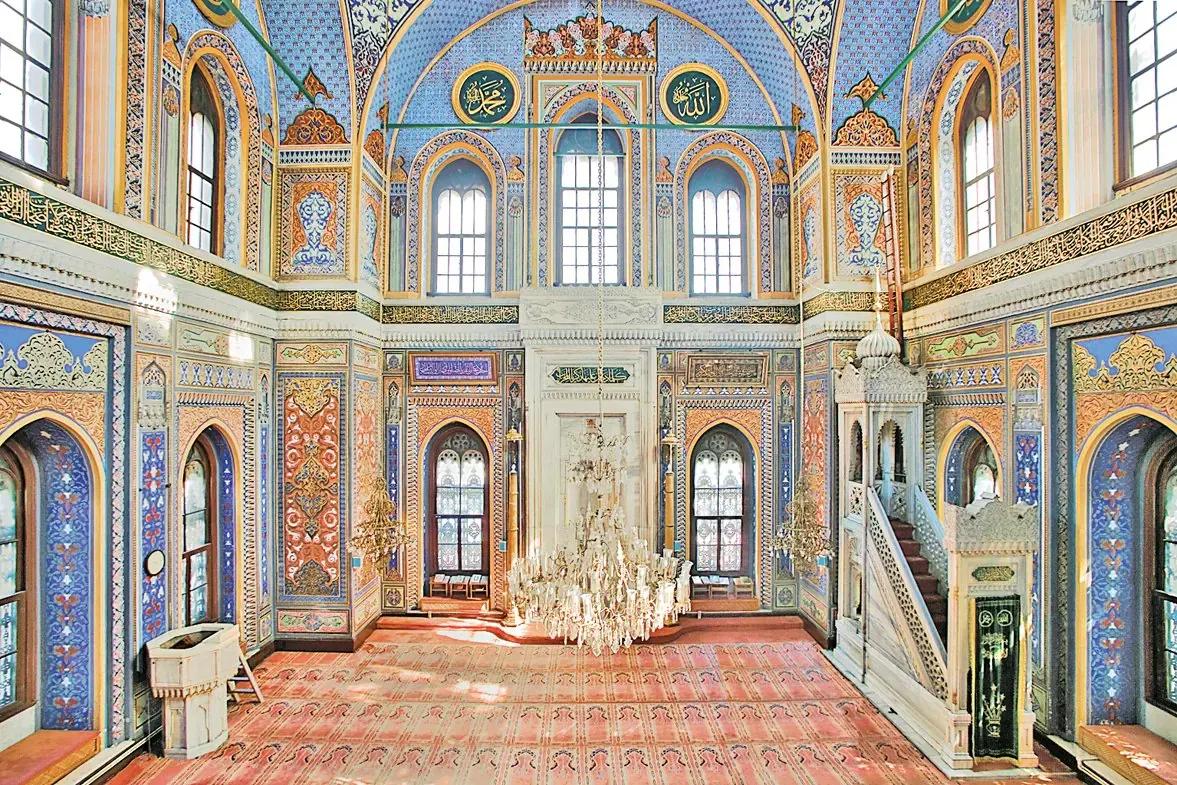
The dome over the prayer hall (on pendentives) is given as 10 m in diameter; although modest for the building’s scale, the four large arches yield an interior width of 14 m. The interior is described as “intensely” decorated with pen work; the programme is dominated by blue, with vegetal motifs and star patterns. Large stars appear on the pendentives and a calligraphic medallion at the dome centre.
Above a double band of muqarnas marble strip running around the walls is an inscription band; Sûrat al-Mulk is written here in celî sülüs. The mihrab and minbar are marble: the mihrab is in classical form (muqarnas hood, sunburst finial); the minbar combines classical elements with a bulbous segmented dome-like top instead of a spire.
Minarets
The minarets are placed to the north of the building, beside the spaces flanking the entrance; they are described as fluted single-gallery minarets on square bases with stone caps. The contemporary observation of “pencil-thin” minarets supports the period’s stylistic perception.
Fountains and Inscriptions
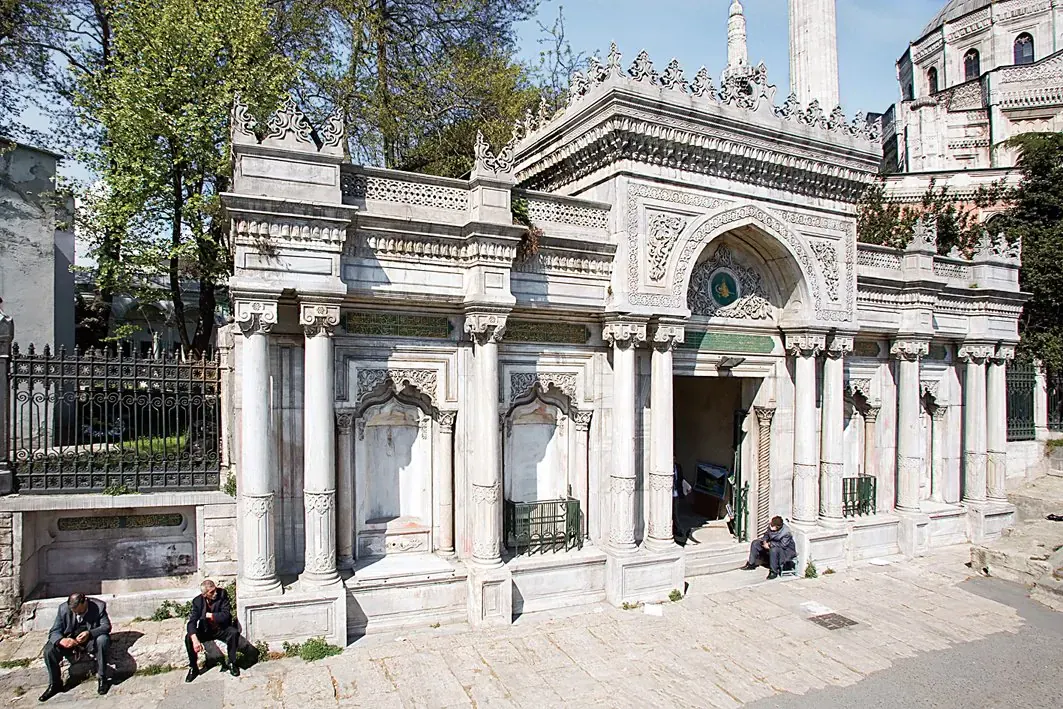
To the right and left of the main gate, four fountains were dismantled and re-erected after the enclosure wall was demolished. They are arranged with deep niches, palmette-capped colonnettes and arches. The fountains’ sülüs date inscriptions are by the poet Saffet. Two fountains on the outer face of the west wall, now at street level and dry, bear inscriptions by Sersikkekünân Abdülfettah Efendi dated 1862–63 (1279).
Tomb: Relocations and Present State
Pertevniyal Valide Sultan’s tomb is the element of the complex that has been moved most often. Although its original position might be expected on the qibla side, it stood at the northwest corner of the courtyard. The tomb is said to contain Pertevniyal Valide Sultan and her grandson Mehmed Sâdeddin Efendi (son of Yûsuf İzzeddin Efendi).
The tomb:
- was dismantled and set back in 1926–1929 for tramway widening,
- was demolished again in 1958 under the Prost plan to be set back further,
- was reassembled in its present position during the 1968–1969 Aksaray Square works.
The entrance facade is plain, with a marble-framed door and four windows; above the door is the verse “Selâmün kavlen min rabbi’r-rahîm” in celî sülüs. The side-street facade has more elaborate marble work; the tomb is reported to have been seriously damaged during moves and reassembly. The fully marble timekeeper’s room at the corner of the complex was dismantled during redevelopment and never re-erected.
Damage to the Complex from Urban Planning Interventions
Text and observation agree: the Pertevniyal Valide Sultan Complex has been moved piece by piece, lost some units and now lies below street level because of road and junction works, the tram line and large-scale planning in Aksaray. Despite this, the mosque remains one of the most visible late Ottoman monuments in the city centre, with its gate layout, eclectic facade language, neo-Gothic window character, dense interior decoration and inscription band.
Images
Questions about this project? Get in touch
← Back to Monument Works