
Rüstem Paşa Complex
History, Architectural Layout and Repair Processes
1. Location and Urban Context
The Rüstem Paşa Complex is located in Fatih district, Istanbul, within the boundaries of Rüstem Paşa neighbourhood, at the intersection of Hasırcılar Street and Uzunçarşı Street, in the Eminönü bazaar area. The complex has a prominent position on the city's waterfront silhouette from the Golden Horn side and stands out with its raised (fevkânî) layout within the dense commercial fabric.
2. History and Founder
The complex was built by Mimar Sinan for Rüstem Paşa, son-in-law of Sultan Süleyman the Magnificent and grand vizier of the period. The construction process is dated to 1555–1561; after Rüstem Paşa's death in 1561, the structure is accepted to have been completed by his wife Mihrimah Sultan. The building was erected on the site of the former Hacı (Attar) Halil Ağa / Halil Efendi Mosque, with the expropriation of surrounding structures.
3. Complex Components
The Rüstem Paşa Complex consists of: mosque, fountain, cemetery (hazire), shops, vaulted cellars (mahzen), and two caravanserais (Great and Small Rüstem Paşa Hans / Great and Small Çukur Han). The fact that the complex was conceived together with its commercial units shows that it was designed within an income-generating waqf system.
4. Mosque – Plan and Structural Layout
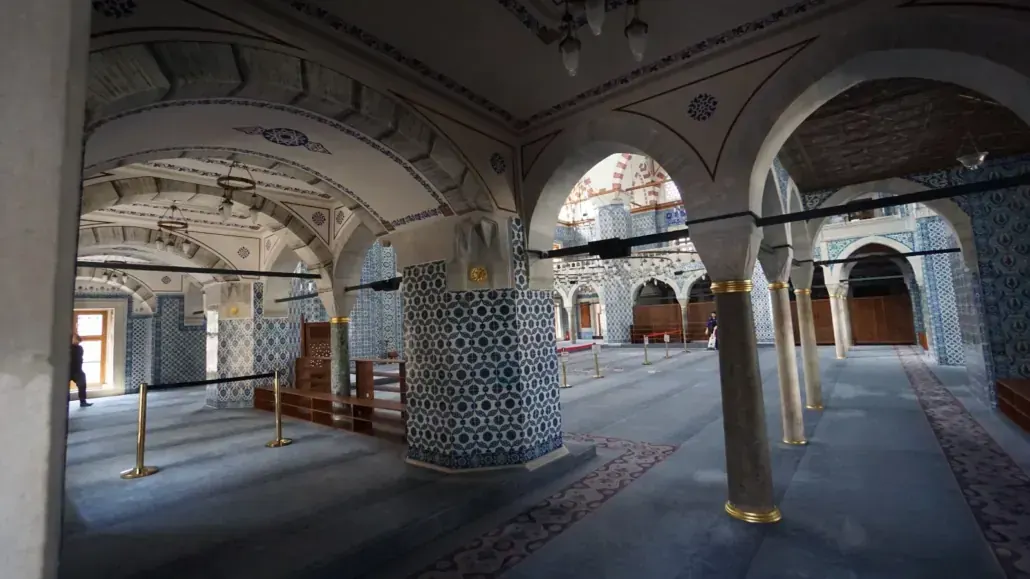
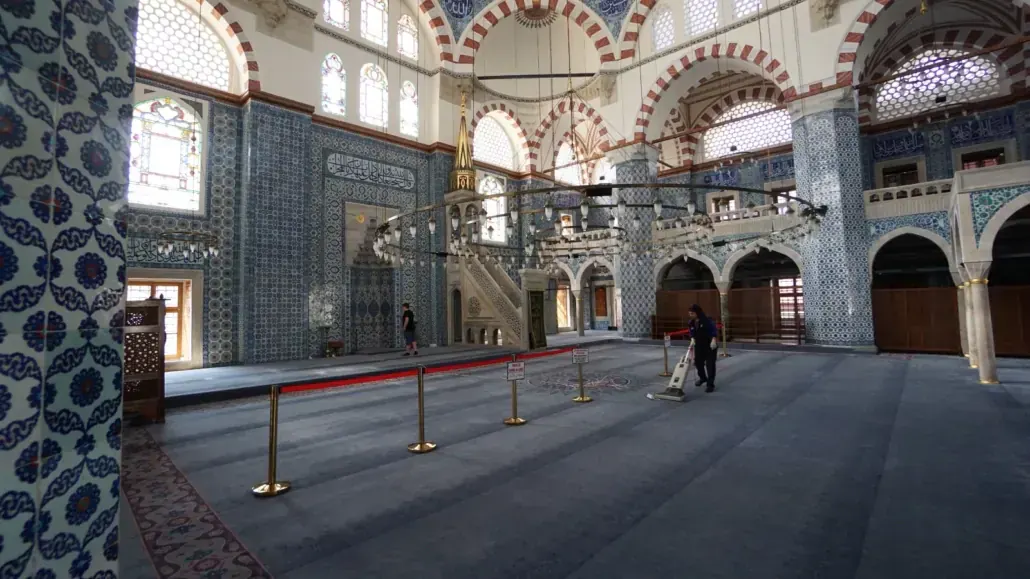
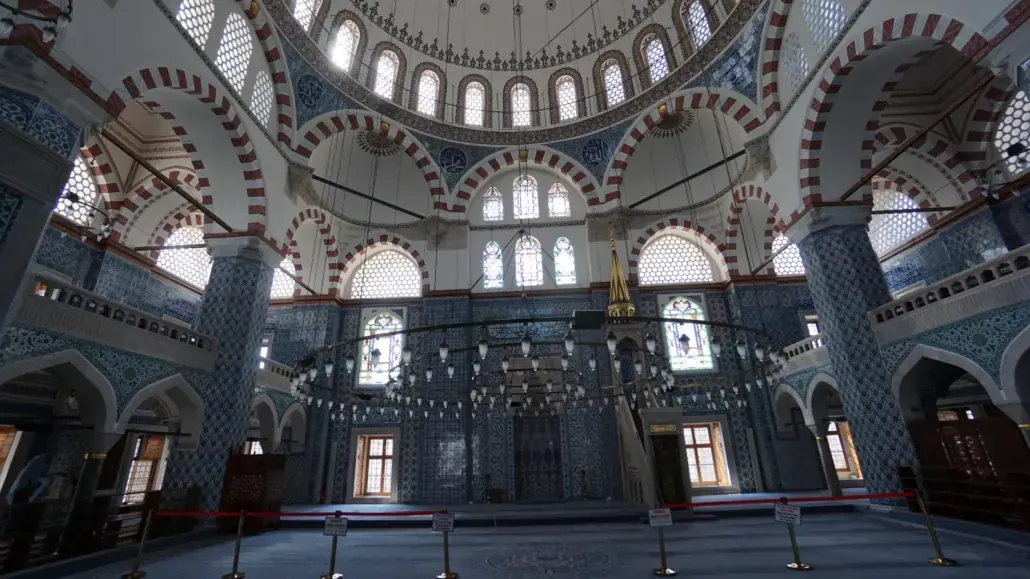
Rüstem Paşa Mosque, the main structure of the complex, holds a special place in Sinan's development of mosque plans as the first example of the eight-support central-dome scheme. In the transversely rectangular prayer hall, four of the eight major piers carrying the main dome are rectangular and attached to the body walls on the qibla and entrance sides, the other four are octagonal and freestanding. These piers are linked by arches to form the octagonal area on which the main dome rests. Blind half-domes are placed behind the arches at the four corners; on both sides the space is extended laterally by three units each—vaulted in the centre and domed on the sides. These side units are treated as galleries inside; beneath them are vaulted spaces. The largest dome Sinan built in the capital for a grand vizier belongs to this mosque.
5. Raised Layout and Substructure
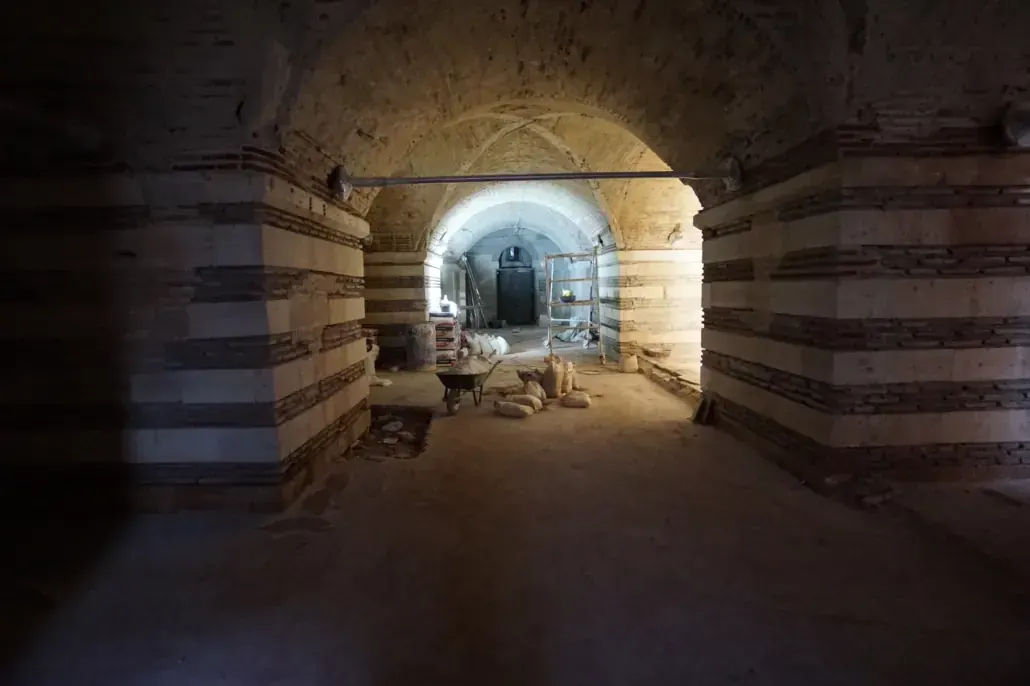
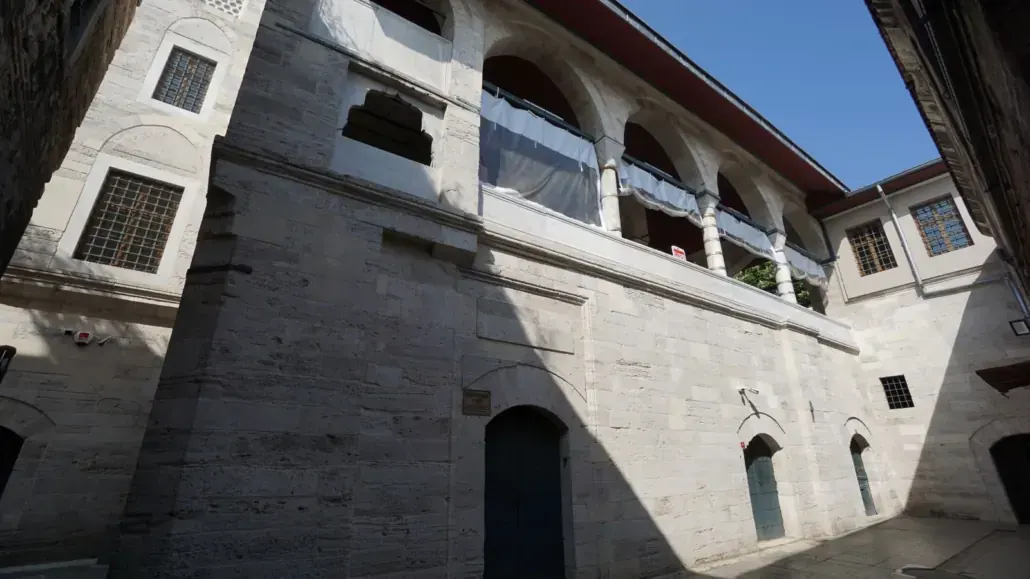
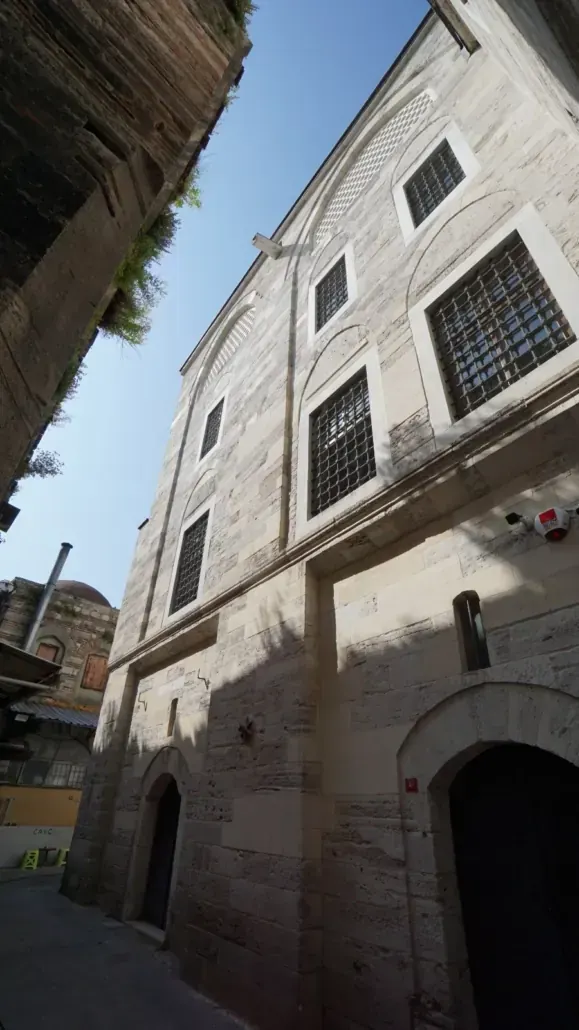
The mosque is set on a high platform rising above the dense commercial fabric. At street level and below the prayer hall are: fifteen cross-vaulted units resting on eight square-section piers; two vaulted cellars under the courtyard with pointed vaults; and eight barrel-vaulted shops under the courtyard to the north. A fountain with a basin is arranged in the centre among the shops. The Great and Small Rüstem Paşa Hans, located towards the Golden Horn, have shops below and domed and vaulted rooms above. The hans have stone-and-brick alternating facades and have been subject to various interventions over time.
6. Courtyard, Portico and Other Elements
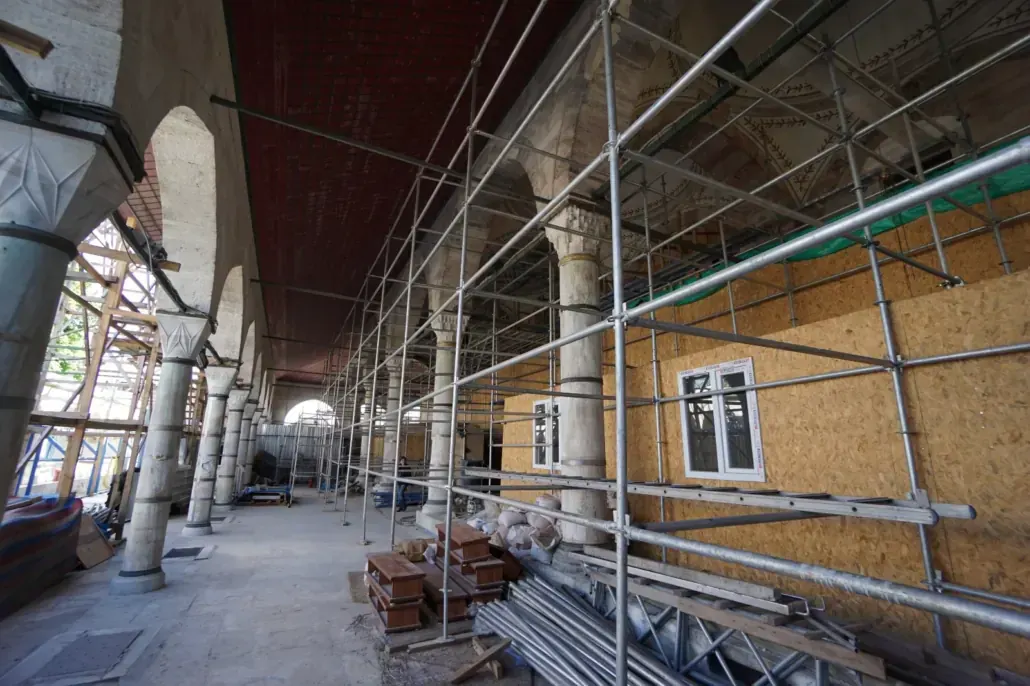
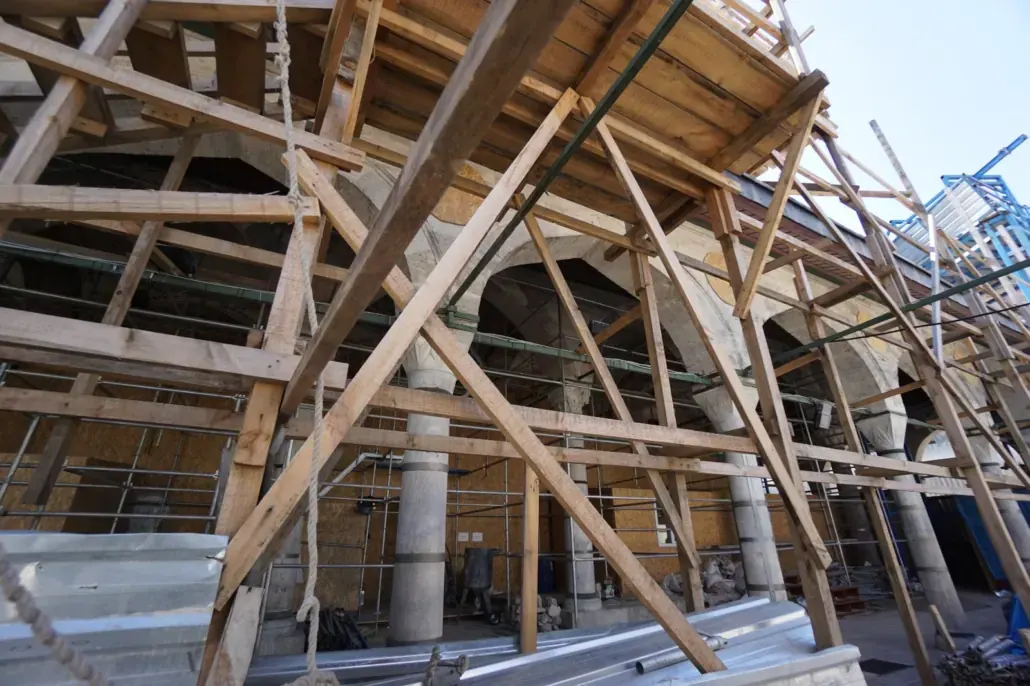
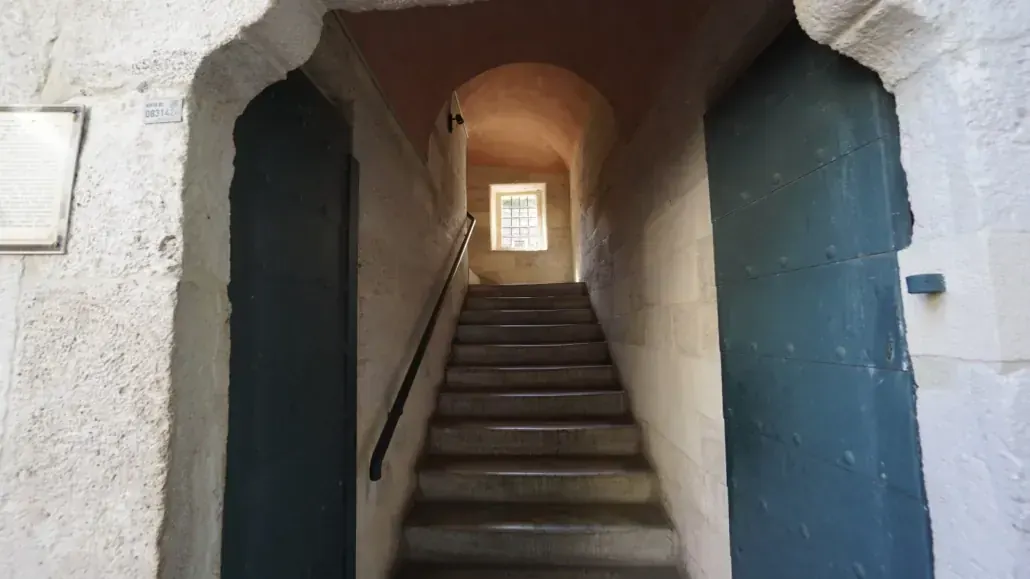
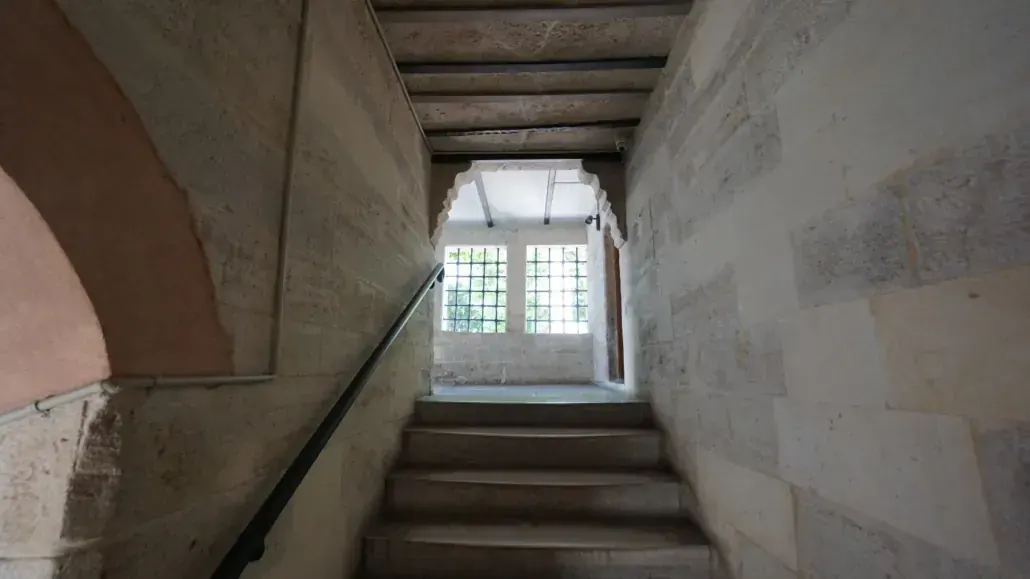
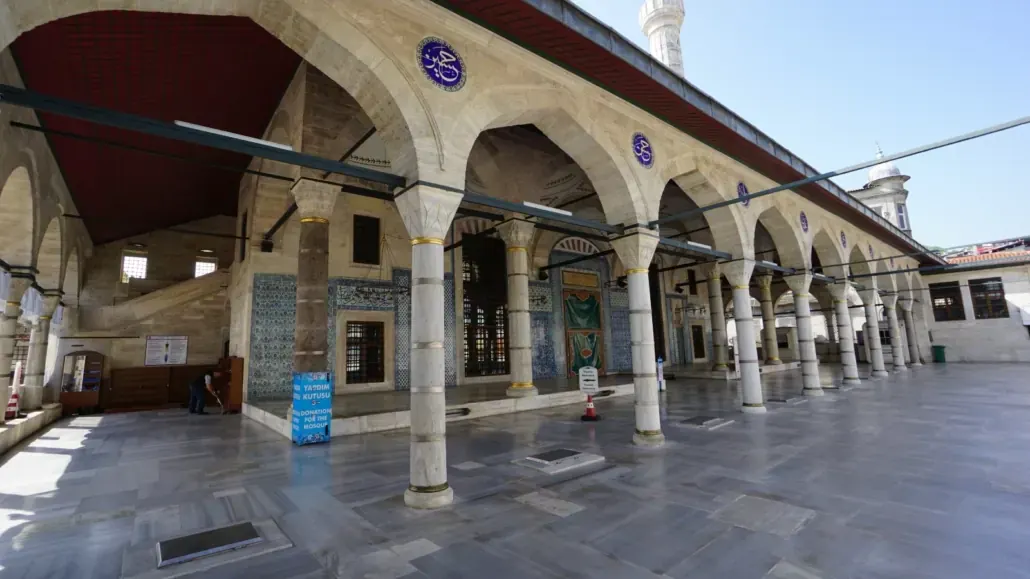
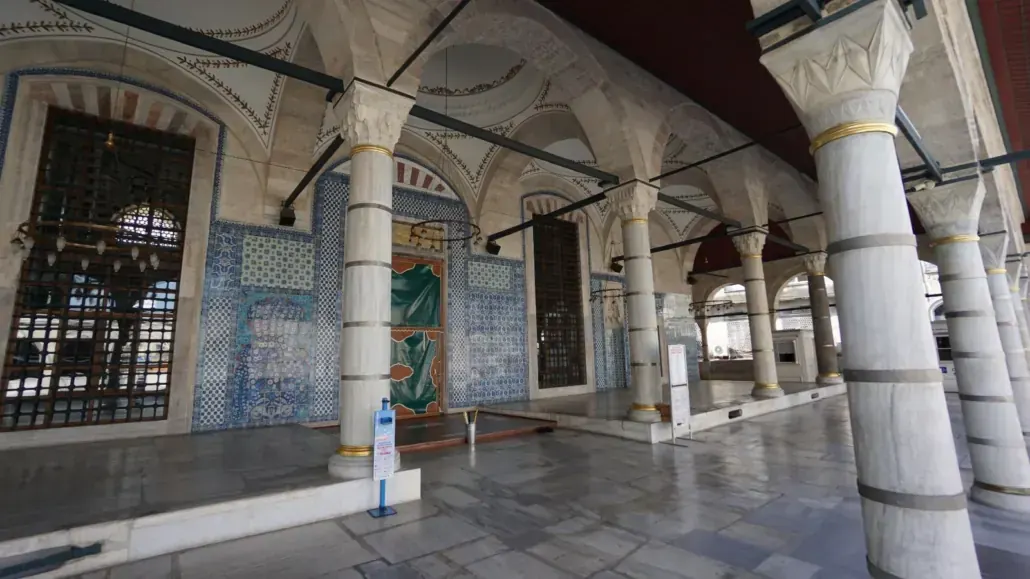
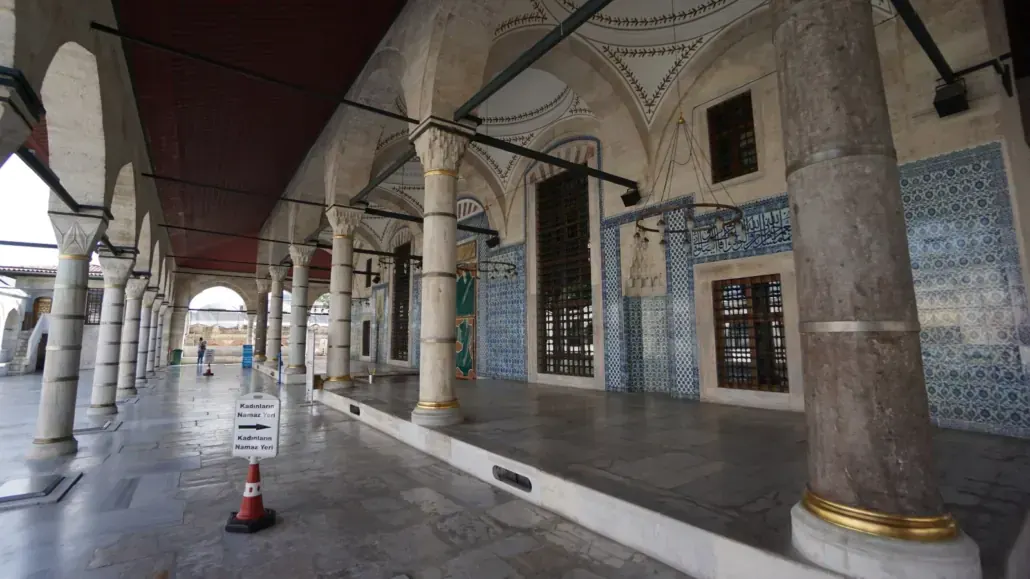
Access to the high courtyard north of the mosque is by enclosed stairs placed on the four sides of the platform. The wooden roof covering much of the courtyard surrounds the five-domed portico, carried on six columns with muqarnas capitals, on three sides. The cut-stone, polygonal-shaft, single-gallery, lead-capped minaret stands at the northwest corner and is reached by a door from the west. The fountain (şadırvan) is located in the square courtyard at street level on Uzunçarşı Street. The cemetery (hazire) is on the Hasırcılar Street front, next to later-added shops.
7. Decorative Programme and Tiles
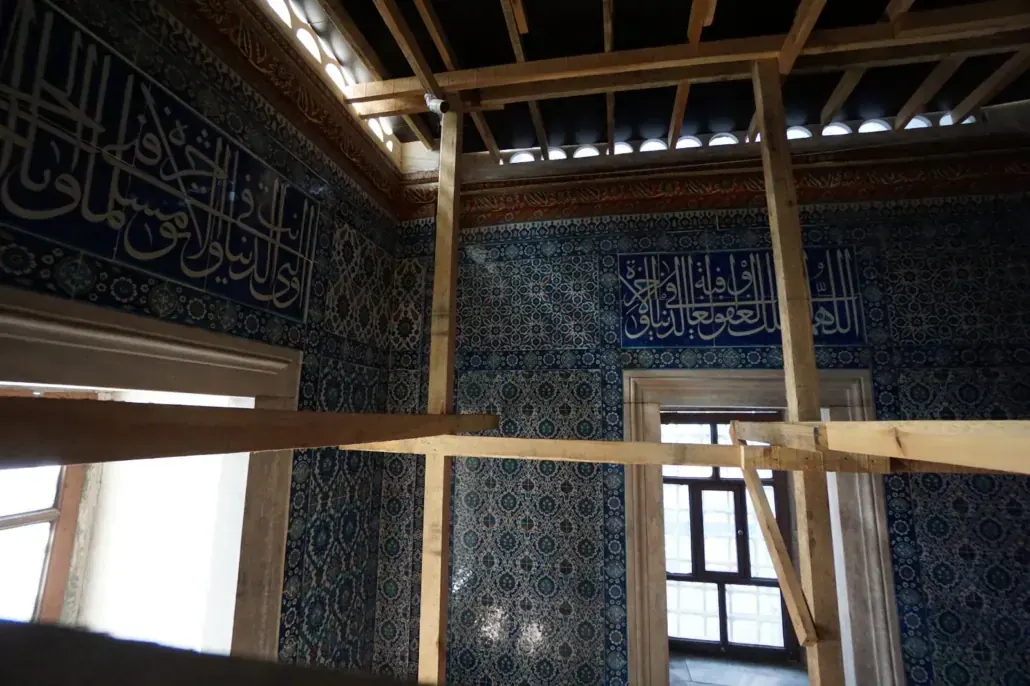
Rüstem Paşa Mosque stands out as the structure in which tile decoration is used most intensively among Sinan's mosques. The interior and portico walls and the piers, buttresses and pendentives are covered with İznik tiles. The half-dome and vault interiors are plastered and painted with kalem işi decoration. The large tile panels on either side of the main entrance in the portico are among the finest examples of classical-period tile art. Over time the portico tiles in particular have suffered significant damage due to fire, earthquake, decay and theft.
8. Damage and Repairs
The mosque suffered serious damage in the great fire of 1660 and the earthquake of 1766; the dome and minaret that collapsed in the earthquake were later rebuilt. The Baroque-style eaves on the dome drum, some wall additions and irregular window proportions belong to 18th-century repairs; the kalem işi decoration in the dome and vault interiors to 19th-century repairs. The structure was repaired by the General Directorate of Foundations in 1960–1961 and 1964–1969, and underwent comprehensive restoration between 1992 and 1995. In this last repair the lead roof coverings were renewed, classical-style kalem işi decoration was revealed and applied in accordance with the original, and tile conservation and cleaning and repair of wooden, plaster, marble and metal elements were carried out.
9. Assessment
The Rüstem Paşa Complex is one of the original and innovative examples of Ottoman classical period architecture with its raised mosque layout, eight-support central-dome plan scheme and exceptional tile decoration programme. With the unity it establishes with commercial structures, its functional approach within the waqf system and its prominent position on the Golden Horn silhouette, it carries high historical value on both architectural and urban scales.
Images
Questions about this project? Get in touch
← Back to Restoration Projects