
Sinanpaşa Mosque Cemetery
Urban Context, Architectural Integrity and Historical Value
1. Location and Urban Setting
The Sinanpaşa Cemetery is located within the Koca Sinan Paşa Complex on Divanyolu (Yeniçeriler Street) in Istanbul's Historic Peninsula, between Bileyiciler Street and Kürükçüler Street. The area lies in an urban fabric dense with complexes along the Divanyolu axis; some complexes today display a two-part layout due to road widening and transport schemes.
The cemetery is situated within the high enclosure walls together with the complex's madrasa and tomb structures and is arranged so as to preserve architectural integrity on the Divanyolu front.
2. History of the Complex
The Koca Sinan Paşa Complex was built in 1592–1593 by Grand Vizier Koca Sinan Paşa for the court architect Dâvud Ağa, a pupil of Mimar Sinan. According to the sebil inscription the complex was completed in H.1002 / AD 1594. The building group is among the distinguished examples of Ottoman classical period architecture.
3. Complex Components
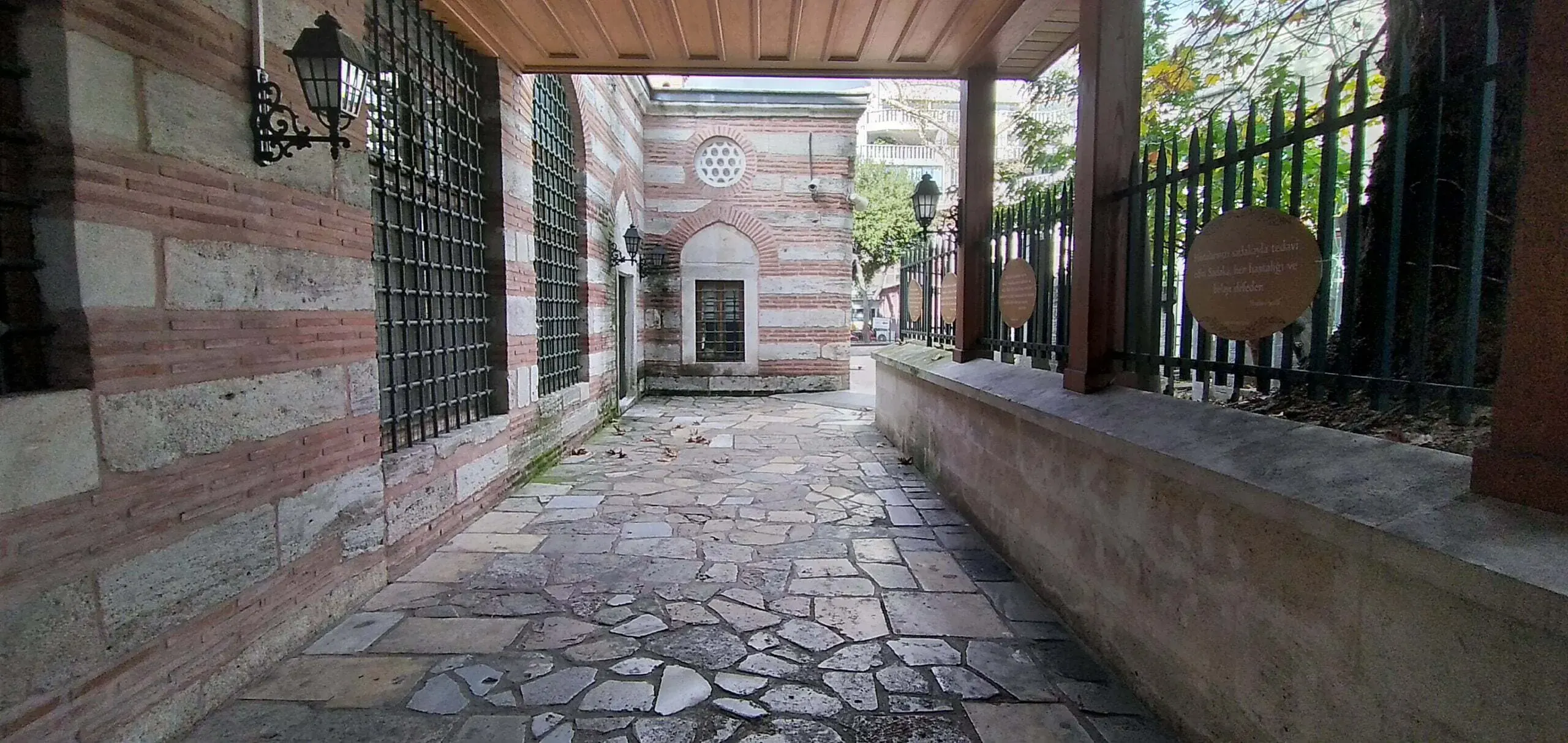
The complex consists of a madrasa, tomb, sebil and cemetery (hazire). The cut-stone structures are surrounded by a high enclosure wall with wrought-iron grilled windows. The sebil is placed at the corner where Divanyolu meets Bileyiciler Street. The courtyard is entered through a depressed-arch main gate opening onto the main street.
4. Madrasa
The madrasa is organised around a rectangular inner courtyard. The building comprises one lecture hall (dershane) and sixteen cells arranged asymmetrically around it. The lecture hall is square in plan and covered by a dome on an octagonal drum with squinches. The dome is supported by arches carried on one pier and two columns. The portico on the south facade is covered by domes at the sides and a vault in the centre. The cells are domed and have windows opening to the courtyard and to the exterior. The courtyard facade has a portico system carried on columns with diamond (baklava) capitals and an eight-columned fountain in the centre of the courtyard.
5. Tomb
The Koca Sinan Paşa Tomb, the most monumental unit of the complex, is a hexadecagonal, low-domed structure with a porticoed entrance facade. The portico is carried on arches resting on slender columns. The facades have pointed-arch rectangular windows in the lower row and round-arch red-and-white alternating stone windows in the upper row. A muqarnas band runs at the dome springing and a palmette frieze above it. Inside the tomb are two marble sarcophagi and three wooden cenotaphs; the interior displays a plain decorative approach. The tomb is currently under the responsibility of the Ministry of Culture and Tourism.
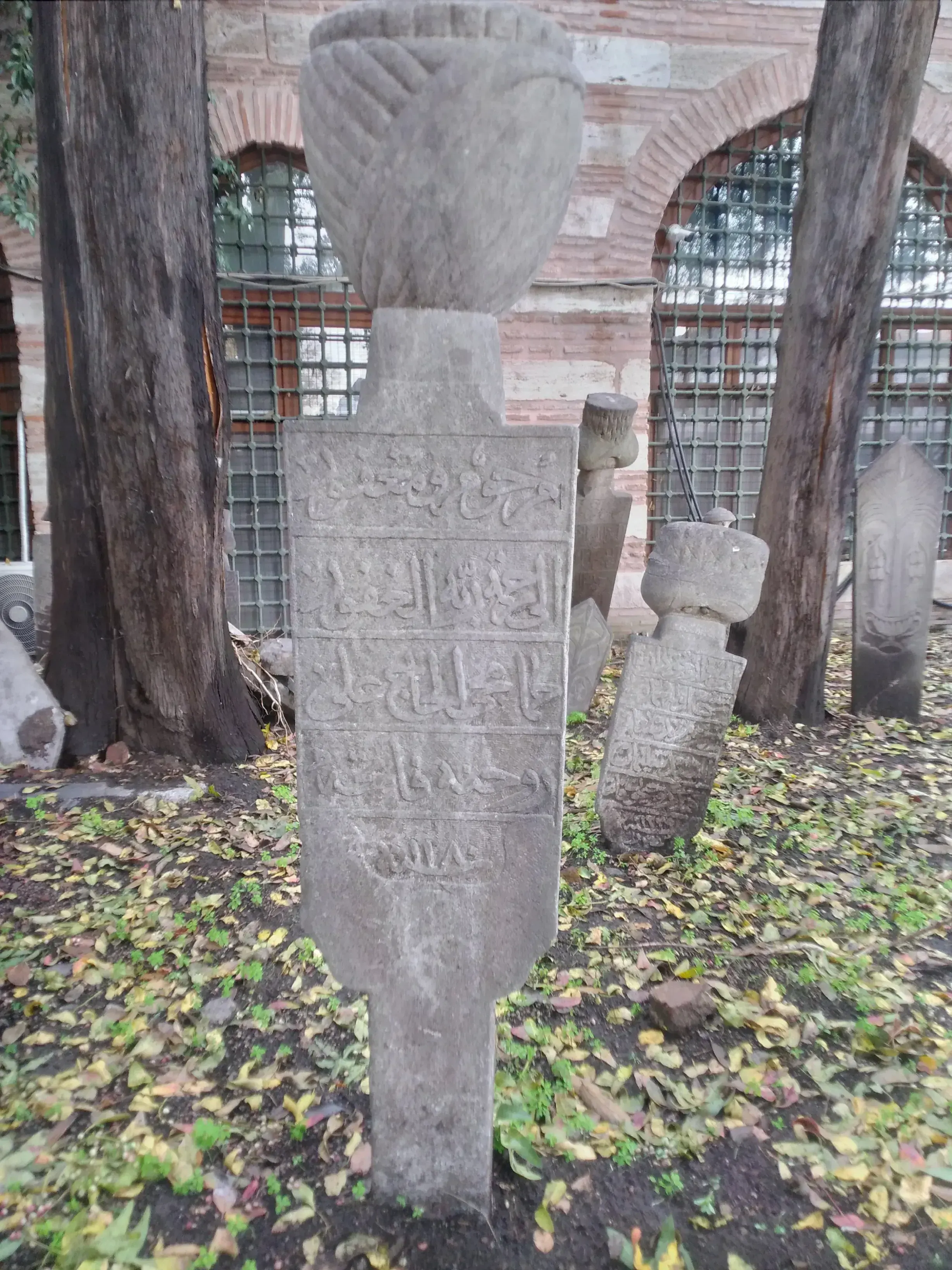
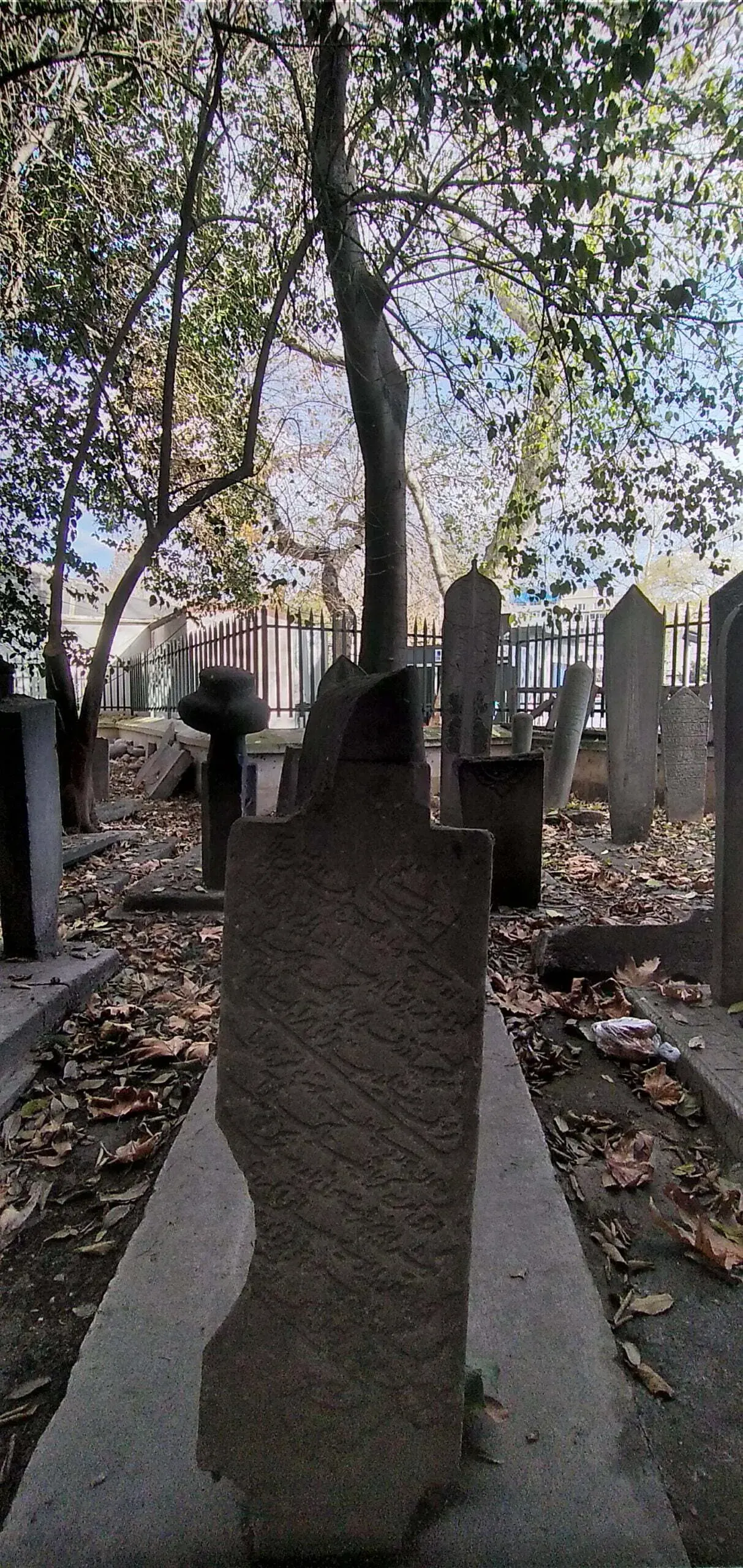
6. Cemetery (Hazire)
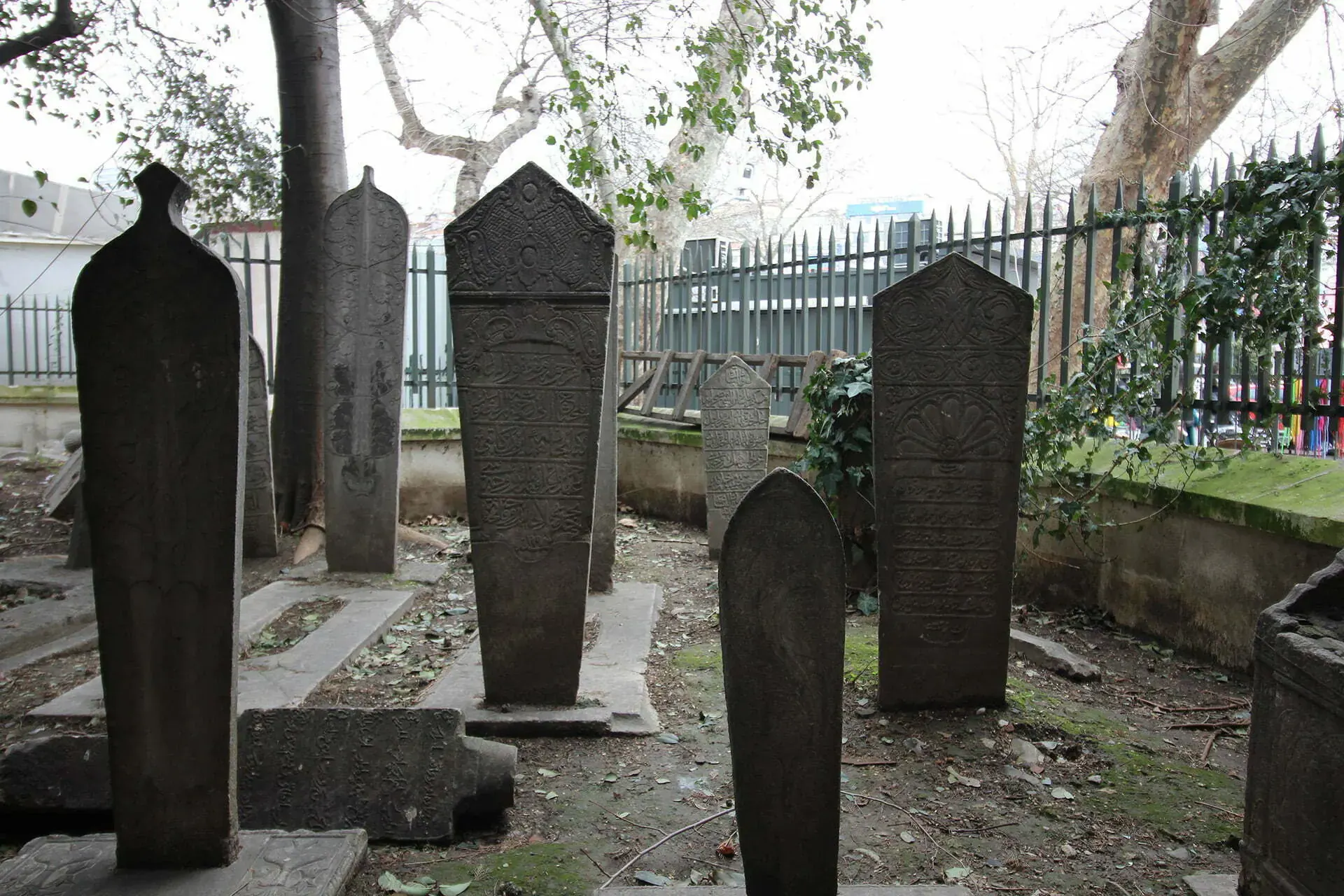
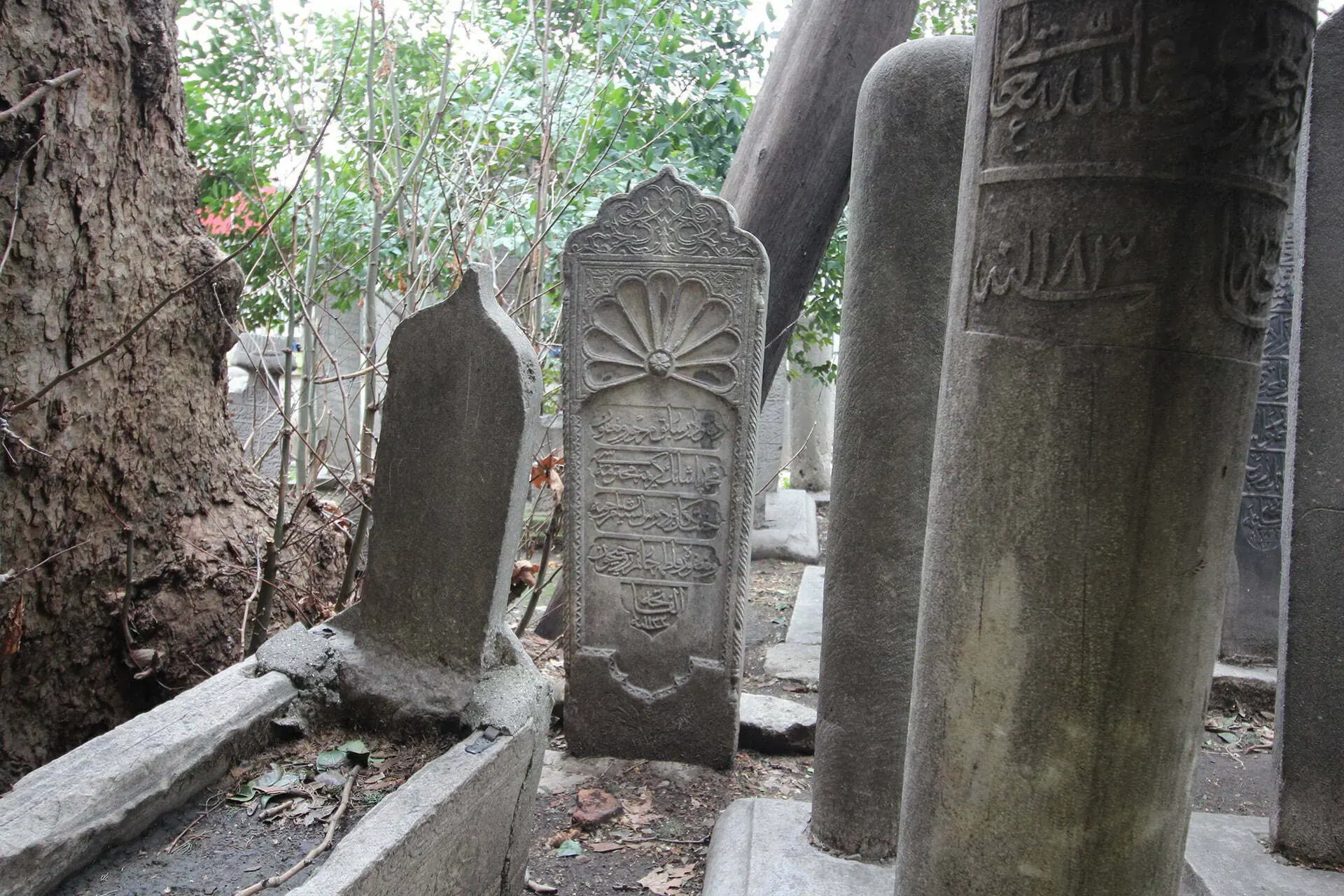
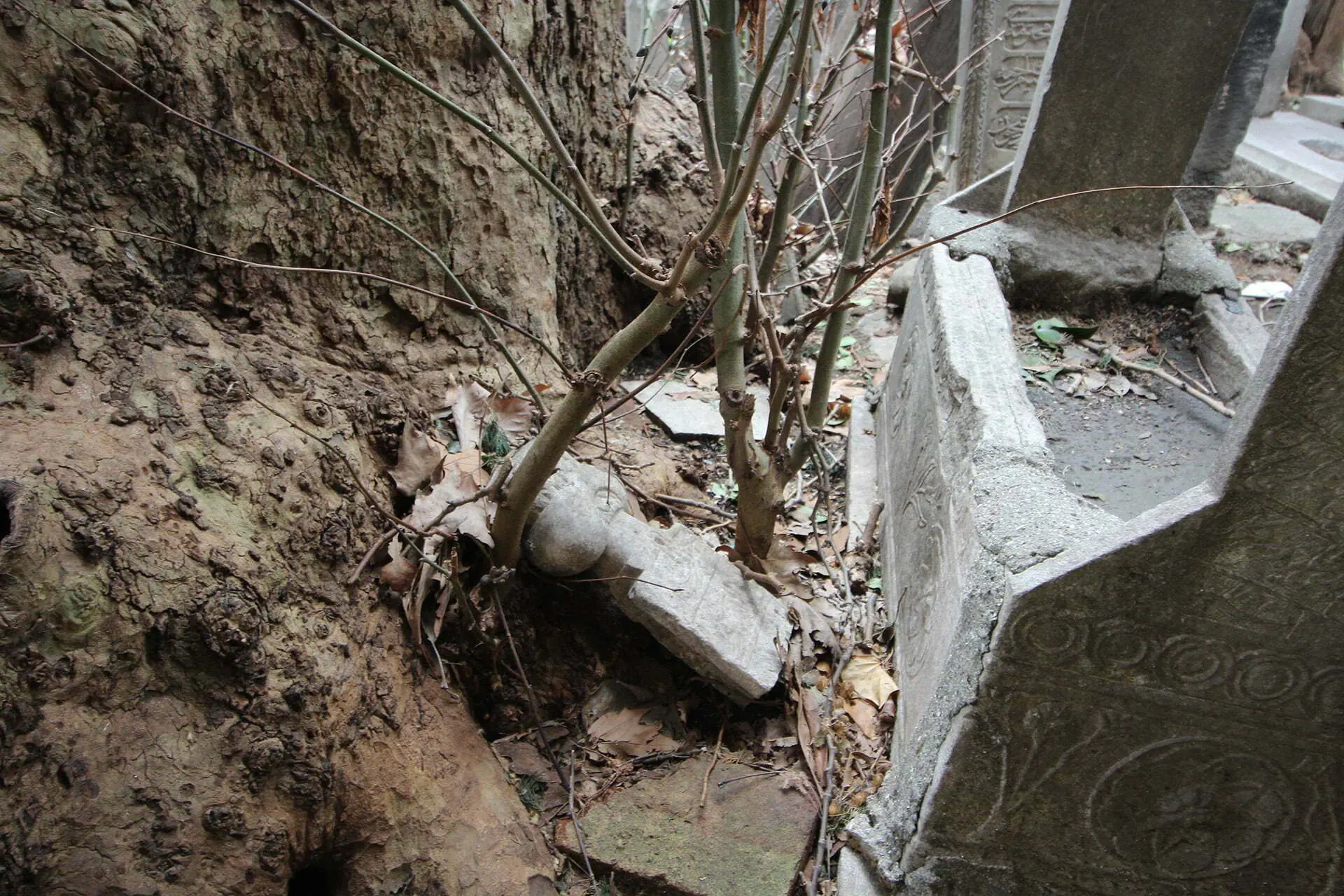
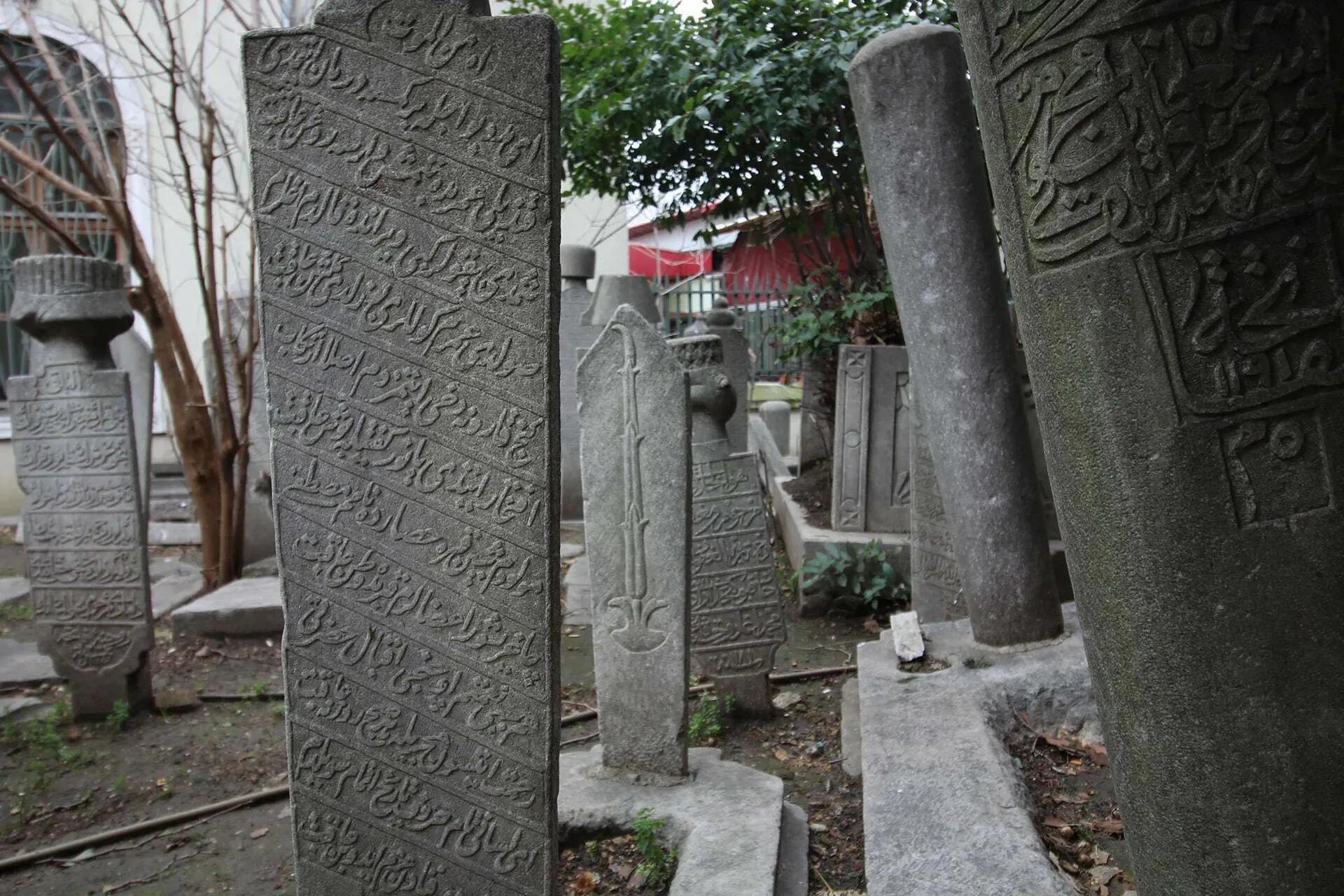
The garden area between the tomb environs and the madrasa and enclosure wall was turned into a cemetery (hazire) in the 18th century. The cemetery contains numerous graves. The cemetery windows on the Divanyolu facade have a tall proportion and aesthetic design. Single-line inscriptions appear above some of the windows. The hazire is an important element reflecting historical continuity within the unity of the complex.
7. Sebil
The sebil is octagonal in plan and rises on a marble base. It is formed by pointed arches carried on engaged columns with muqarnas capitals. There are five water-dispensing openings facing the street, fitted with cast-iron lattice grilles. The marble pediments are worked in openwork. Between the column capitals is a sixteen-line verse inscription in thuluth script. The sebil's low roof and all the domes of the complex are lead-covered. Today the sebil is used as a book sales point.
8. Use and Repairs
The complex was damaged in the 1865 Hocapaşa Fire and subsequently repaired. In 1973–1974 it underwent a systematic restoration. The madrasa is currently used by civil society organisations.
9. Assessment
As an integral part of the Koca Sinan Paşa Complex, the Sinanpaşa Cemetery provides important data on Ottoman classical period architecture, the tradition of urban cemeteries and the arrangement of complexes along Divanyolu. Through its spatial relationship with the tomb, madrasa and sebil, it is not only a burial ground but a substantial cultural asset that ensures the continuity of historical, architectural and urban memory.
Images
Questions about this project? Get in touch
← Back to Restoration Projects