
Süleymaniye Mosque and Complex
Istanbul
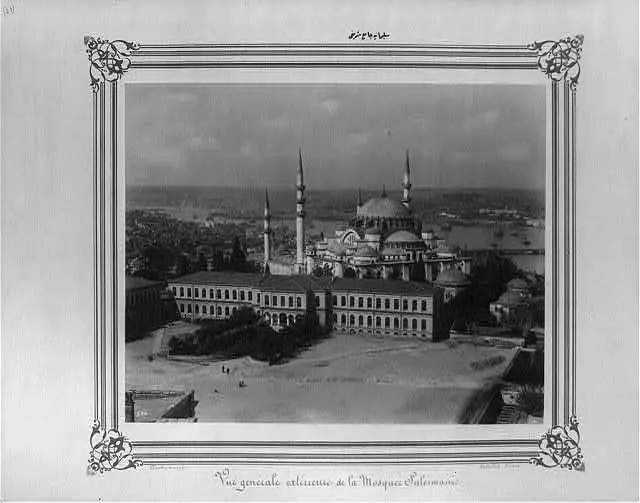
Süleymaniye Mosque, known as Mimar Sinan's "masterwork" (kalfalık eseri), was built between 1551 and 1558 on the order of Suleyman the Magnificent. Located on a commanding site in Istanbul, it is considered one of the strongest examples of classical Ottoman architecture. Tradition holds that the first foundation stone was laid by Şeyhülislâm Ebussuud Efendi.
Architectural Layout and Roof System
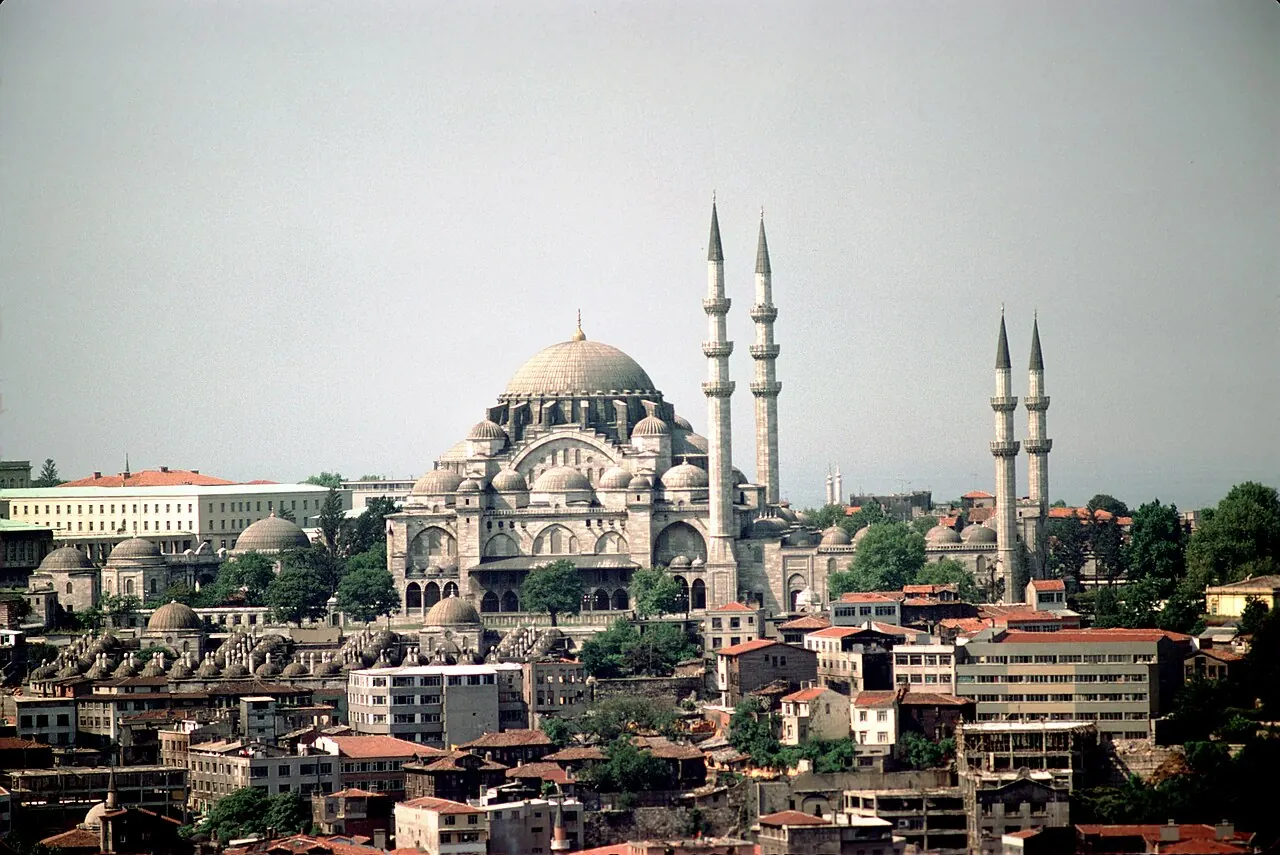
The main prayer hall has a balanced roof system of one central dome, two half domes, two quarter domes and accompanying smaller domes. The central dome rests on four elephant piers; the weight of the dome arches is carried by four large granite columns. The dome is said to have 32 windows; it is 27.25 m in diameter and reaches 53 m in height from the ground.
Acoustics, Light and Interior Effect
One of the most emphasised features of Süleymaniye is its acoustic sensitivity. To reinforce the reverberation of sound, 64 jars (about 50 cm) were placed with their openings facing inward in the dome and corners; this is said to provide controlled sound distribution in the space.
The mosque has strong natural light from its tall window arrangement: it is said to receive light from 238 windows, the interior area is about 3,500 m², and the prayer hall dimensions are given as approximately 59 × 58 m. The coloured windows in the upper part of the mihrab are attributed to the period master İbrahim Usta; the effect of sunlight is described with the simile "Şehper-i Cibril (wings of Gabriel)".
Structural Elements and Material Emphasis
The four large granite columns in the prayer hall are said to have been brought from different sources; they are associated with Alexandria, Baalbek, Kıztaşı in Istanbul and the Saray-ı Âmire. Each column is about 9.02 m high, 1.14 m in diameter and between 40 and 50 tonnes; Sinan is said to have likened them to the Four Rightly Guided Caliphs. Marble paving, the gallery and mihrab–minbar workmanship stand out as elements that reinforce the sense of "mastery" in the interior.
The section to the right of the muezzin's gallery, enclosed by metal grilles, was used as a library until 1918; the books were transferred in that year to the General Library established in the Süleymaniye Madrasas.
Courtyard Layout and Arcades
The mosque has a large inner courtyard; the floor is marble-clad and the courtyard is surrounded by 28 domed arcades. The arcades rest on 24 columns; 12 are granite, 10 marble and 2 porphyry marble. The courtyard–gate layout is one of the main elements that strengthen the mosque's monumental entrance effect.
Minarets and Symbolism
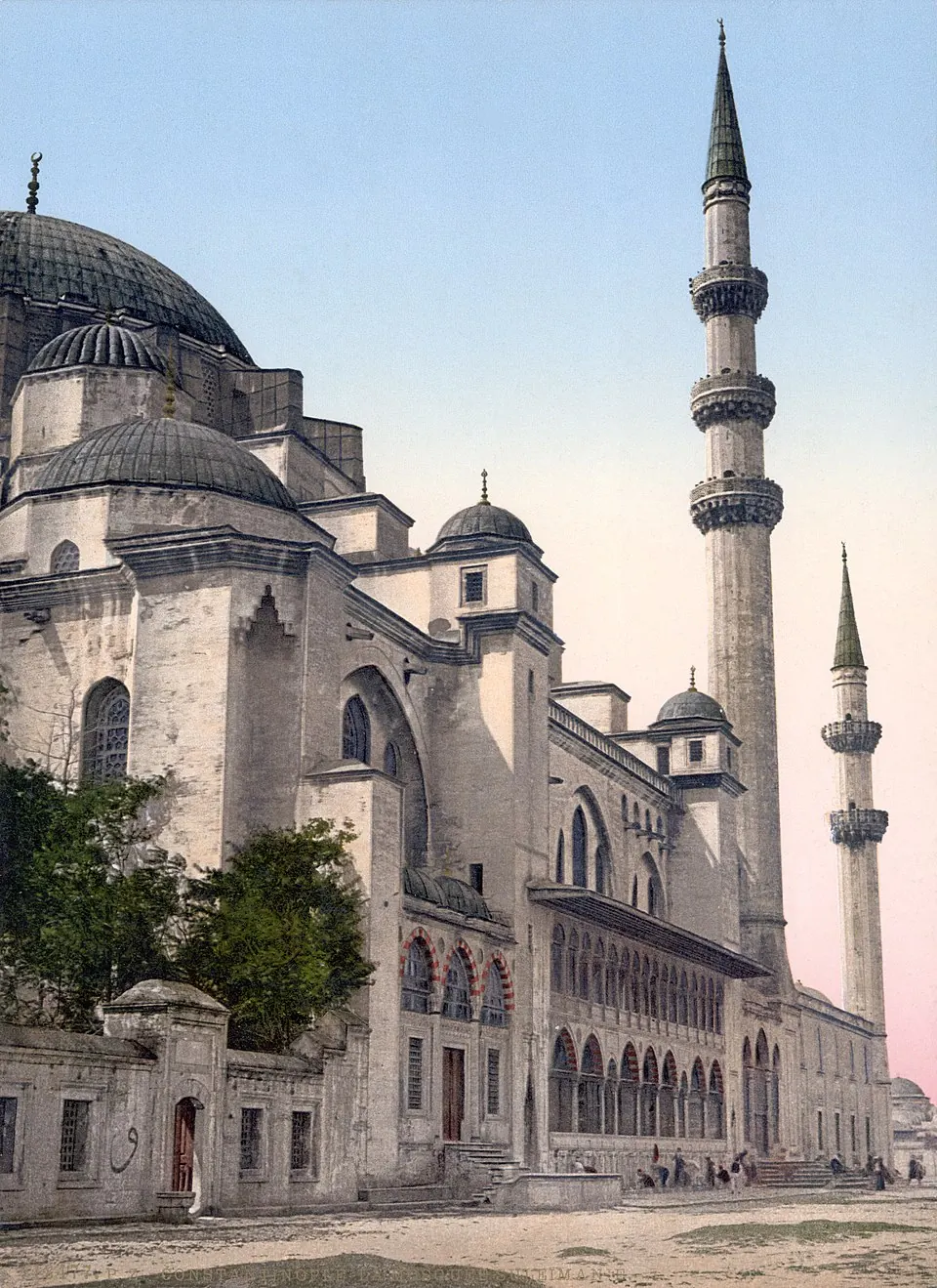
Süleymaniye Mosque has four minarets; two have three galleries and two have two, making ten galleries in total. This arrangement is interpreted as referring to Suleyman's being the fourth sultan after the conquest of Istanbul and the tenth sultan of the Ottoman dynasty. The silhouette of the minarets is also likened to "a person in prayer".
Calligraphy and Inscriptions
The main body of the mosque inscriptions is associated with the famous calligrapher Ahmet Karahisarî and his pupil Hasan Çelebi; Kazasker Mustafa Efendi is said to have made some later additions. Most of the texts are selected from the Qur'an; the inscription above the door from the inner courtyard into the mosque is arranged in three parts to form a narrative including the sultan's qualities, lineage and the building's intention/history.
Tombs and Complex Integrity
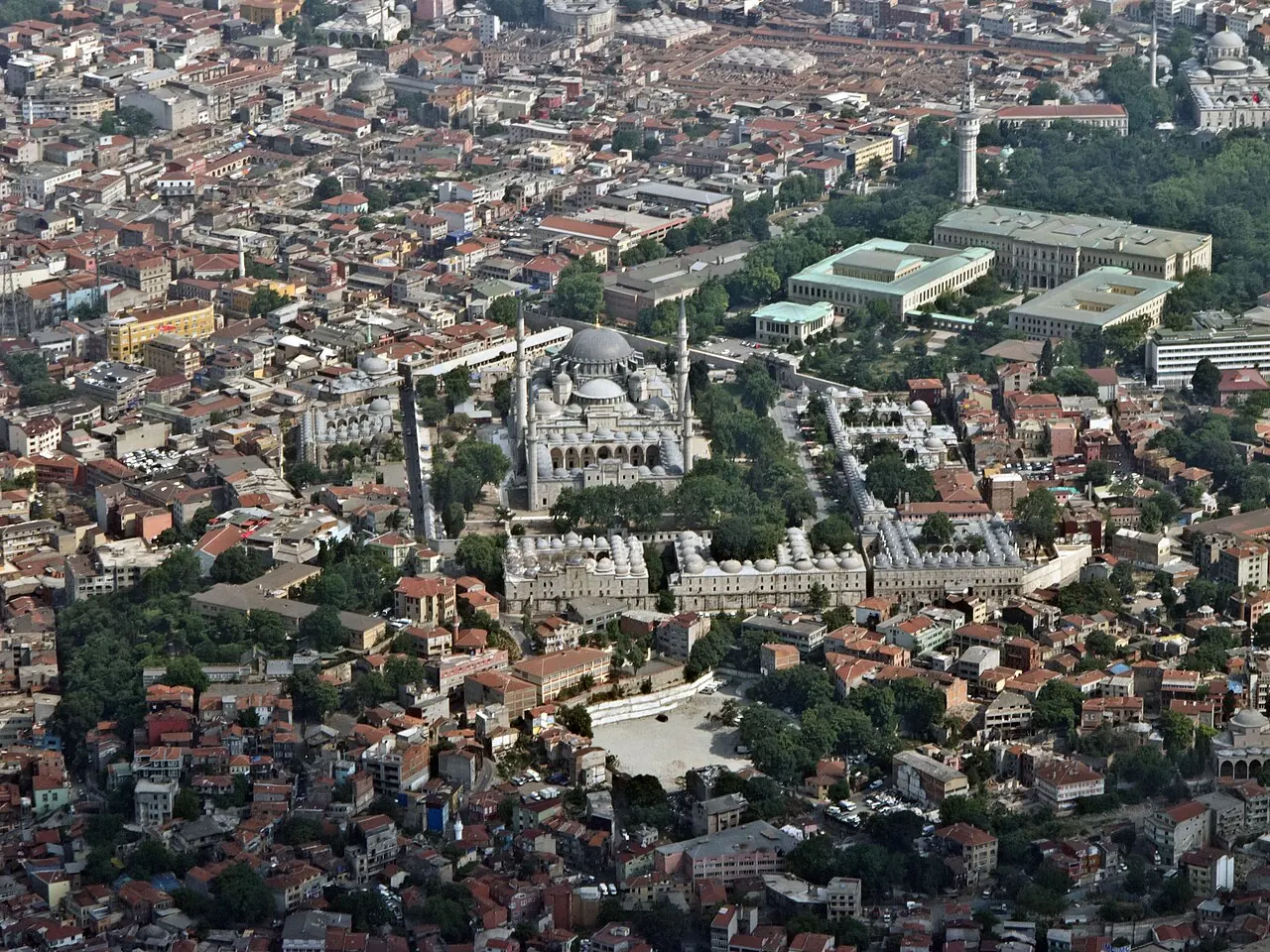
The tomb in front of the mihrab is that of Suleyman the Magnificent; the one beside it is Hürrem Sultan's. The mosque garden is about 6,000 m² and has 11 gates; the educational buildings known as the Süleymaniye Madrasas were established around it. The complex is emphasised as having seven madrasa units; some buildings are said to have been put to different uses over time:
- Some units on the right (Evvel–Sani madrasas and the primary school) were later converted into Süleymaniye Library; part is used as a children's library;
- The corner medical madrasa and the hospital opposite were used for different purposes in different periods;
- The buildings to the north were first a soup kitchen (imaret), then a museum, and were transferred to Süleymaniye Library in 1984.
Images
.webp)
.webp)
Questions about this project? Get in touch
← Back to Monument Works