
History and Significance
Vefa High School is one of the most rooted and symbolic institutions of the modern education drive that began in the Ottoman Empire in the 19th century. Until the 18th century in the Ottoman period, education continued through classical structures such as neighbourhood schools and madrasas; at the end of the 18th and in the 19th century a new era began with the establishment of military and civil modern schools. This transformation was systematised by the 1869 General Education Regulation; education was structured in primary–secondary–higher education tiers.
Foundation and the İdadi Period
The foundation of today's Vefa High School was laid with the idadi (lycée) classes opened within Mekteb-i Mülkiye in 1872. In this respect the school is regarded as the first civil (mülkiye) lycée teaching in the mother tongue.
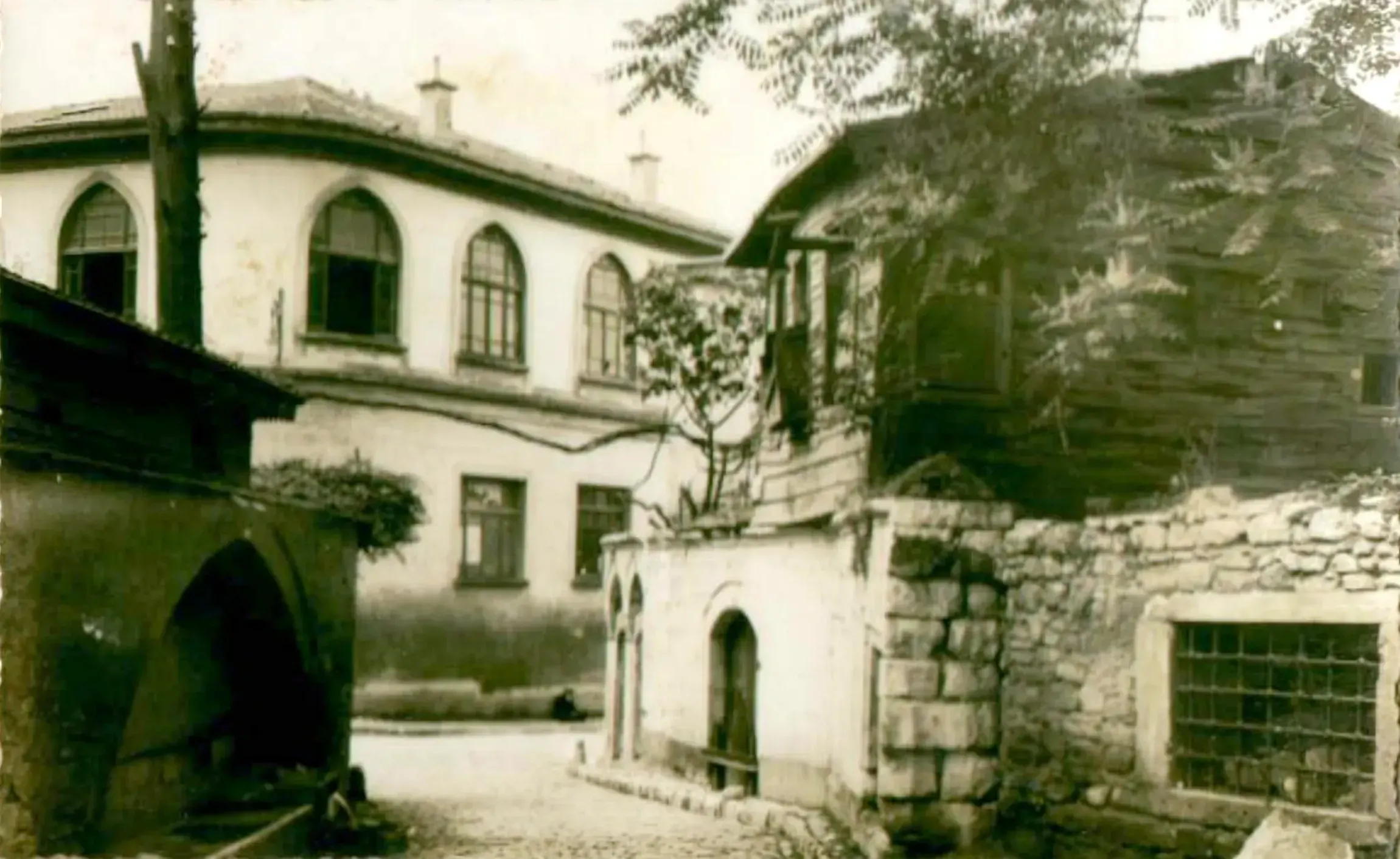
The idadi classes merged with those of Mekteb-i Tıbbiye and the Law School and in 1886 became an independent school under the name Dersaadet İdadî-i Mülki-i Şâhânesi. The school moved to a building purchased by the Ministry of Education and known today as the Mütercim Rüşdü Paşa Mansion; in 1900 it took the name Vefa İdadî-i Mülkî-i Şâhânesi after its neighbourhood.
Sultani, Lycée and Middle School Phase
1913–1914: The school was raised to the status of Vefa Mekteb-i Sultanisi and became a 12-year integrated institution covering primary, middle and lycée levels.
After the 1924 Law on the Unification of Education: it took the name Vefa Boys' Lycée.
1925–1933: It was converted into a middle school and operated as Vefa Middle School in the Pharmacy School building in Kadırga.
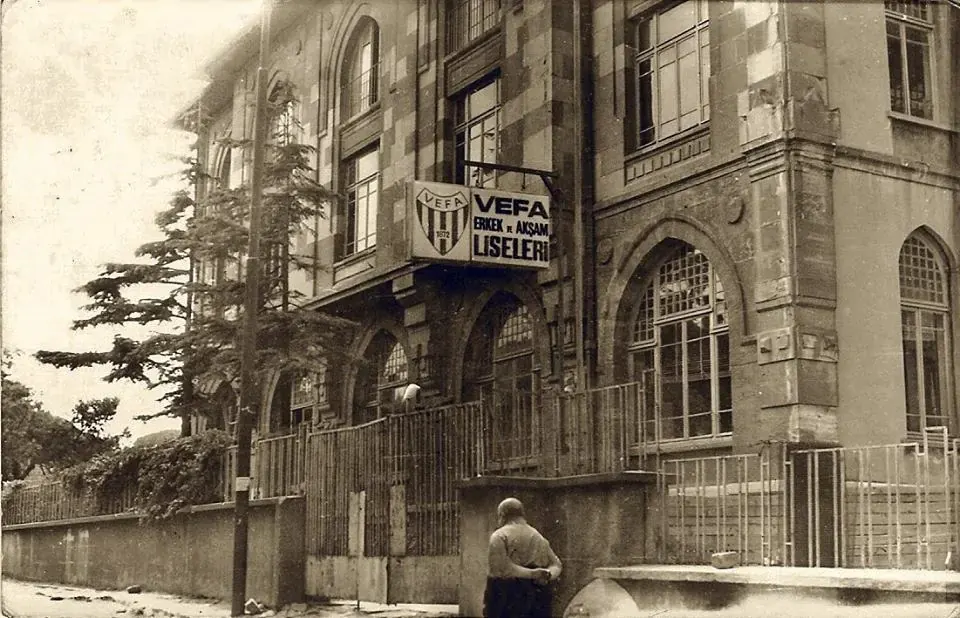
1933: Through alumni initiative it regained lycée status and returned to its historic building in Vefa.
Spatial Development and Buildings
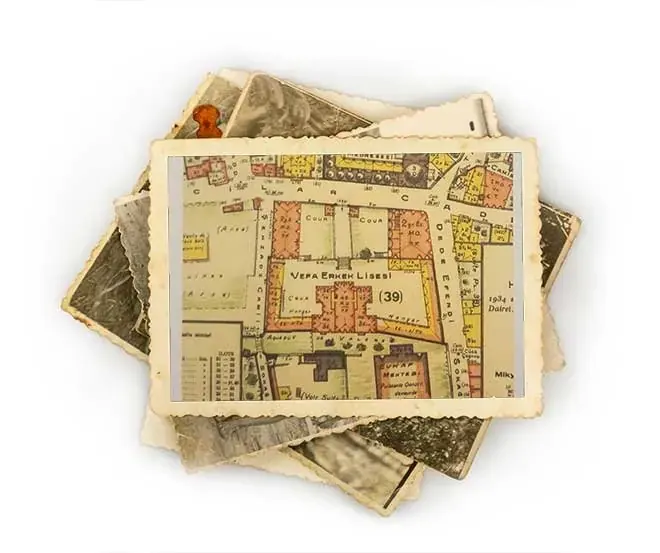
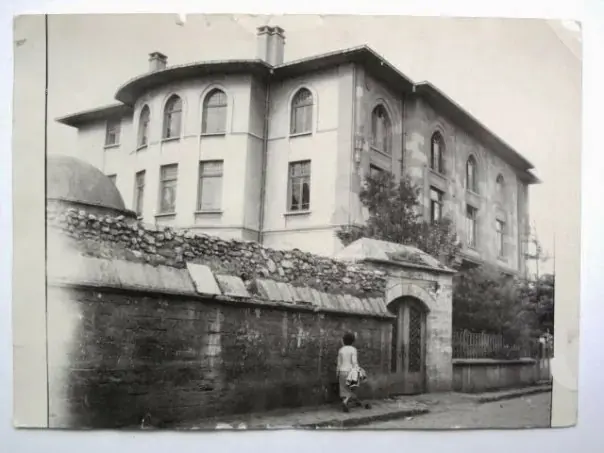
Mütercim Rüşdü Paşa Mansion: The school's main historic building.
Upper Garden Building: Allocated to the Higher Teacher Training School in 1937 and transferred to Vefa High School in 1949.
Lower Garden Pavilions: Used for sports, culture and science laboratories.
Şehzade Mehmet Tabhane: Converted into a Chemistry Laboratory in the late 1950s.
5. Vakıf Han: Designed in 1911 by Architect Kemaleddin Bey, the building is used today as the Vefa High School building. It is among the distinguished examples of the First National Architecture period.
Boarding, Evening Lycée and Anatolian High School
1959: Boys' Student Dormitory opened; closed in 1980 and reorganised in 1984 as Girls' Student Dormitory.
1958–1978: Turkey's first Evening Lycée operated under Vefa and produced approximately 5,000 graduates.
1990: The school gained Anatolian High School status; in 2001 it reverted to its historic name and again took the name Vefa High School.
Earthquake, Restoration and the 21st Century
Historic buildings damaged after the 1999 earthquake were repaired with support from the Istanbul Stock Exchange and alumni in 2000–2001 and returned to educational use.
With the "21st Century Adaptation Project" launched in 2000, the school's physical infrastructure and educational technology were renewed; from 2006–2007 it adopted a 5-year education model (Preparatory + 4 years). In the same period all classrooms were equipped with multimedia infrastructure.
Assessment
With a history approaching some 150 years, Vefa High School is one of the key institutions of modern education history stretching from the Ottoman period to the Republic. With its idadi–sultani–lycée transformations, the first evening lycée practice, strong alumni network and conserved historic buildings, it holds a special place within Istanbul's and Turkey's distinguished educational heritage.
Images
Questions about this project? Get in touch
← Back to Restoration Projects